Useum

Kitagawa Utamaro

240 works held in 6 museums

Japanese master of the woodblock print, painter of the beauties of Edo, c. 1753-1806

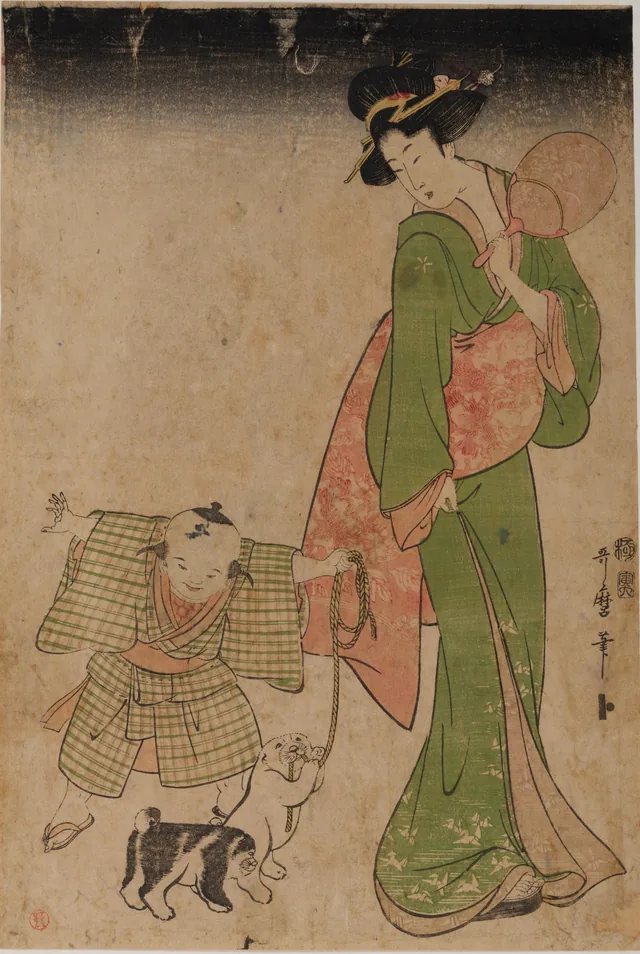
Woman and Child with Puppies, Kitagawa Utamaro

Woman and Child with Puppies, 1806.

美人子供に小犬 (museum title)

Kitagawa Utamaro (Japanese), colour woodcut on paper

Tokyo National Museum, Japan

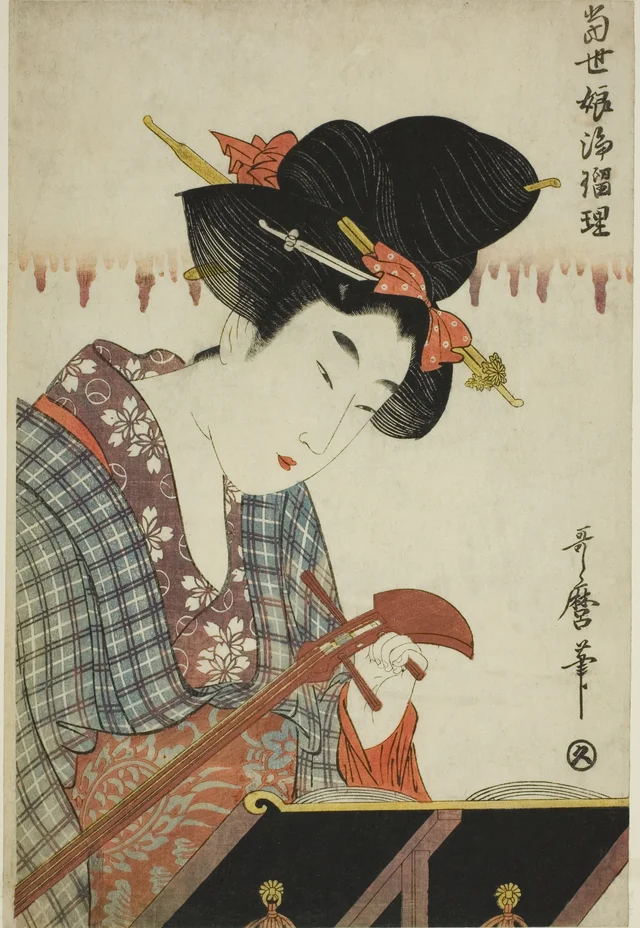
Turning a Shamisen (Shamisen no nejime), from the series "Chanting to Shamisen by Young Women of Today (Tosei musume joruri)", Kitagawa Utamaro

Turning a Shamisen (Shamisen no nejime), from the series "Chanting to Shamisen by Young Women of Today (Tosei musume joruri)", c. 1804.

Kitagawa Utamaro (Japanese), colour woodcut on paper

Art Institute of Chicago, United States

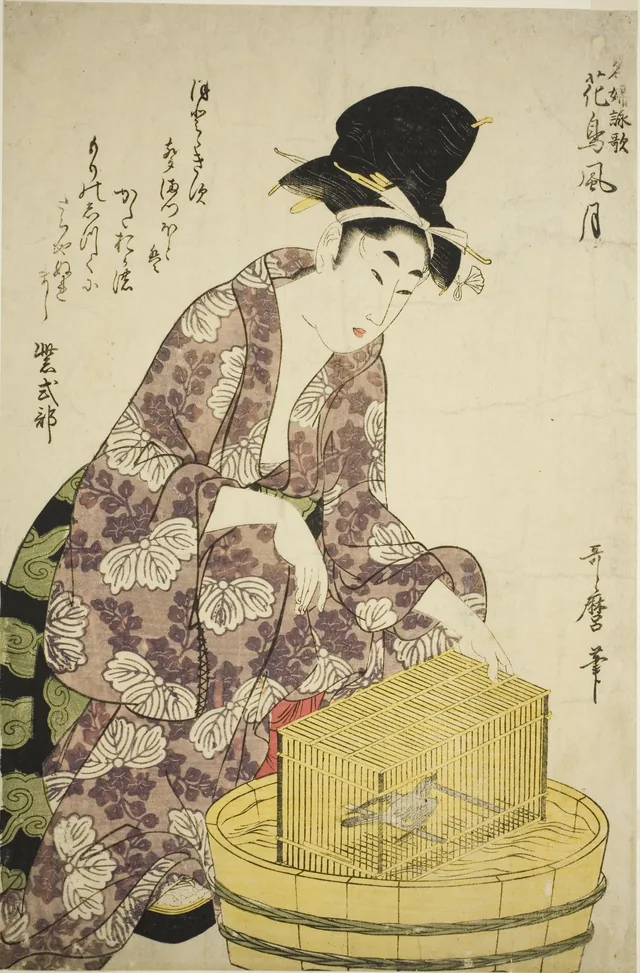
Murasaki Shikibu: Bird, from the series "Famous Women and Their Poems on Flowers, Birds, Wind, and Moon (Meifu eika kacho fugetsu)", Kitagawa Utamaro

Murasaki Shikibu: Bird, from the series "Famous Women and Their Poems on Flowers, Birds, Wind, and Moon (Meifu eika kacho fugetsu)", c. 1805.

Kitagawa Utamaro (Japanese), colour woodcut on paper

Art Institute of Chicago, United States

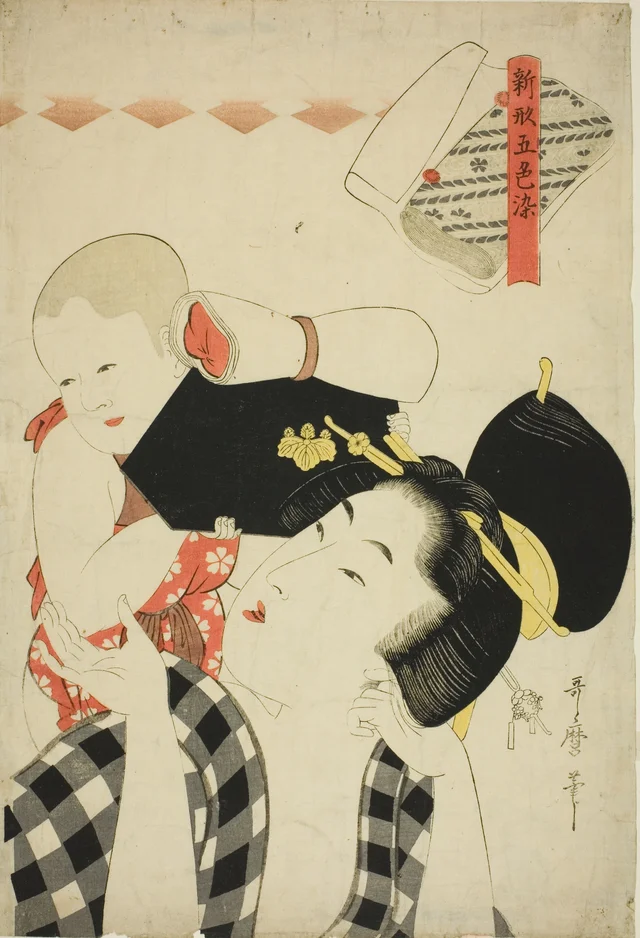
Mother and Child, from the series "New Patterns dyed in Five Colors (Shingata goshiki zome)", Kitagawa Utamaro

Mother and Child, from the series "New Patterns dyed in Five Colors (Shingata goshiki zome)", c. 1803.

Kitagawa Utamaro (Japanese), colour woodcut on paper

Art Institute of Chicago, United States

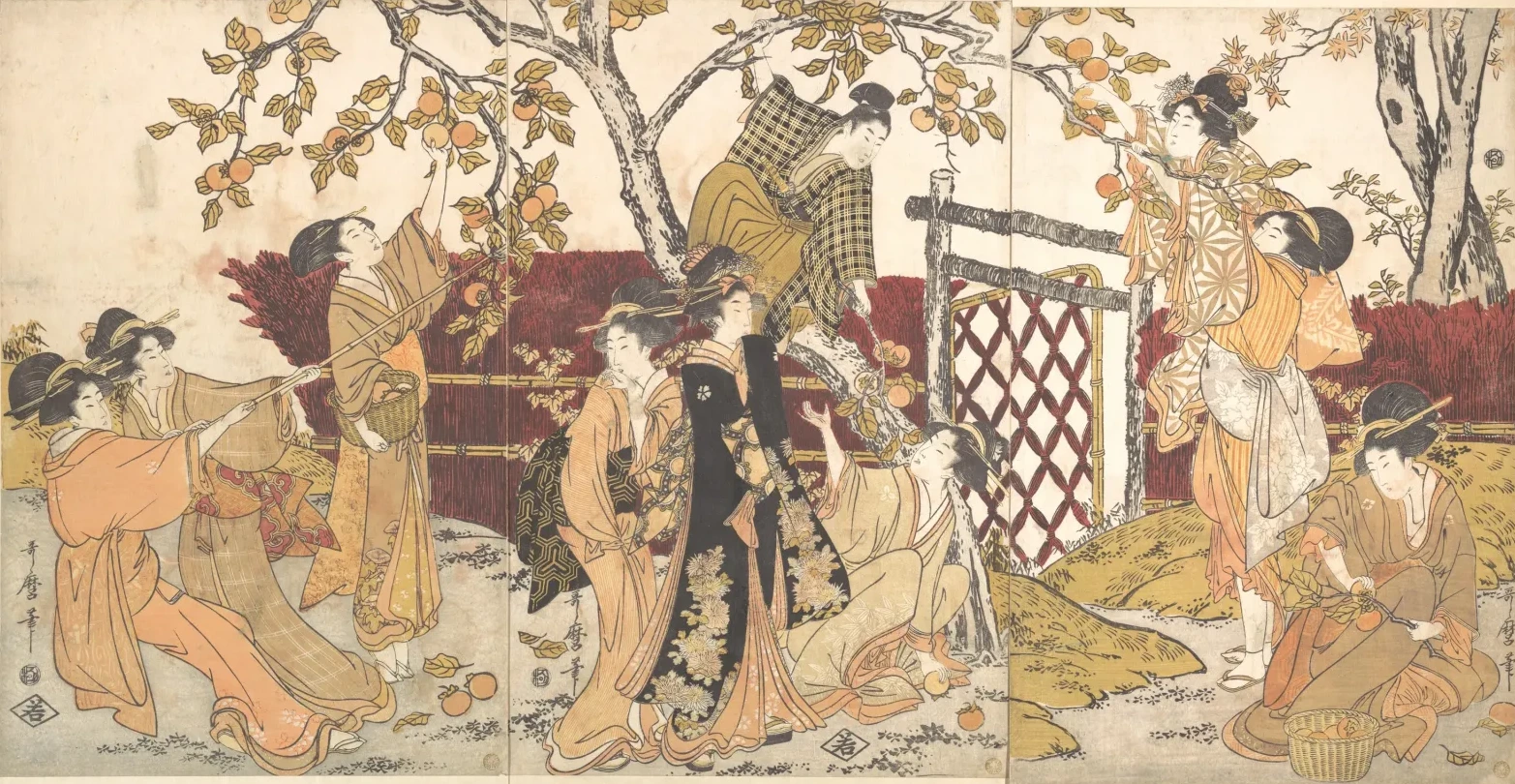
Picking Persimmons (Kaki-mogi), Kitagawa Utamaro

Picking Persimmons (Kaki-mogi), c. 1802–1804.

Kitagawa Utamaro (Japanese), colour woodcut on paper

Metropolitan Museum of Art, United States

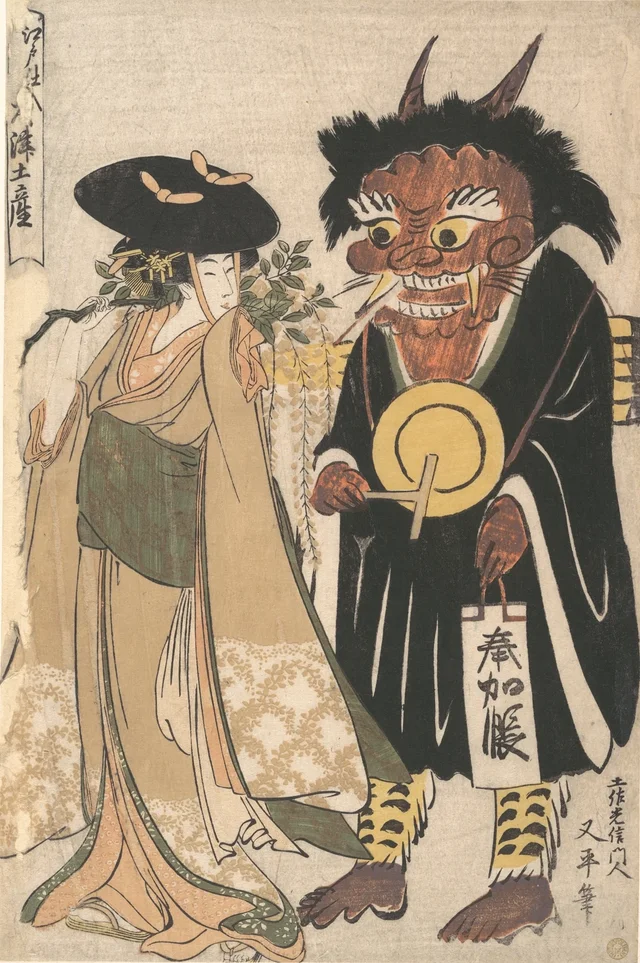
Wisteria Maiden with an Ōtsu Demon Dressed as an Itinerant Monk, from the series Souvenir Paintings from Ōtsu, Stocked in Edo (Edo Shi-ire Ōtsu Miyage), Kitagawa Utamaro

Wisteria Maiden with an Ōtsu Demon Dressed as an Itinerant Monk, from the series Souvenir Paintings from Ōtsu, Stocked in Edo (Edo Shi-ire Ōtsu Miyage), c. 1802–1803.

Kitagawa Utamaro (Japanese), colour woodcut on paper

Metropolitan Museum of Art, United States

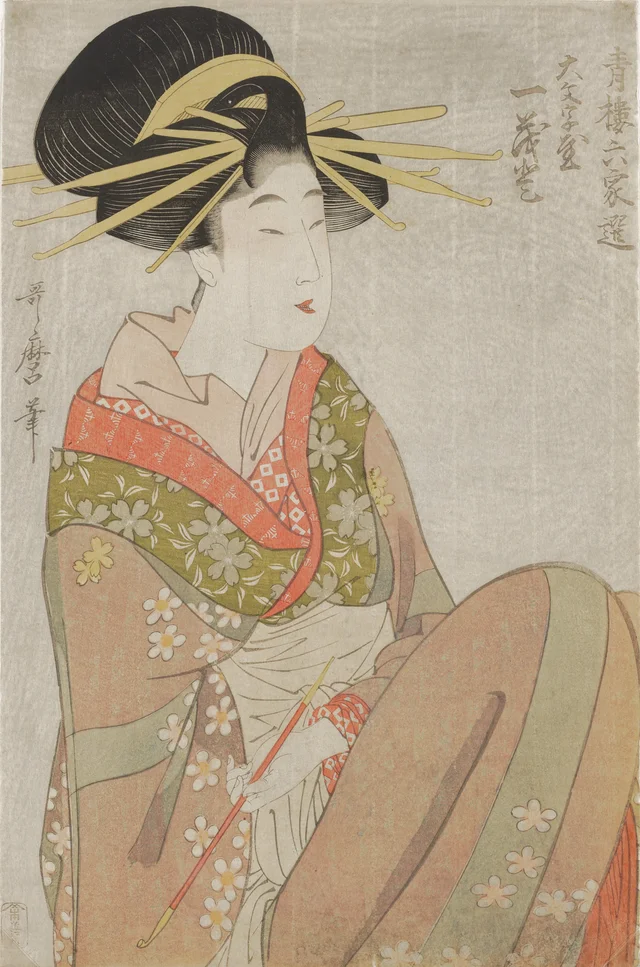
Courtesan Hitomoto of the Daimonjiya, Kitagawa Utamaro

Courtesan Hitomoto of the Daimonjiya, c. 1801–1802.

Kitagawa Utamaro (Japanese), colour woodcut on paper

Minneapolis Institute of Art, United States

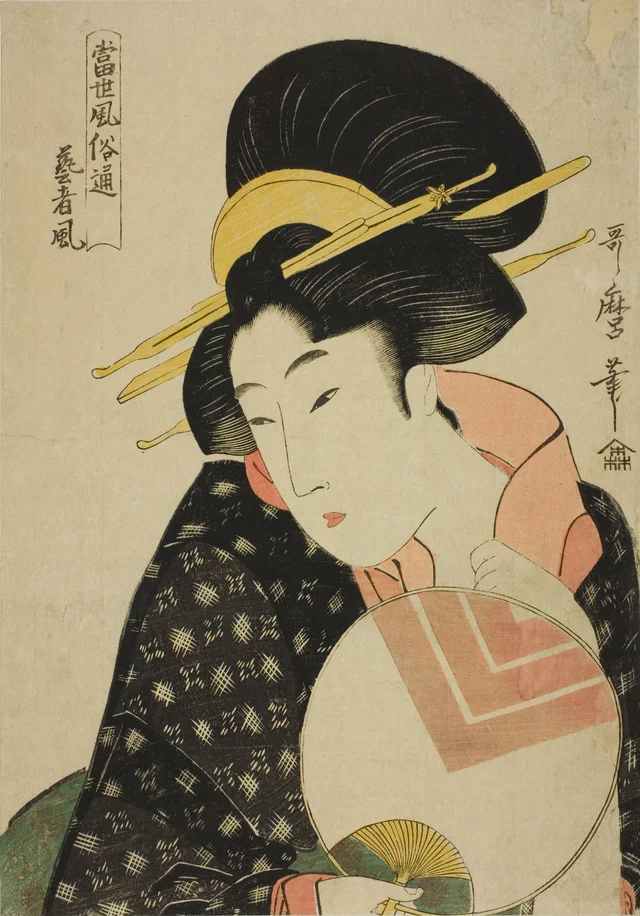
Geisha Style (geisha fū) from the series Guide to Contemporary Styles (Tōsei fūzoku tsū), Kitagawa Utamaro

Geisha Style (geisha fū) from the series Guide to Contemporary Styles (Tōsei fūzoku tsū), 1801.

Kitagawa Utamaro (Japanese), colour woodcut on paper

Art Institute of Chicago, United States

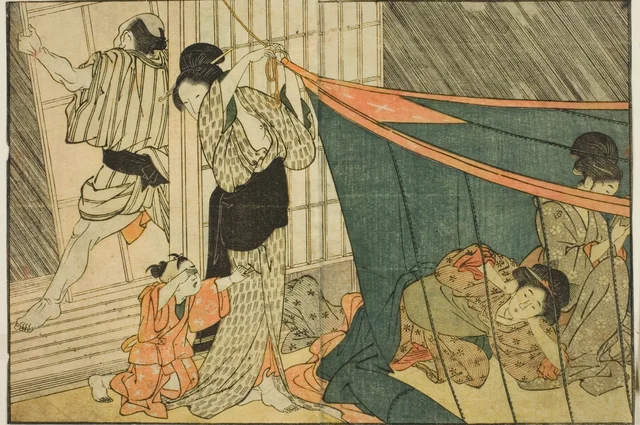
Women Inside a Mosquito Net During a Thunderstorm, from the illustrated book "Picture Book: Flowers of the Four Seasons (Ehon shiki no hana)," vol. 1, Kitagawa Utamaro

Women Inside a Mosquito Net During a Thunderstorm, from the illustrated book "Picture Book: Flowers of the Four Seasons (Ehon shiki no hana)," vol. 1, 1801.

Kitagawa Utamaro (Japanese), colour woodcut on paper

Art Institute of Chicago, United States

Yamanba and Kintarō: Ear Cleaning, Kitagawa Utamaro

Yamanba and Kintarō: Ear Cleaning, 19th century.

山姥と金太郎・耳かき (museum title)

Kitagawa Utamaro (Japanese), colour woodcut on paper

Tokyo National Museum, Japan
Fondness for Children, from the series Eight Views of Present-Day Favorites, Kitagawa Utamaro

Fondness for Children, from the series Eight Views of Present-Day Favorites, 19th century.

當世好物八景・子供好 (museum title)

Kitagawa Utamaro (Japanese), colour woodcut on paper

Tokyo National Museum, Japan

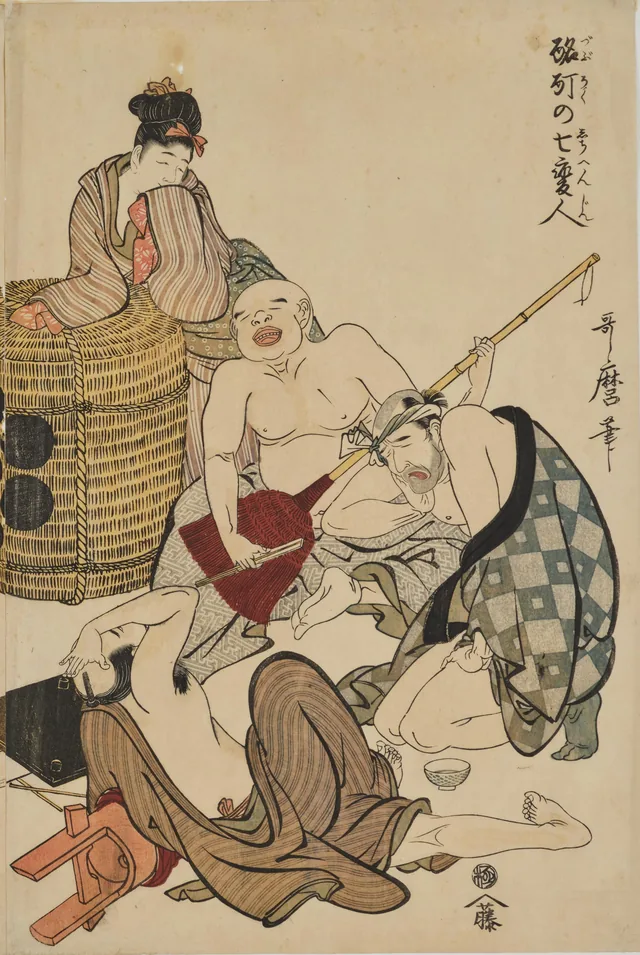
Seven Eccentric Drunk Men, sheet of a triptych, Kitagawa Utamaro

Seven Eccentric Drunk Men, sheet of a triptych, 19th century.

酩酊の七変人 (museum title)

Kitagawa Utamaro (Japanese), colour woodcut on paper

Tokyo National Museum, Japan

Goldfish, from the series "Elegant Comparison of Little Treasures (Furyu kodakara awase)", Kitagawa Utamaro

Goldfish, from the series "Elegant Comparison of Little Treasures (Furyu kodakara awase)", c. 1802.

Kitagawa Utamaro (Japanese), colour woodcut on paper

Art Institute of Chicago, United States
Chrysanthemum and Narcissus, from the illustrated book "Picture Book: Flowers of the Four Seasons (Ehon shiki no hana)," vol. 2, Kitagawa Utamaro

Chrysanthemum and Narcissus, from the illustrated book "Picture Book: Flowers of the Four Seasons (Ehon shiki no hana)," vol. 2, 1801.

Kitagawa Utamaro (Japanese), colour woodcut on paper

Art Institute of Chicago, United States
Likes Enjoying Herself (Tanoshimizuki), from the series "Eight Views of Favorite Things of Today (Tosei kobutsu hakkei)", Kitagawa Utamaro

Likes Enjoying Herself (Tanoshimizuki), from the series "Eight Views of Favorite Things of Today (Tosei kobutsu hakkei)", c. 1801.

Kitagawa Utamaro (Japanese), colour woodcut on paper

Art Institute of Chicago, United States
"Bathing" from the Series "Kintarō and a Mountain Witch", Kitagawa Utamaro

"Bathing" from the Series "Kintarō and a Mountain Witch", 19th century.

山姥と金太郎・行水 (museum title)

Kitagawa Utamaro (Japanese), colour woodcut on paper

Tokyo National Museum, Japan

Yamanba and Kintarō: Kissing, Kitagawa Utamaro

Yamanba and Kintarō: Kissing, 19th century.

山姥と金太郎・接吻 (museum title)

Kitagawa Utamaro (Japanese), colour woodcut on paper

Tokyo National Museum, Japan

Mother, Child and Shop Boy, Kitagawa Utamaro

Mother, Child and Shop Boy, 19th century.

母子と丁稚 (museum title)

Kitagawa Utamaro (Japanese), colour woodcut on paper

Tokyo National Museum, Japan

“The Precocious Girl”from the Series "Variegations of Blooms According to their Speech", Kitagawa Utamaro

“The Precocious Girl”from the Series "Variegations of Blooms According to their Speech", 19th century.

咲分ヶ言葉の花・おちやつぴい (museum title)

Kitagawa Utamaro (Japanese), colour woodcut on paper

Tokyo National Museum, Japan

The Dance of the Beach Maidens, Kitagawa Utamaro

The Dance of the Beach Maidens, 19th century.

Kitagawa Utamaro (Japanese), colour woodcut on paper

Metropolitan Museum of Art, United States
The Seventh Hour of the Night, Kitagawa Utamaro

The Seventh Hour of the Night, c. 1800.

Kitagawa Utamaro (Japanese), colour woodcut on paper

Metropolitan Museum of Art, United States
The Courtesans Kasugano and Utahama of Tamaya, from Courtesans of the Pleasure Quarters in Double Mirrors, Kitagawa Utamaro

The Courtesans Kasugano and Utahama of Tamaya, from Courtesans of the Pleasure Quarters in Double Mirrors, c. 1800.

Kitagawa Utamaro (Japanese), colour woodcut on paper

Cleveland Museum of Art, United States

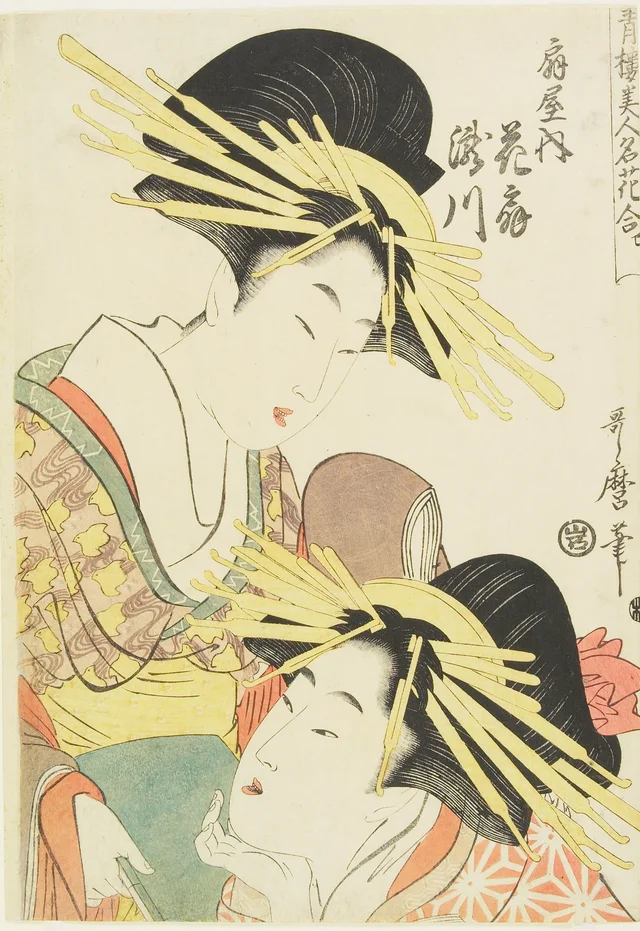
The Courtesans Hanaōgi and Takigawa of the Ōgiya House, Kitagawa Utamaro

The Courtesans Hanaōgi and Takigawa of the Ōgiya House, c. 1805.

Kitagawa Utamaro (Japanese), colour woodcut on paper

Minneapolis Institute of Art, United States
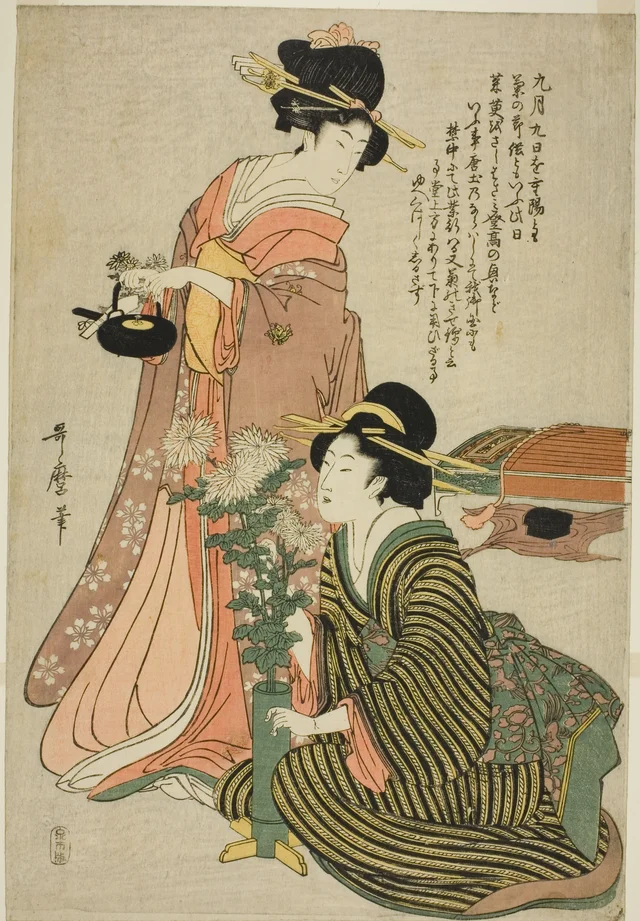
The Chrysanthemum Festival in the Ninth Month, from an untitled pentaptych of the five festivals, Kitagawa Utamaro

The Chrysanthemum Festival in the Ninth Month, from an untitled pentaptych of the five festivals, c. 1803.

Kitagawa Utamaro (Japanese), colour woodcut on paper

Art Institute of Chicago, United States
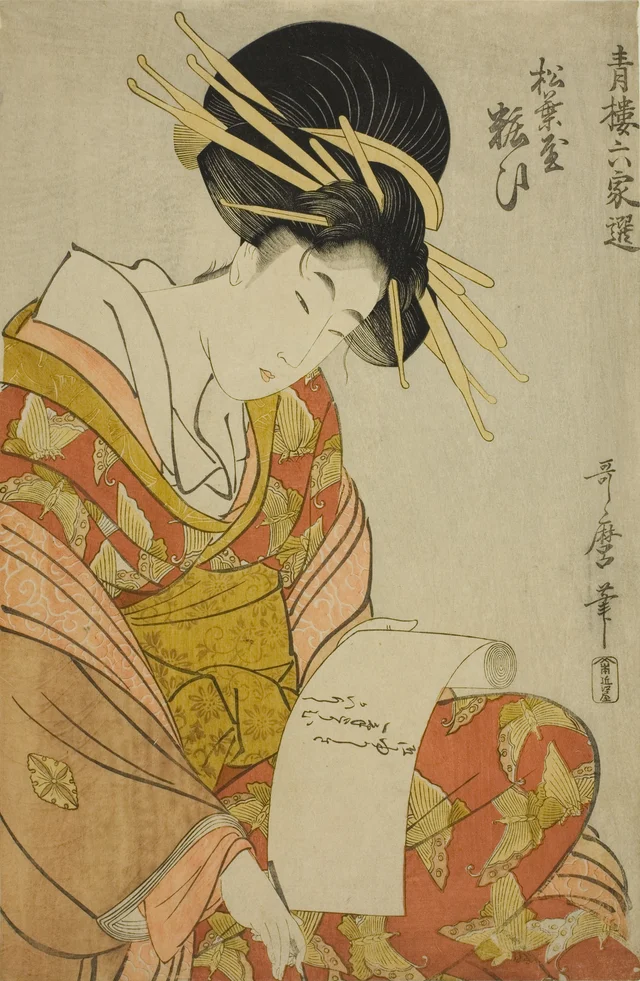
Yosooi of the Matsubaya, from the series Selections from Six Houses in Yoshiwara (Seiro rokkasen) (Matsubaya Yosooi), Kitagawa Utamaro

Yosooi of the Matsubaya, from the series Selections from Six Houses in Yoshiwara (Seiro rokkasen) (Matsubaya Yosooi), c. 1801.

Kitagawa Utamaro (Japanese), colour woodcut on paper

Art Institute of Chicago, United States
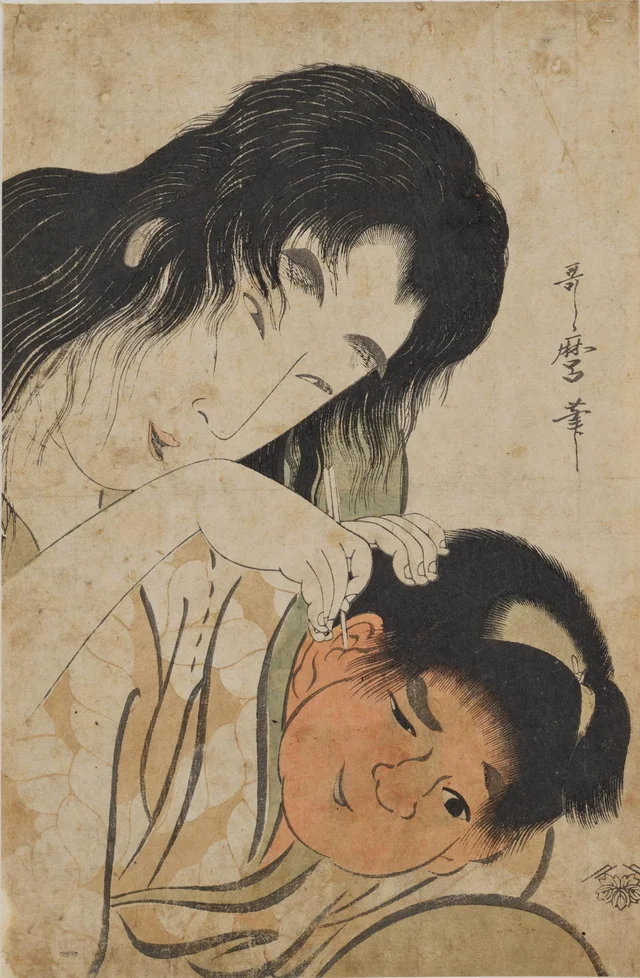
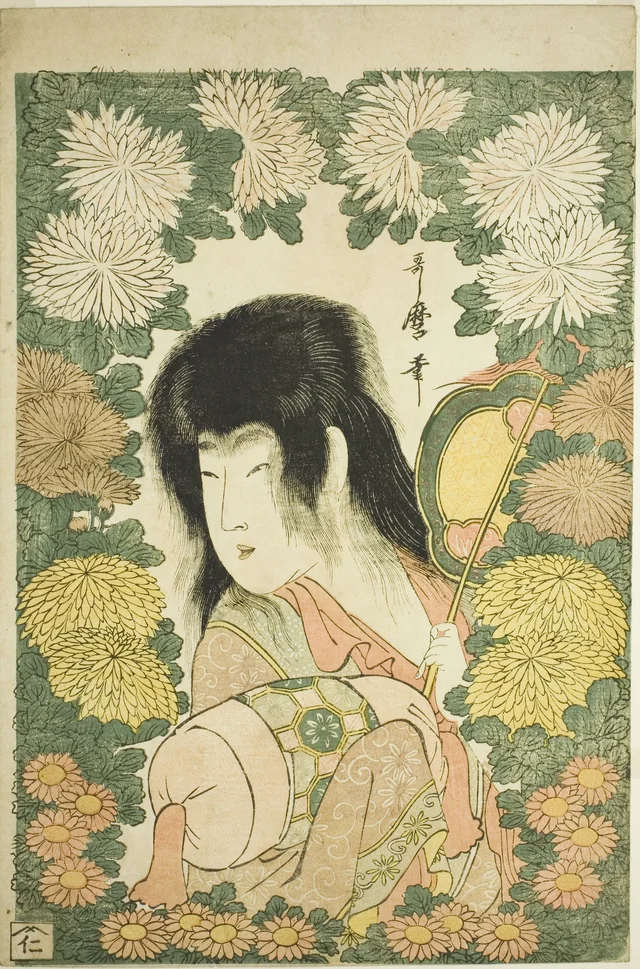
Chrysanthemum Boy, Kitagawa Utamaro

Chrysanthemum Boy, c. 1801.

Kitagawa Utamaro (Japanese), colour woodcut on paper

Art Institute of Chicago, United States

Stone Bridge, Kitagawa Utamaro

Stone Bridge, c. 1801.

Kitagawa Utamaro (Japanese), colour woodcut on paper

Art Institute of Chicago, United States

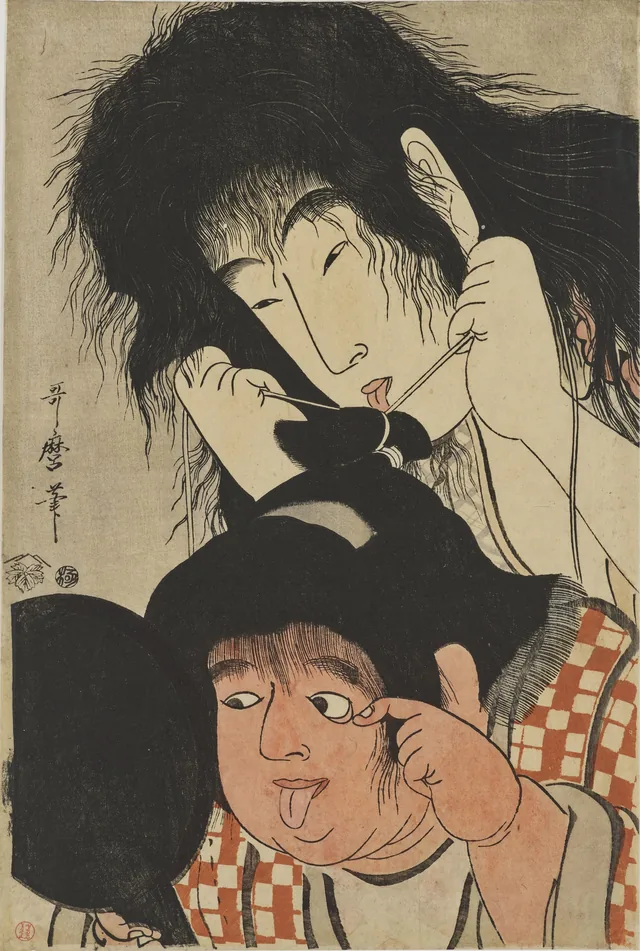
"Blackening Teeth" from the Series "Kintarō and a Mountain Witch", Kitagawa Utamaro

"Blackening Teeth" from the Series "Kintarō and a Mountain Witch", 19th century.

山姥と金太郎・鉄漿 (museum title)

Kitagawa Utamaro (Japanese), colour woodcut on paper

Tokyo National Museum, Japan
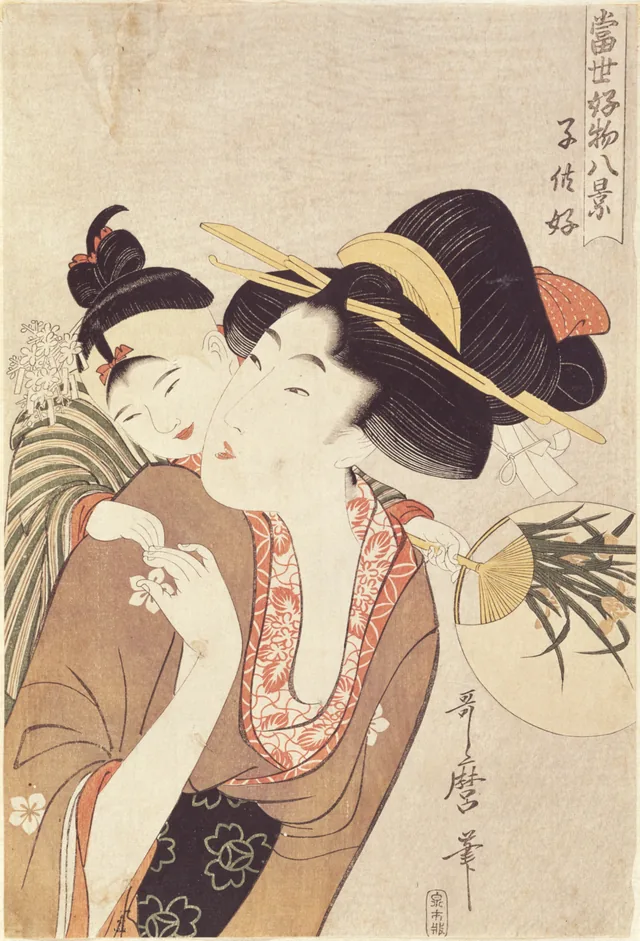
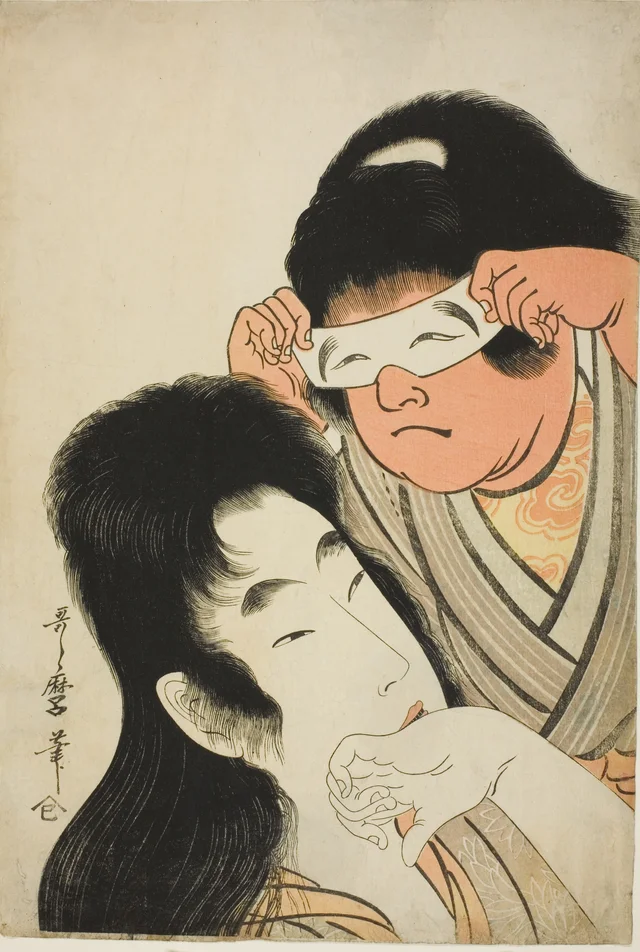
Yamanba and Kintarō: Making Faces, Kitagawa Utamaro

Yamanba and Kintarō: Making Faces, 19th century.

山姥と金太郎・あかんべえ (museum title)

Kitagawa Utamaro (Japanese), colour woodcut on paper

Tokyo National Museum, Japan
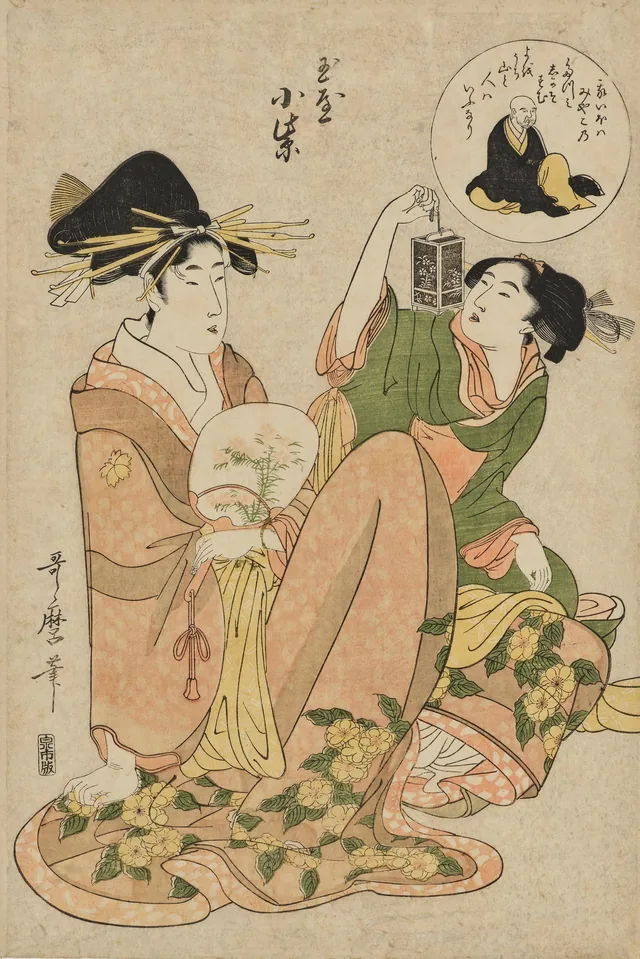
"Komurasaki of the Tamaya" from the Series "Courtesans for the Six Poetic Sages", Kitagawa Utamaro

"Komurasaki of the Tamaya" from the Series "Courtesans for the Six Poetic Sages", 19th century.

遊女見立六歌仙・玉屋小紫 喜撰法師 (museum title)

Kitagawa Utamaro (Japanese), colour woodcut on paper

Tokyo National Museum, Japan
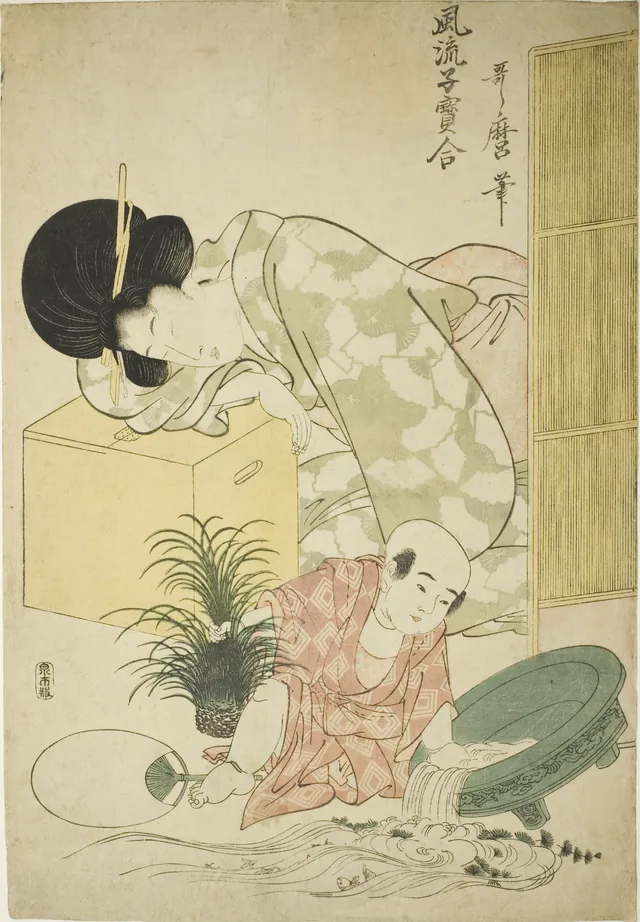
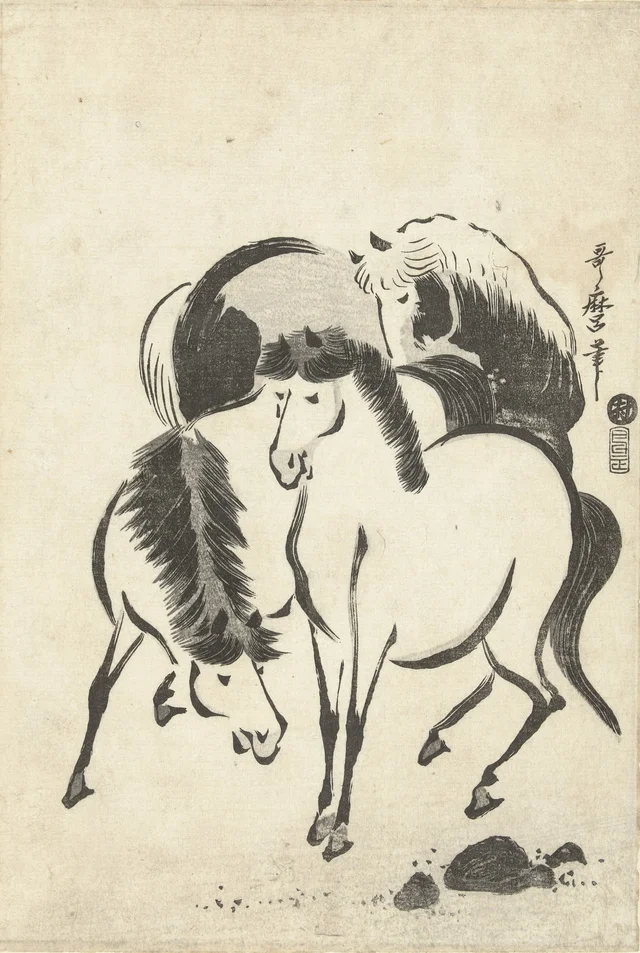
Drie paarden, Kitagawa Utamaro

Drie paarden, 1800.

Kitagawa Utamaro (Japanese), colour woodcut on paper

Rijksmuseum, Netherlands

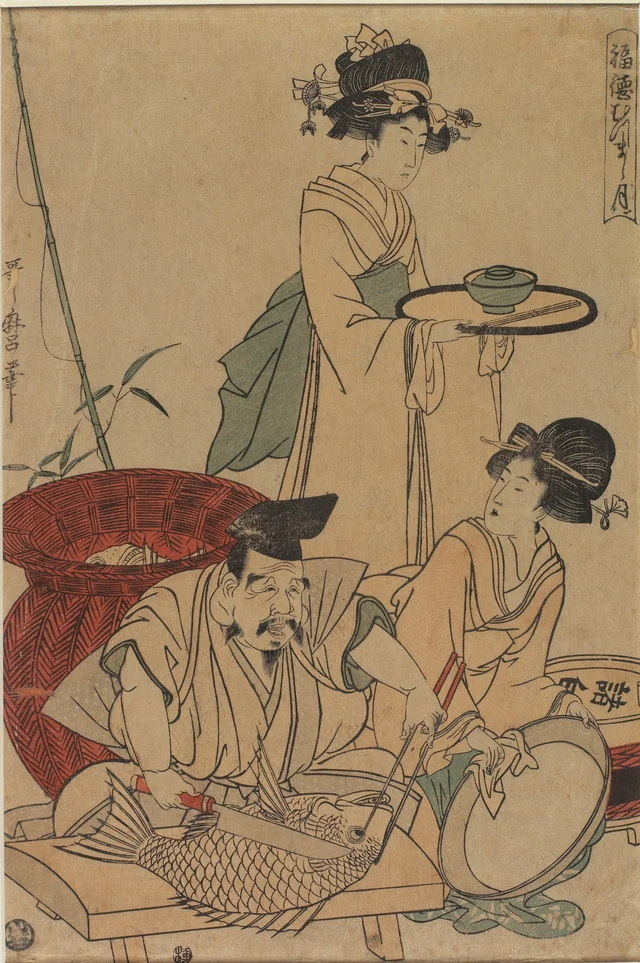
Ebisu God Cooking a Red Snapper, Kitagawa Utamaro

Ebisu God Cooking a Red Snapper, 19th century.

Kitagawa Utamaro (Japanese), colour woodcut on paper

Minneapolis Institute of Art, United States

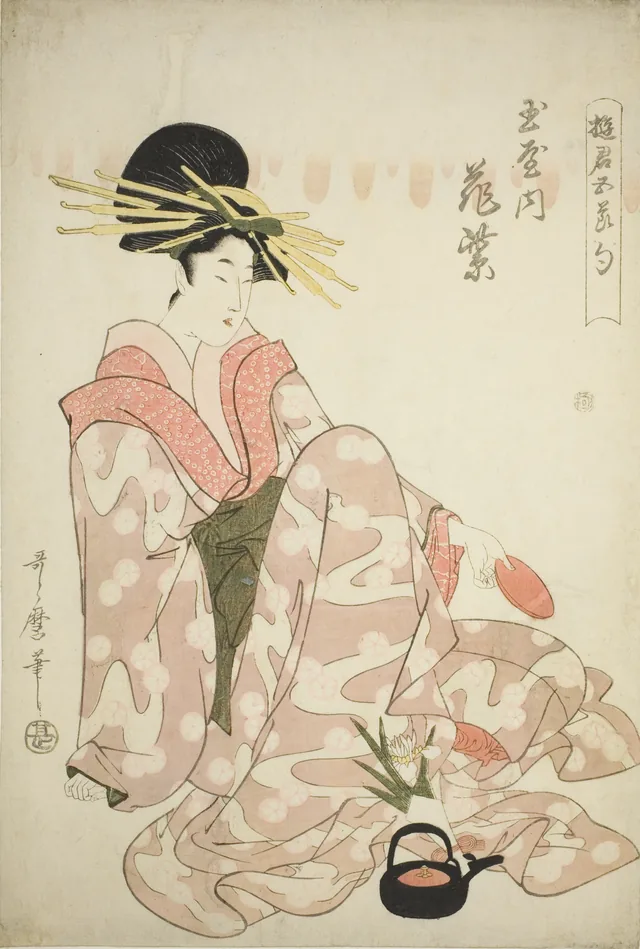
The Courtesan Hanamurasaki of the Tamaya, from the series "Courtesans of the Five Festivals (Yukun gosekku)", Kitagawa Utamaro

The Courtesan Hanamurasaki of the Tamaya, from the series "Courtesans of the Five Festivals (Yukun gosekku)", c. 1805.

Kitagawa Utamaro (Japanese), colour woodcut on paper

Art Institute of Chicago, United States
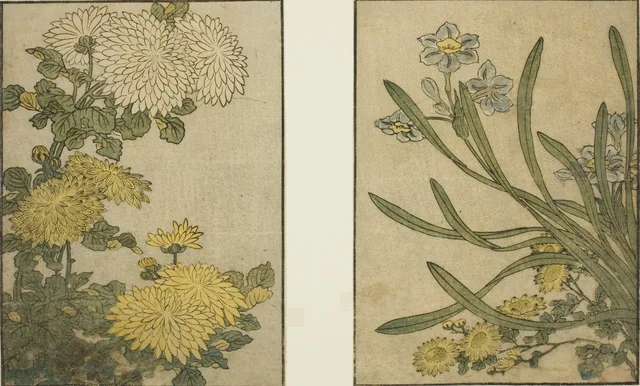
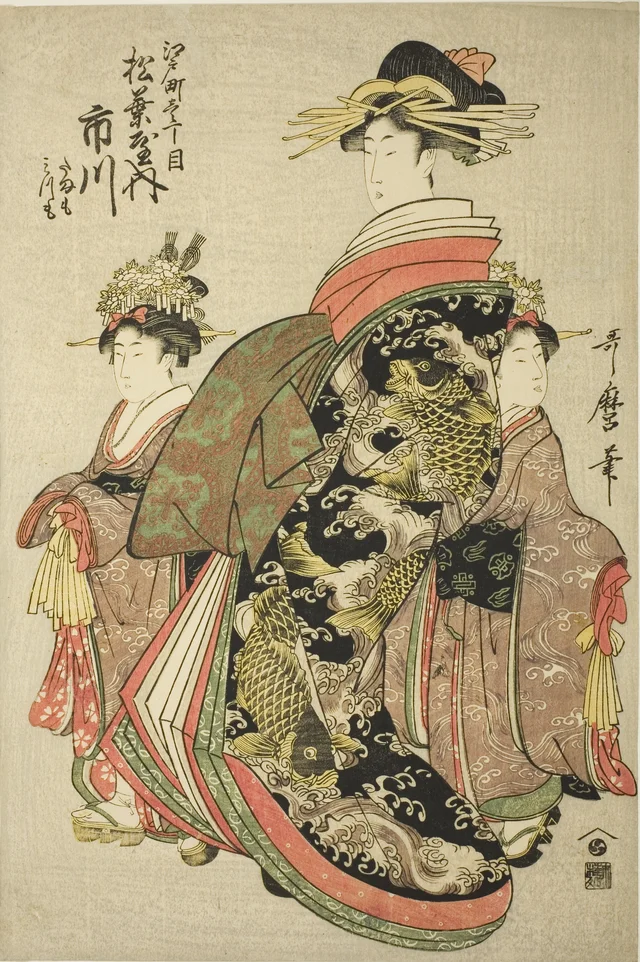
The Courtesan Ichikawa of the Matsubaya in Edo-machi Itchome, with her Child Attendants Tamamo and Mitsumo, Kitagawa Utamaro

The Courtesan Ichikawa of the Matsubaya in Edo-machi Itchome, with her Child Attendants Tamamo and Mitsumo, c. 1803.

Kitagawa Utamaro (Japanese), colour woodcut on paper

Art Institute of Chicago, United States
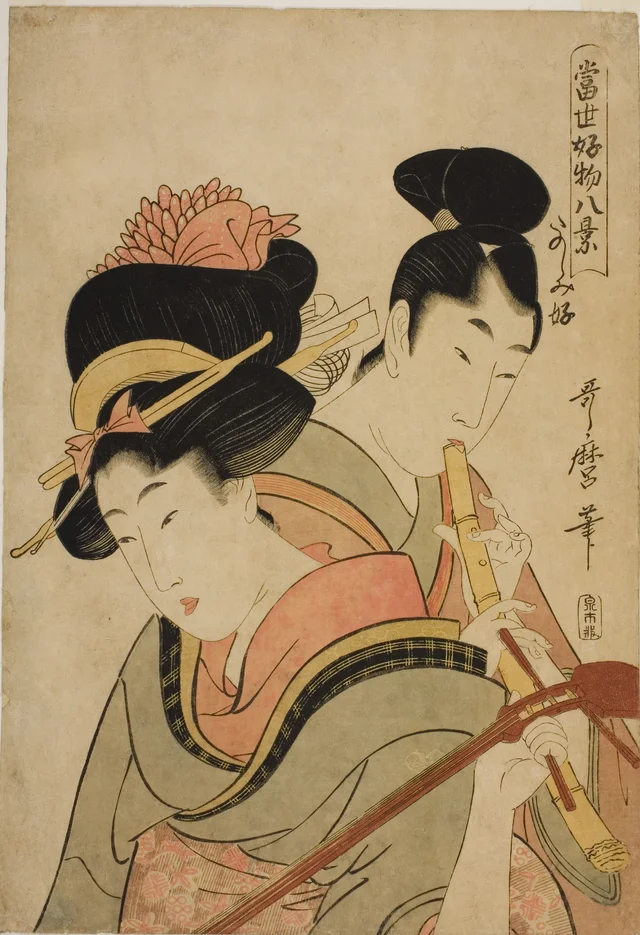
Yamauba with Kintaro Holding a Toy Mask, Kitagawa Utamaro

Yamauba with Kintaro Holding a Toy Mask, c. 1801.

Kitagawa Utamaro (Japanese), colour woodcut on paper

Art Institute of Chicago, United States
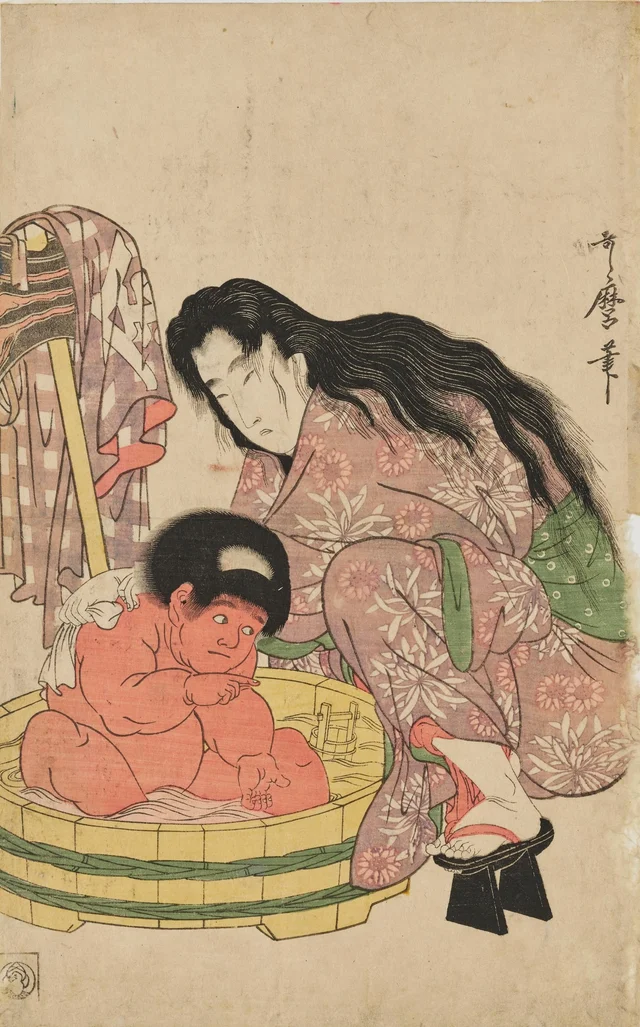
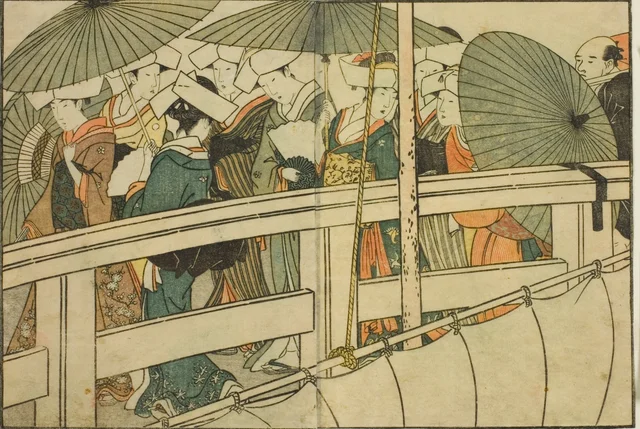
Crossing a Bridge in Summer, from the illustrated book "Picture Book: Flowers of the Four Seasons (Ehon shiki no hana)," vol. 1, Kitagawa Utamaro

Crossing a Bridge in Summer, from the illustrated book "Picture Book: Flowers of the Four Seasons (Ehon shiki no hana)," vol. 1, 1801.

Kitagawa Utamaro (Japanese), colour woodcut on paper

Art Institute of Chicago, United States

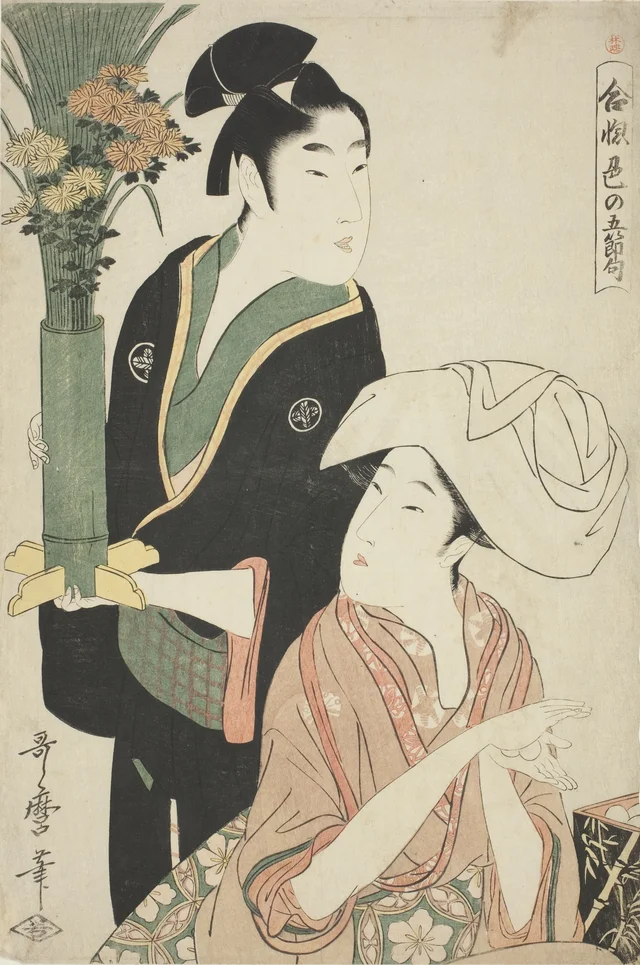
The Ninth Month, from the series Five Amorous Festivals of Love (Aibore iro no gosekku), Kitagawa Utamaro

The Ninth Month, from the series Five Amorous Festivals of Love (Aibore iro no gosekku), 1801.

Kitagawa Utamaro (Japanese), colour woodcut on paper

Art Institute of Chicago, United States

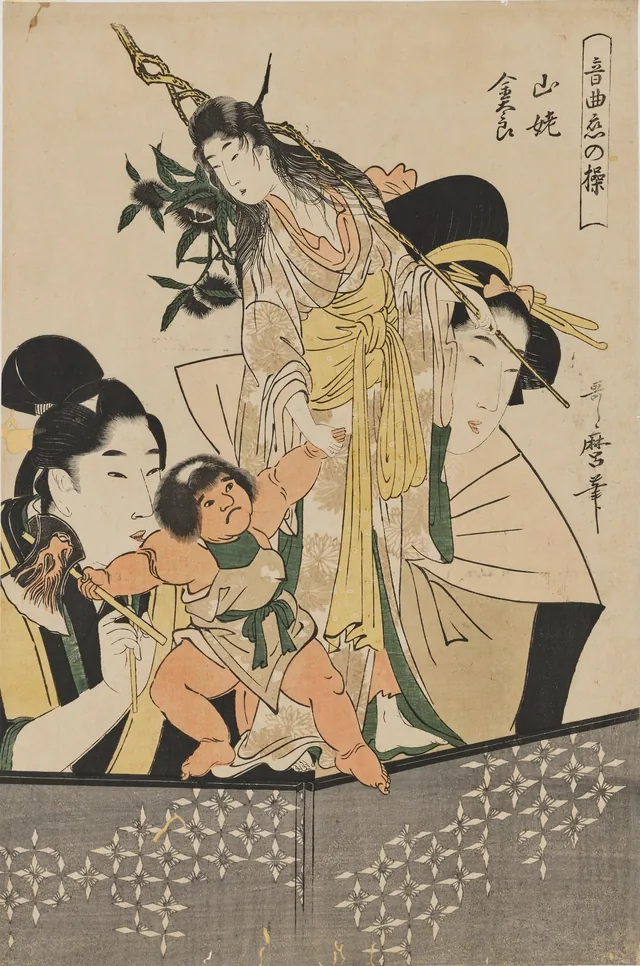
"Kintarō and a Mountain Witch ("Yamanba")" from the Series "Manipulations of Love with Musical Accompaniment", Kitagawa Utamaro

"Kintarō and a Mountain Witch ("Yamanba")" from the Series "Manipulations of Love with Musical Accompaniment", 19th century.

音曲恋の操・山姥、金太良 (museum title)

Kitagawa Utamaro (Japanese), colour woodcut on paper

Tokyo National Museum, Japan
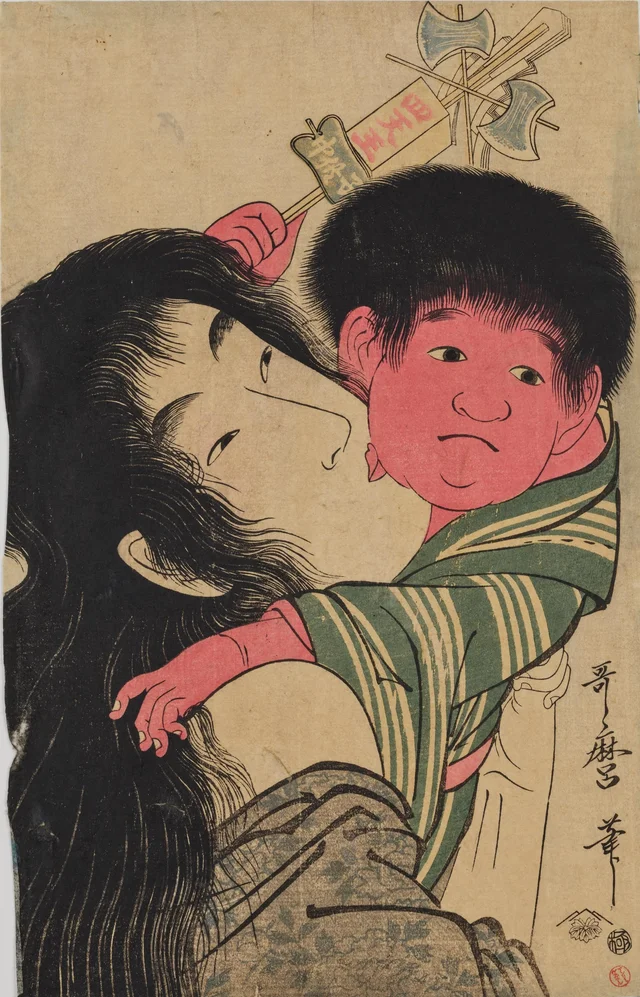
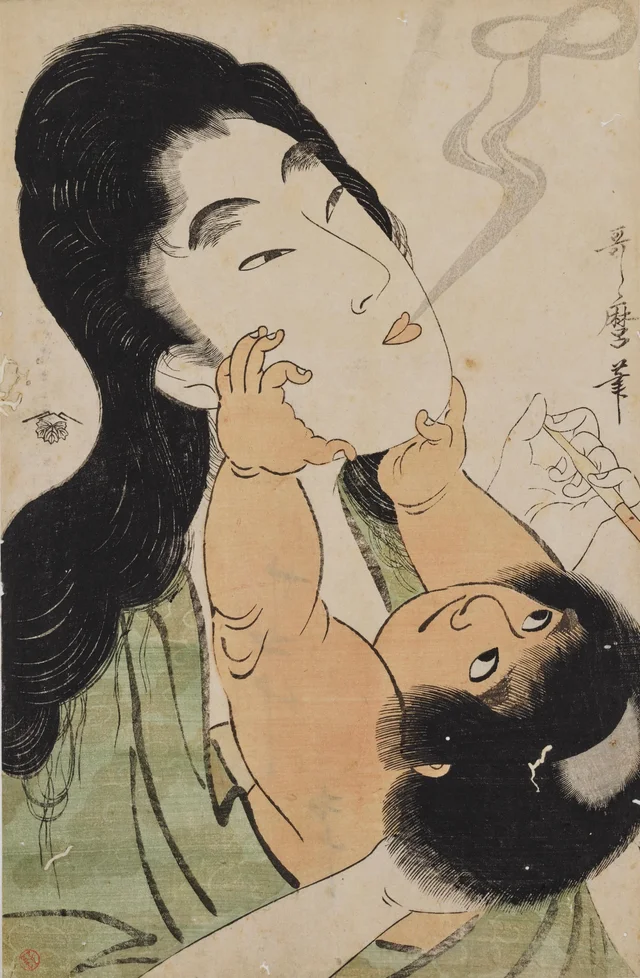
Yamanba and Kintarō: Tobacco Smoke, Kitagawa Utamaro

Yamanba and Kintarō: Tobacco Smoke, 19th century.

山姥と金太郎・煙草の煙 (museum title)

Kitagawa Utamaro (Japanese), colour woodcut on paper

Tokyo National Museum, Japan
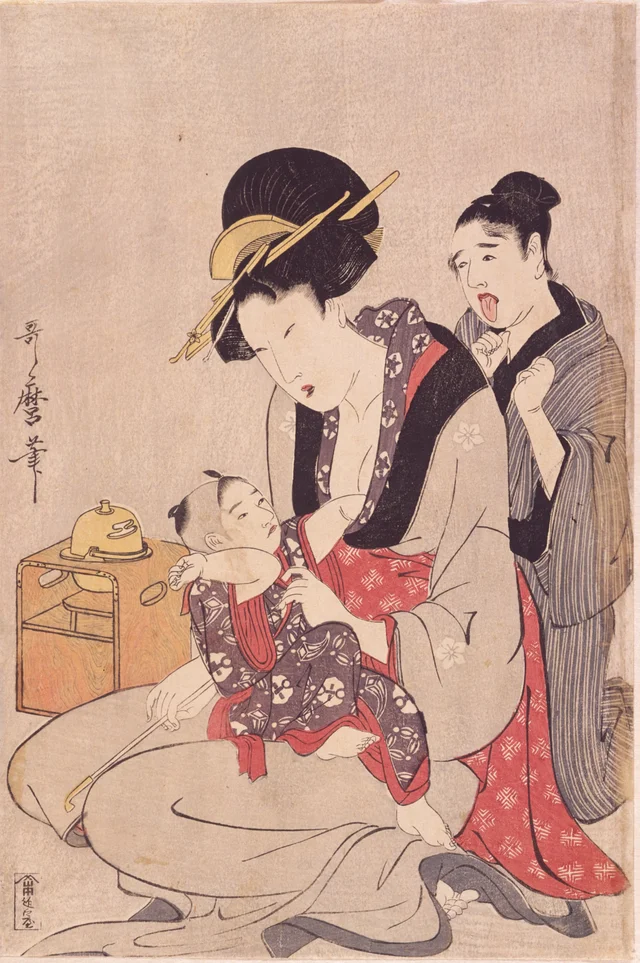
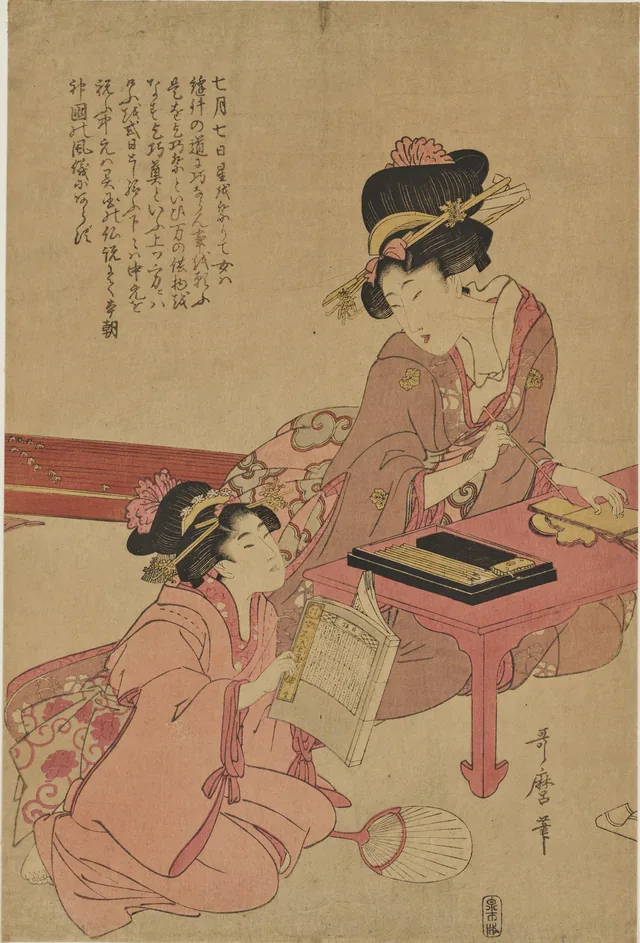
"Tanabata" from the Series "The Five Traditional Japanese Festivals", Kitagawa Utamaro

"Tanabata" from the Series "The Five Traditional Japanese Festivals", 19th century.

五節句・七夕 (museum title)

Kitagawa Utamaro (Japanese), colour woodcut on paper

Tokyo National Museum, Japan
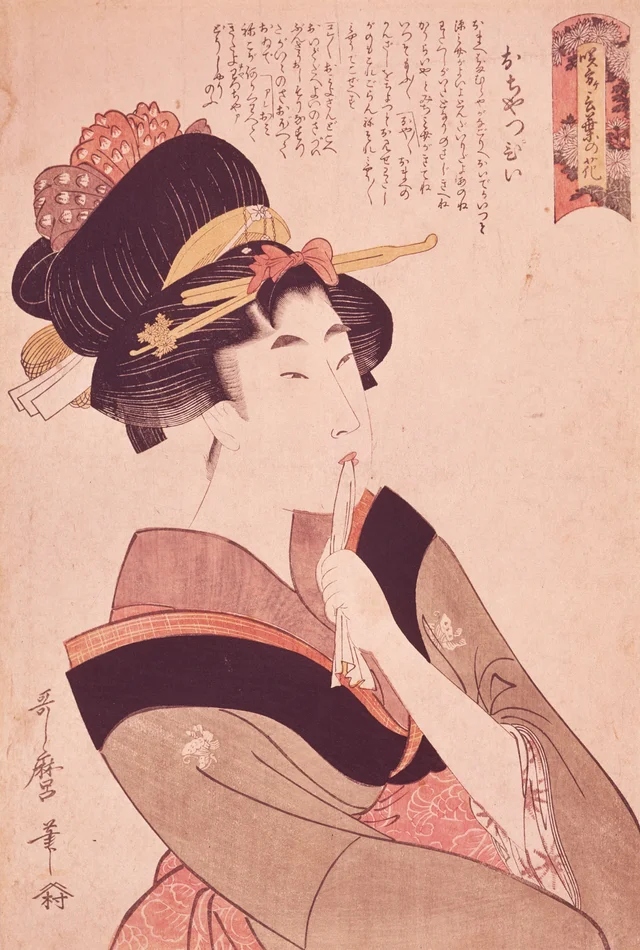
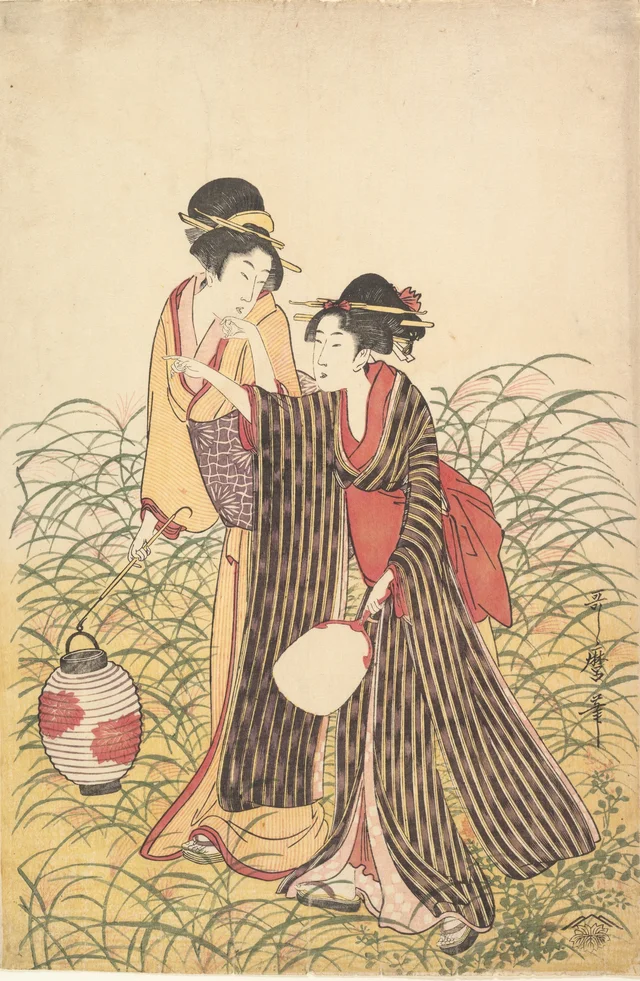
Elopers in Musashino, Kitagawa Utamaro

Elopers in Musashino, 19th century.

Kitagawa Utamaro (Japanese), colour woodcut on paper

Metropolitan Museum of Art, United States

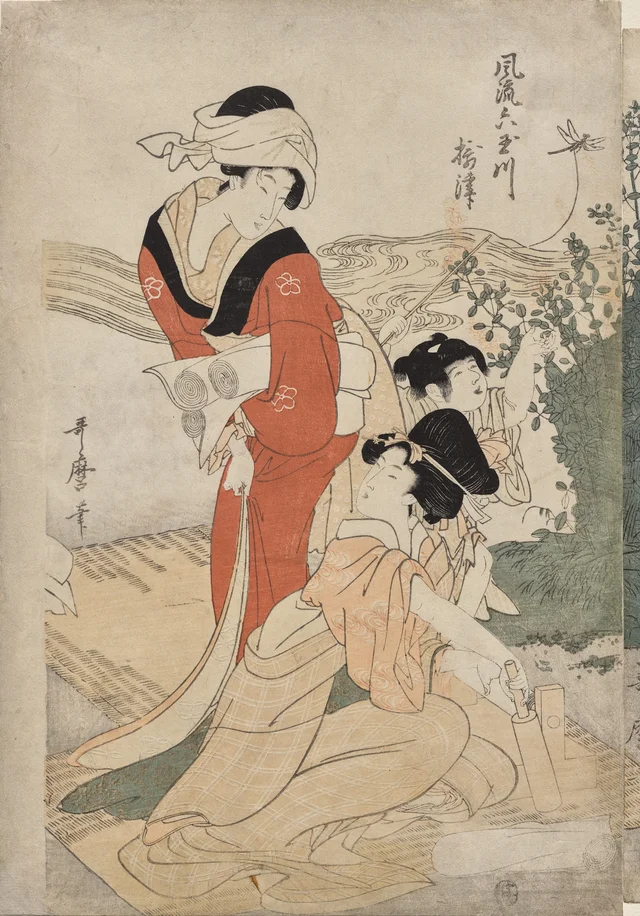
Musashi Province from the series Fashionable Six Jewel Rivers (Furyu Mu Tamagawa), Kitagawa Utamaro

Musashi Province from the series Fashionable Six Jewel Rivers (Furyu Mu Tamagawa), c. 1804.

Kitagawa Utamaro (Japanese), colour woodcut on paper

Cleveland Museum of Art, United States

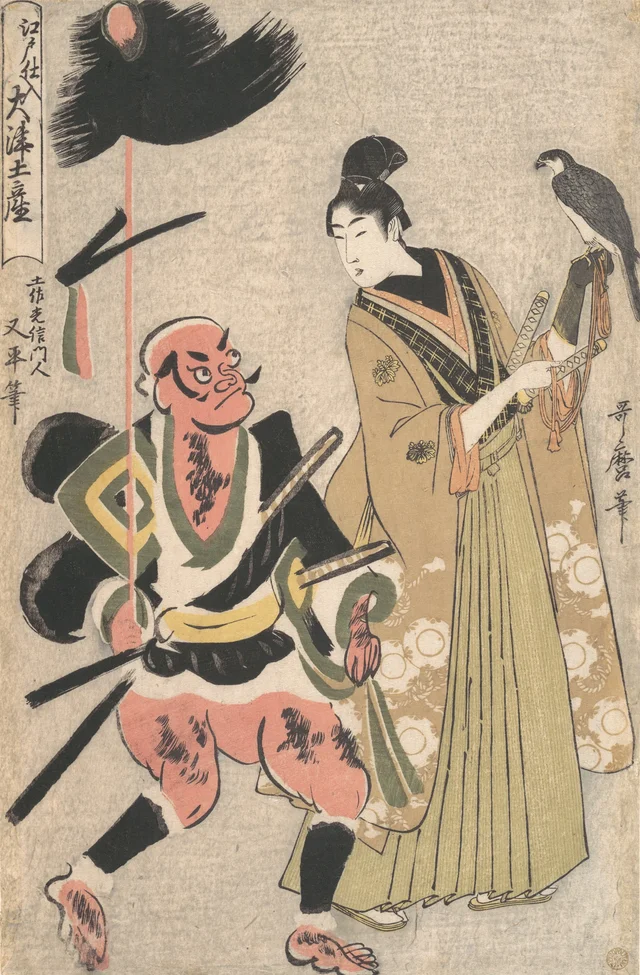
Foot-Soldier with a Spear and Hawk-Handler (Yari-mochi yakko to taka shō), from the series Souvenir Paintings from Ōtsu, Stocked in Edo (Edo Shi-ire Ōtsu Miyage), Kitagawa Utamaro

Foot-Soldier with a Spear and Hawk-Handler (Yari-mochi yakko to taka shō), from the series Souvenir Paintings from Ōtsu, Stocked in Edo (Edo Shi-ire Ōtsu Miyage), c. 1802–1803.

Kitagawa Utamaro (Japanese), colour woodcut on paper

Metropolitan Museum of Art, United States

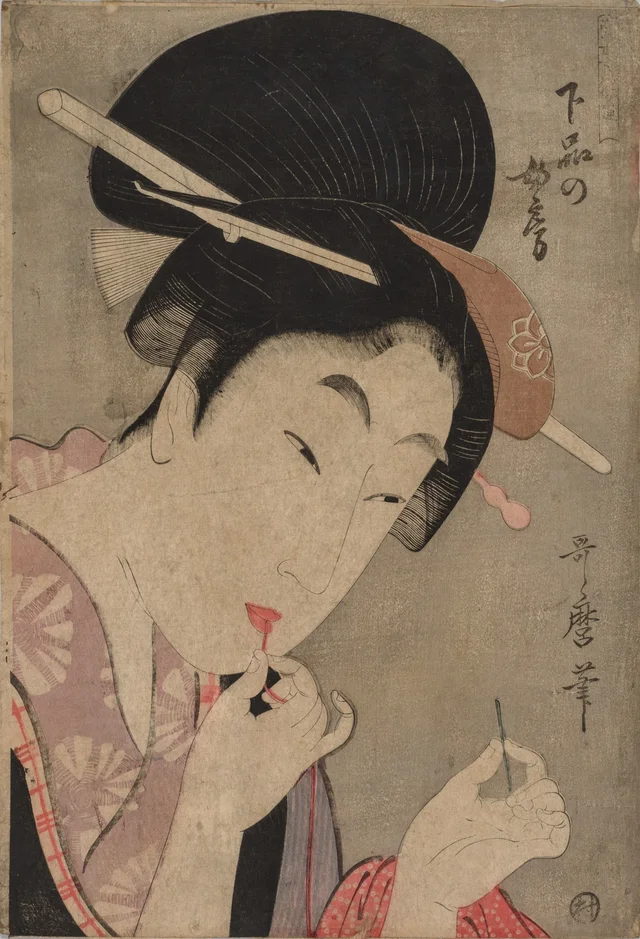
A Wife of the Lower Rank (Gebon no nyōbō), from the series A Guide to Women's Contemporary Styles (Tōsei onna fūzoku tsū), Kitagawa Utamaro

A Wife of the Lower Rank (Gebon no nyōbō), from the series A Guide to Women's Contemporary Styles (Tōsei onna fūzoku tsū), c. 1801–1802.

Kitagawa Utamaro (Japanese), colour woodcut on paper

Cleveland Museum of Art, United States

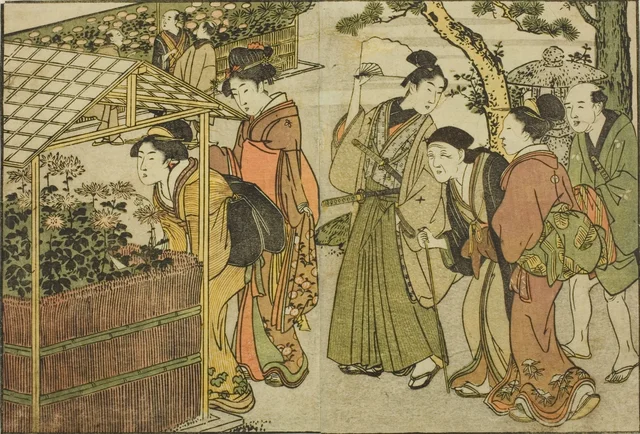
Display of Chrysanthemums, from the illustrated book "Picture Book: Flowers of the Four Seasons (Ehon shiki no hana)," vol. 2, Kitagawa Utamaro

Display of Chrysanthemums, from the illustrated book "Picture Book: Flowers of the Four Seasons (Ehon shiki no hana)," vol. 2, 1801.

Kitagawa Utamaro (Japanese), colour woodcut on paper

Art Institute of Chicago, United States

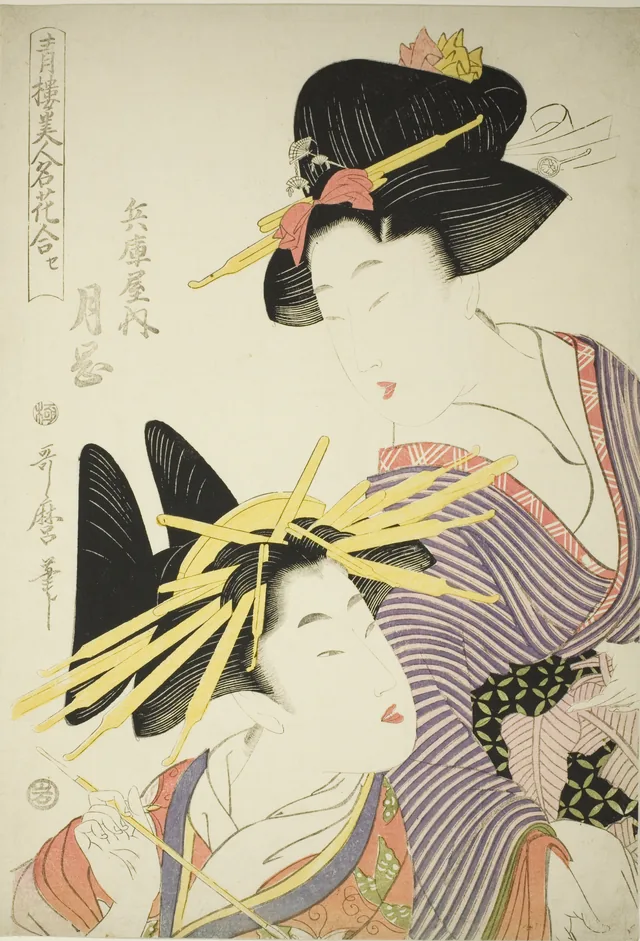
Tsukioka of the Hyogoya (Hyogoya uchi tsukioka), from the series "Seiro bijin meika awase", Kitagawa Utamaro

Tsukioka of the Hyogoya (Hyogoya uchi tsukioka), from the series "Seiro bijin meika awase", c. 1801.

Kitagawa Utamaro (Japanese), colour woodcut on paper

Art Institute of Chicago, United States

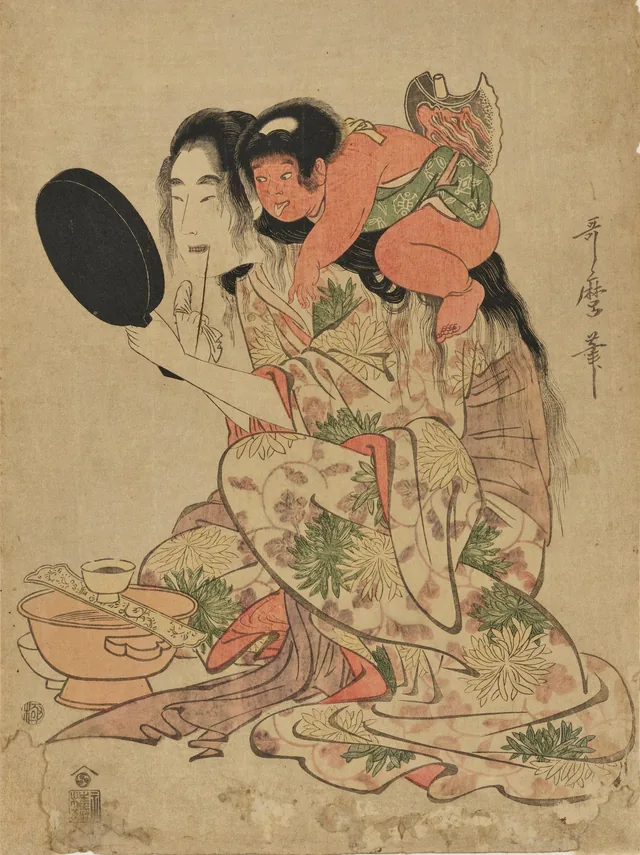
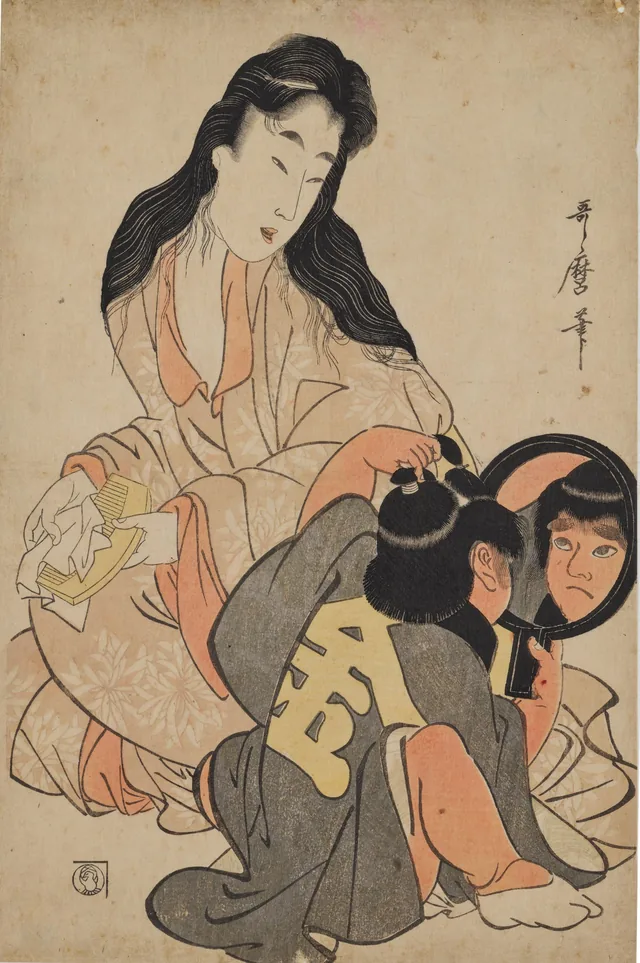
"Mirror" from the Series "Kintarō and a Mountain Witch", Kitagawa Utamaro

"Mirror" from the Series "Kintarō and a Mountain Witch", 19th century.

山姥と金太郎・鏡 (museum title)

Kitagawa Utamaro (Japanese), colour woodcut on paper

Tokyo National Museum, Japan
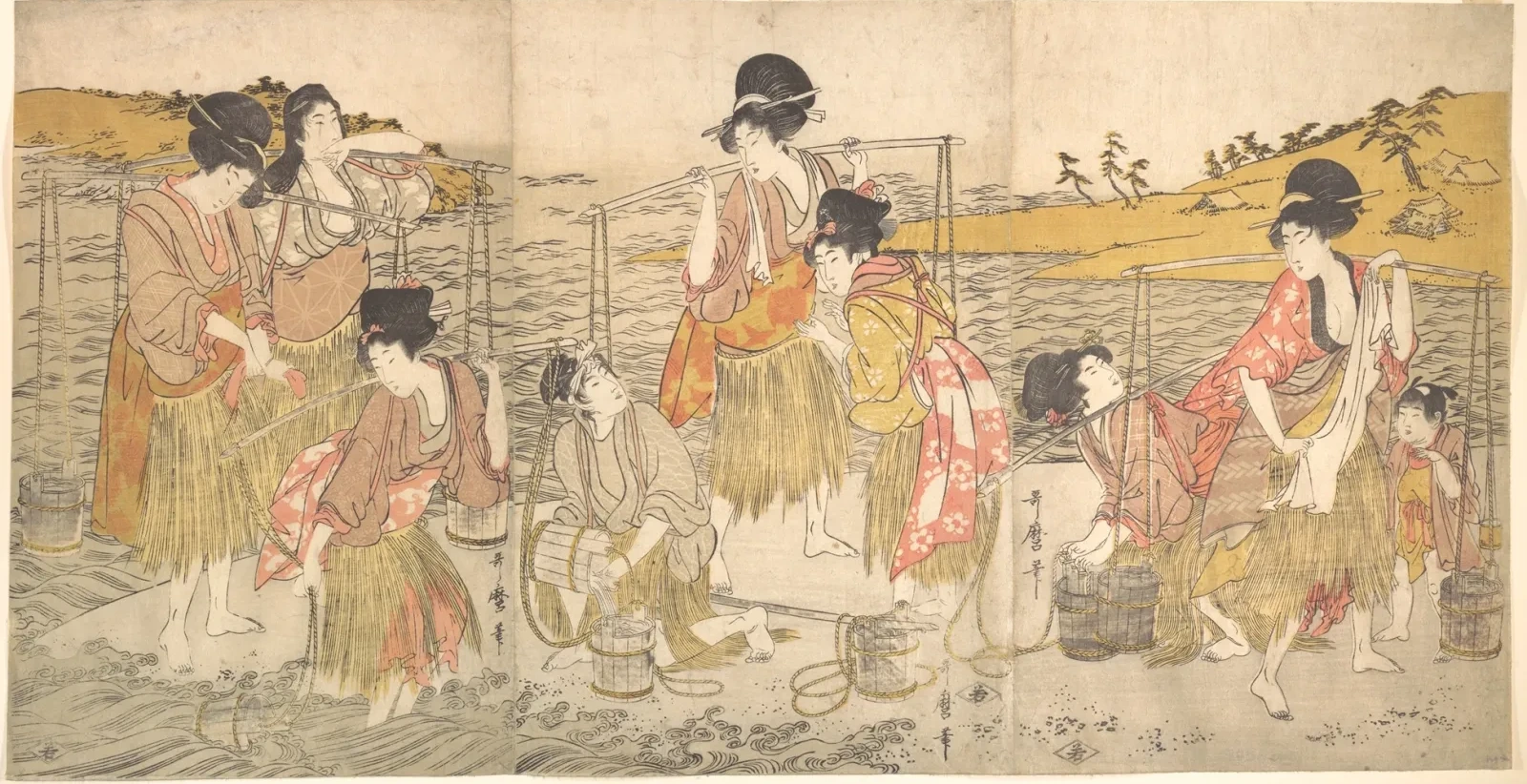
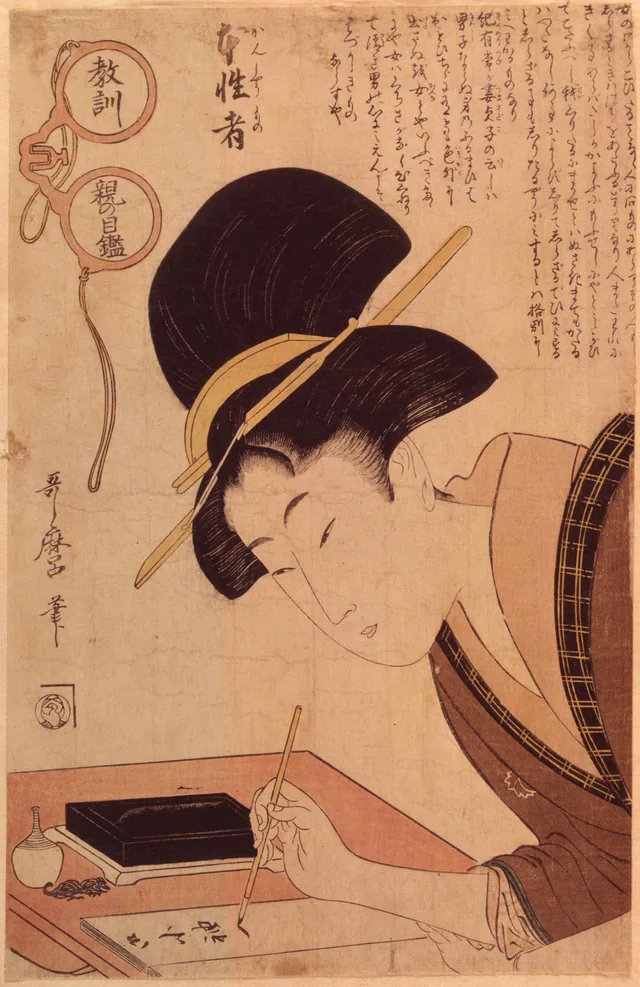
A Parent's Moralizing Spectacles: Human Nature, Kitagawa Utamaro

A Parent's Moralizing Spectacles: Human Nature, 19th century.

教訓親の目鑑・本性者 (museum title)

Kitagawa Utamaro (Japanese), colour woodcut on paper

Tokyo National Museum, Japan

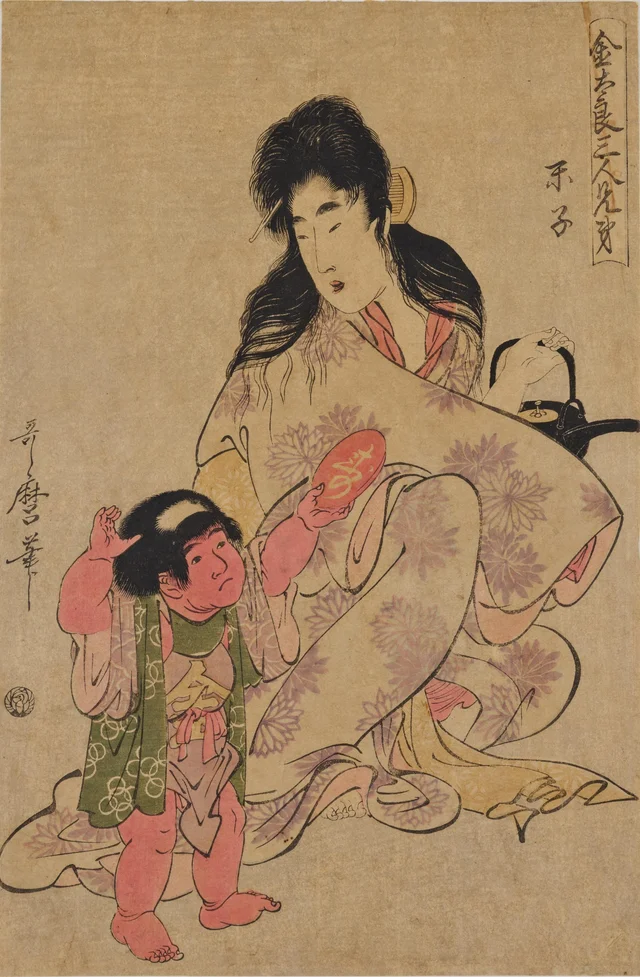
Kintarō's Siblings: Youngest Child, Kitagawa Utamaro

Kintarō's Siblings: Youngest Child, 19th century.

金太良三人兄弟・末子 (museum title)

Kitagawa Utamaro (Japanese), colour woodcut on paper

Tokyo National Museum, Japan

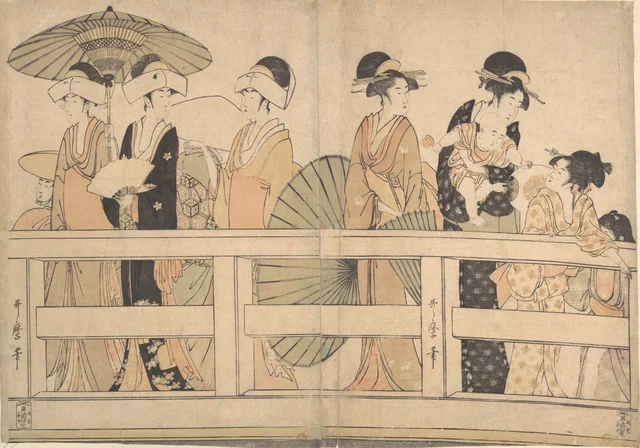
Enjoying the Cool Evening Breeze on and under the Bridge, Kitagawa Utamaro

Enjoying the Cool Evening Breeze on and under the Bridge, c. 1800.

Kitagawa Utamaro (Japanese), colour woodcut on paper

Metropolitan Museum of Art, United States

Works by Kitagawa Utamaro (喜多川歌麿, c. 1753-1806), in the public domain: his woodblock prints, from half-length portraits of women (ōkubi-e) to scenes of life in Edo, and pages from his illustrated books of insects, birds and shells, published online by the museums that hold them, each linked to its museum record. The photographs are those of the museums, which place them in the public domain or allow their free reuse (source of the Tokyo National Museum images: ColBase, https://colbase.nich.go.jp). A print exists in several impressions; for each design, the site shows a single impression, the freshest among those the museums publish. A triptych is shown whole when the museum photographs it assembled; a single sheet is identified as such in its title. The artist's erotic prints are not included. The titles are those of the museums, with their translation.