
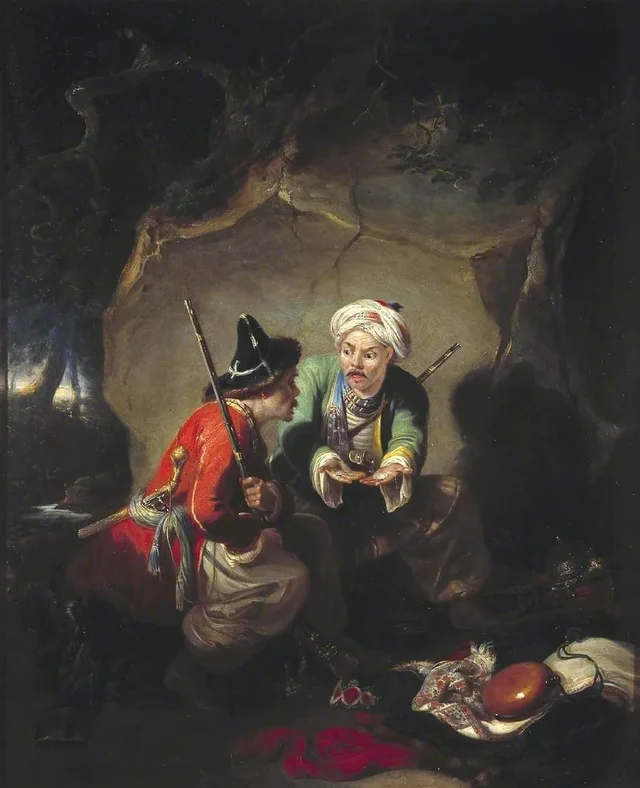
Tartar Robbers Dividing Spoil, 1817.
William Allan (British), oil on wood
Tate Britain, United Kingdom

6 works held in 5 museums
Scottish history painter, President of the Royal Scottish Academy, 1782-1850
William Allan (British), oil on wood
Tate Britain, United Kingdom

William Allan (British), oil on canvas
Royal Museums Greenwich, United Kingdom
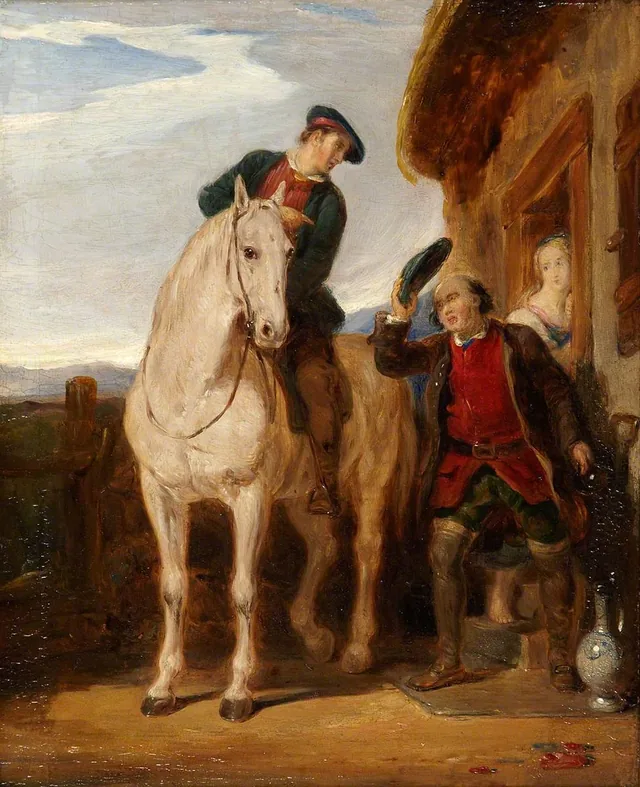
William Allan (British), oil on wood
Royal Scottish Academy, United Kingdom
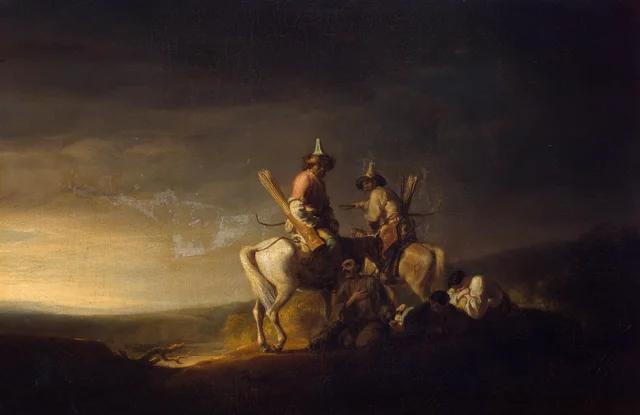
Башкиры (Башкиры, конвоирующие приговоренных) (museum title)
William Allan (British), oil on canvas
Hermitage Museum, Russia
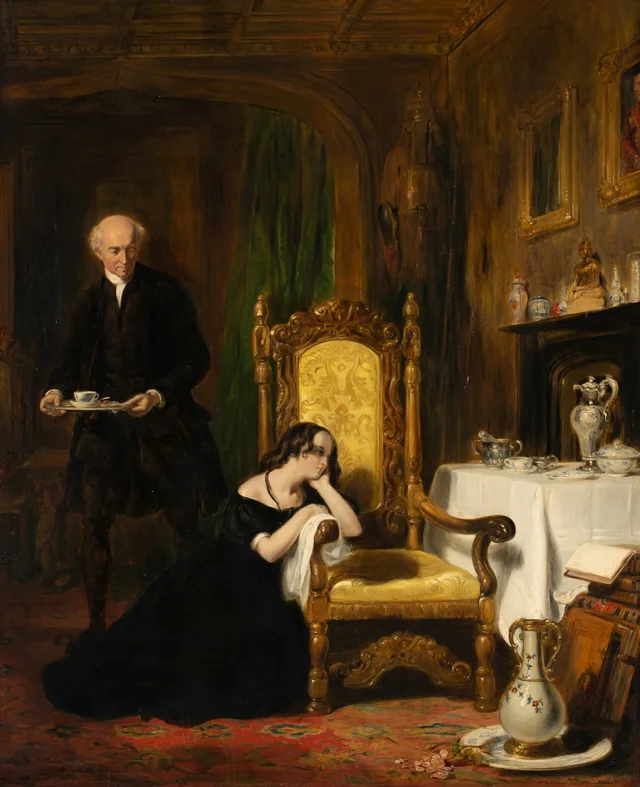
William Allan (British), oil on wood
Royal Collection, United Kingdom
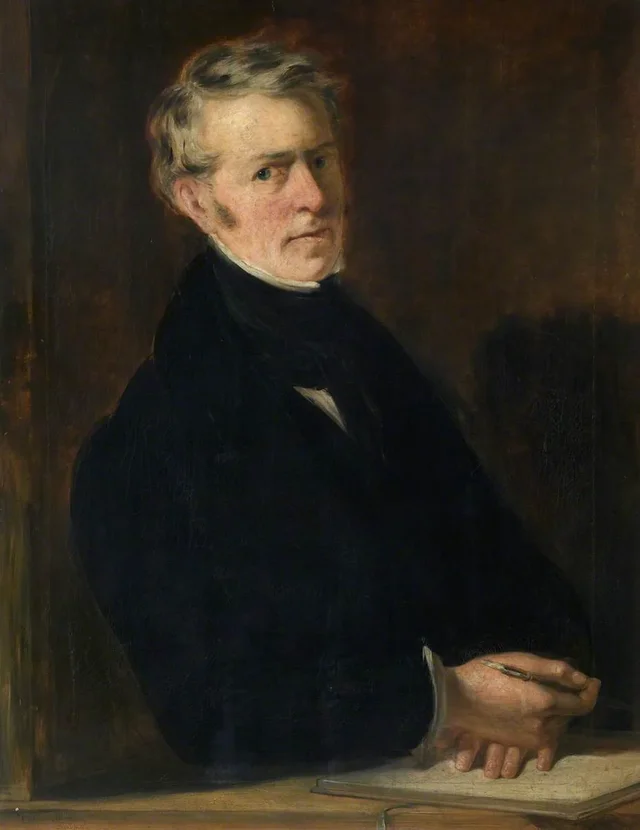
William Allan (British), oil on canvas
Royal Scottish Academy, United Kingdom
Works by William Allan (1782-1850), in the public domain, each linked to the record of the institution that holds it. Born in Edinburgh, a pupil at the Trustees' Academy alongside David Wilkie, he left for Russia in 1805 and lived there for nine years, travelling in Ukraine, the Crimea, the Caucasus and the Caspian steppes; he brought back a collection of arms and costumes from which he made scenes of the Circassians, the Bashkirs and the Tartars, which Grand Duke Nicholas, the future Nicholas I, bought when he visited Edinburgh. He went on to paint scenes from Scottish history inspired by Walter Scott, became President of the Royal Scottish Academy, the Queen's Limner in Scotland and a knight, and devoted his last years to large battle pictures, from Cape St Vincent to Waterloo and Bannockburn, which he left unfinished at his death. Only works that the institutions give to him without reservation, and of which a freely reusable photograph of at least 900 pixels on the short side exists, are included; the origin of each photograph is given on the page of the work. The titles are those of the institutions, with their translation.