Useum

Bijin-ga

116 works by 1 artist

116 works featuring “Bijin-ga” by 1 artist, from the 18th to the 19th century, held in 6 museums.

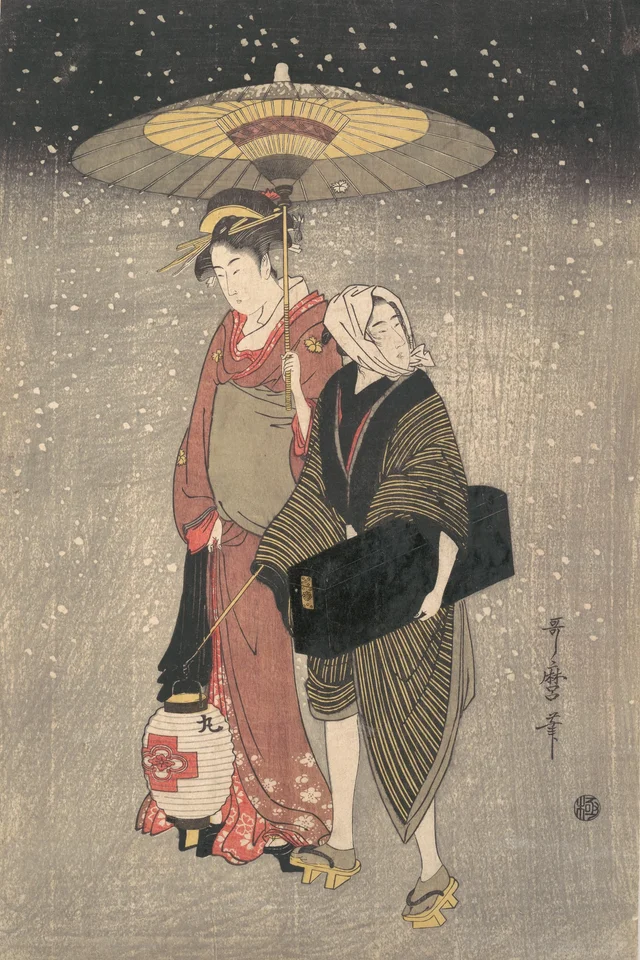
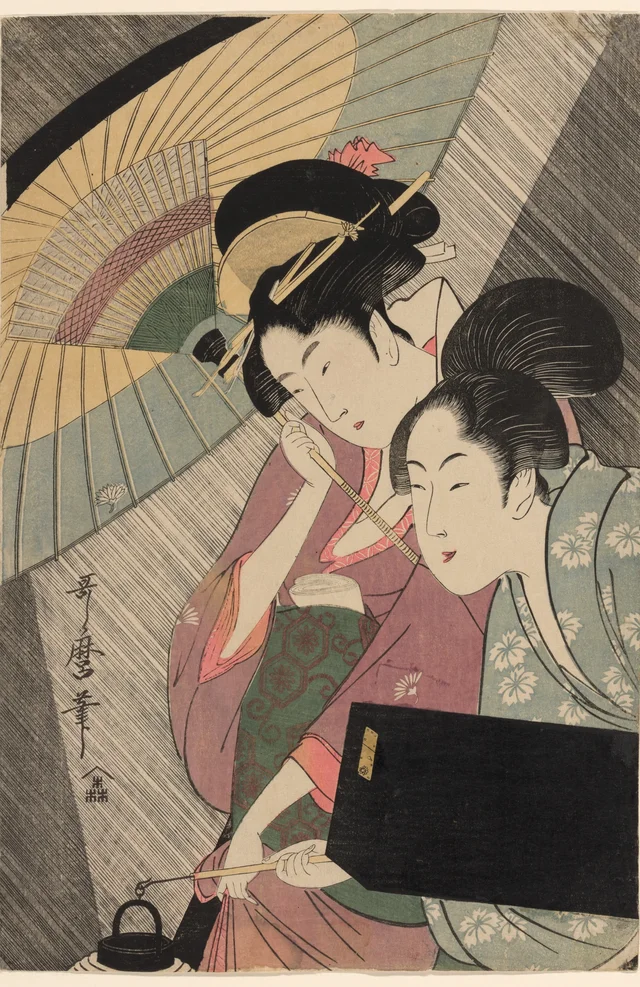
Geisha and Attendant on a Rainy Night, Kitagawa Utamaro

Geisha and Attendant on a Rainy Night, c. 1797.

Kitagawa Utamaro (Japanese), colour woodcut on paper

Art Institute of Chicago, United States

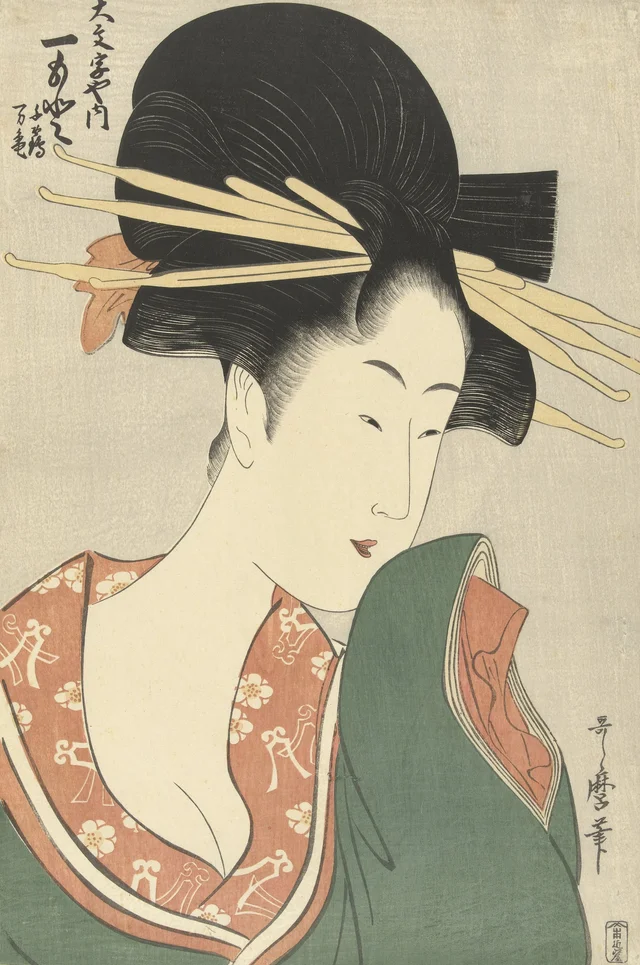
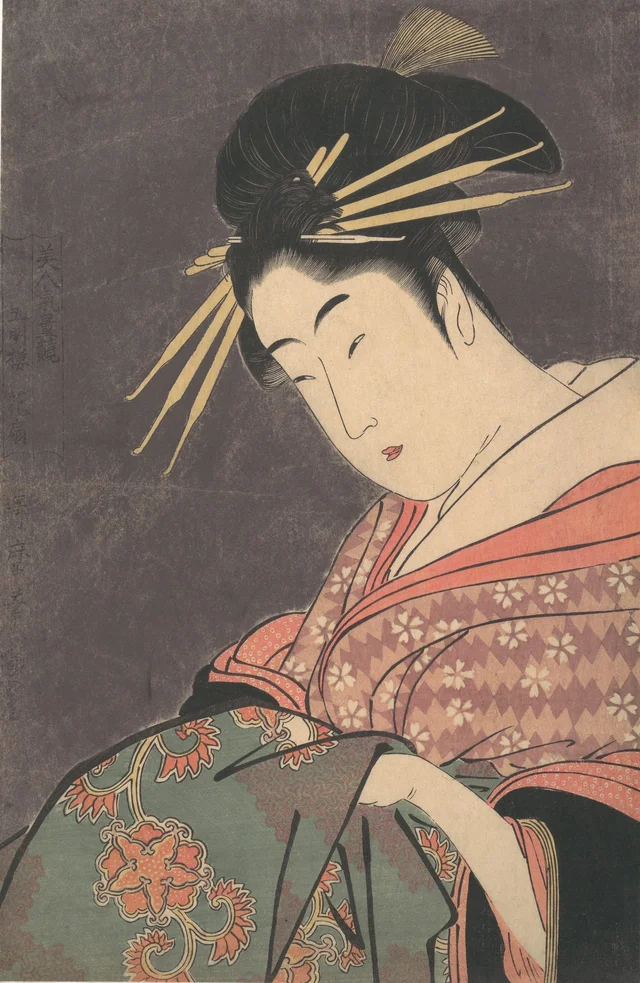
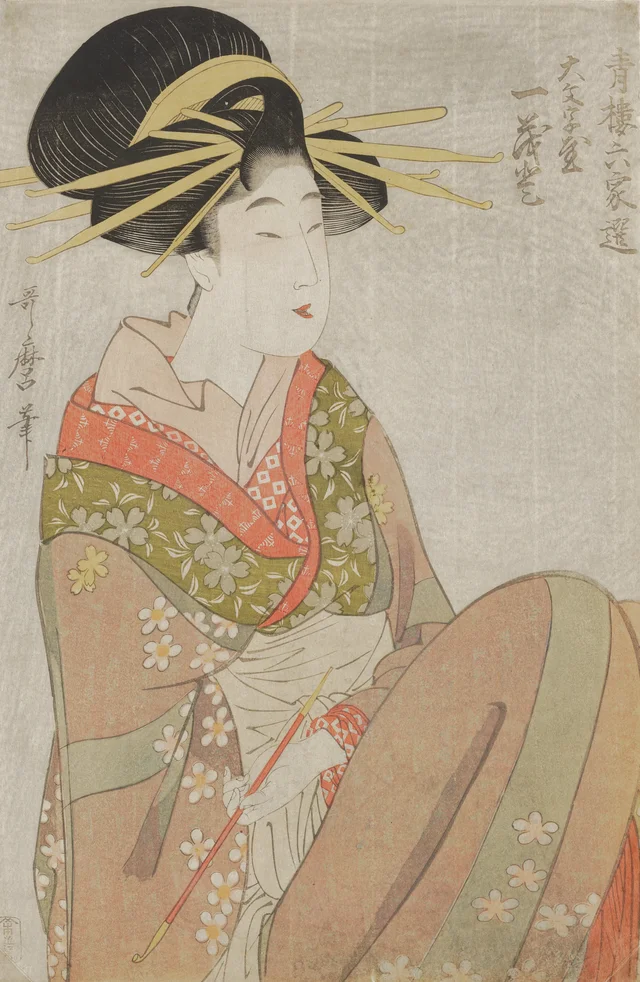
Courtesan Hitomoto of the Daimonjiya, Kitagawa Utamaro

Courtesan Hitomoto of the Daimonjiya, c. 1801–1802.

Kitagawa Utamaro (Japanese), colour woodcut on paper

Minneapolis Institute of Art, United States

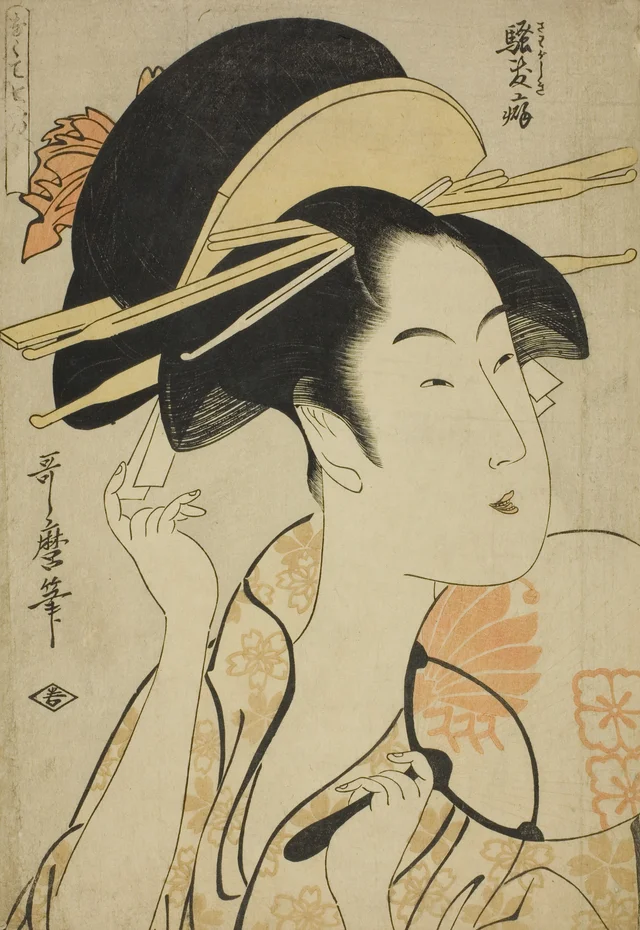
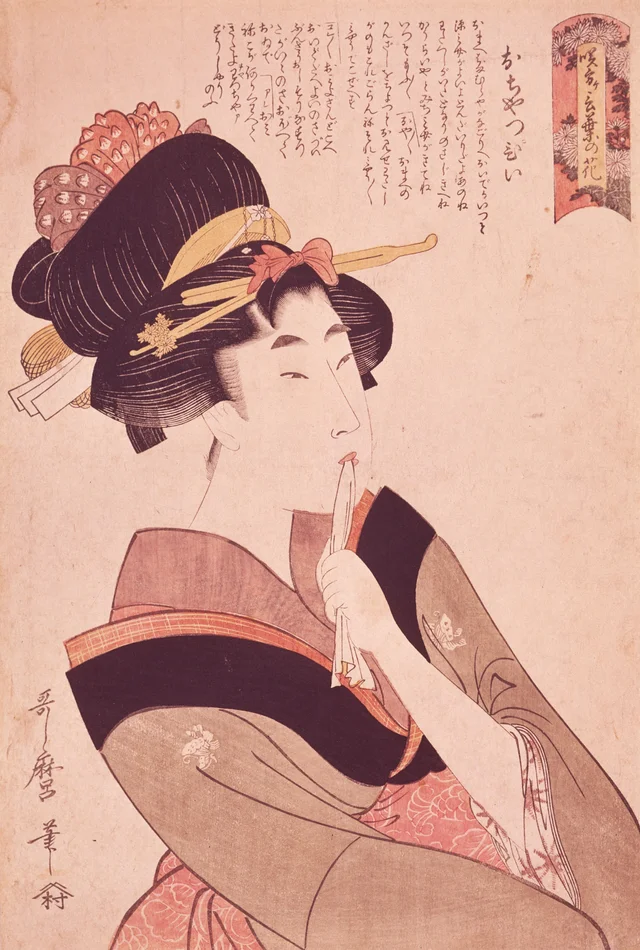
“The Precocious Girl”from the Series "Variegations of Blooms According to their Speech", Kitagawa Utamaro

“The Precocious Girl”from the Series "Variegations of Blooms According to their Speech", 19th century.

咲分ヶ言葉の花・おちやつぴい (museum title)

Kitagawa Utamaro (Japanese), colour woodcut on paper

Tokyo National Museum, Japan

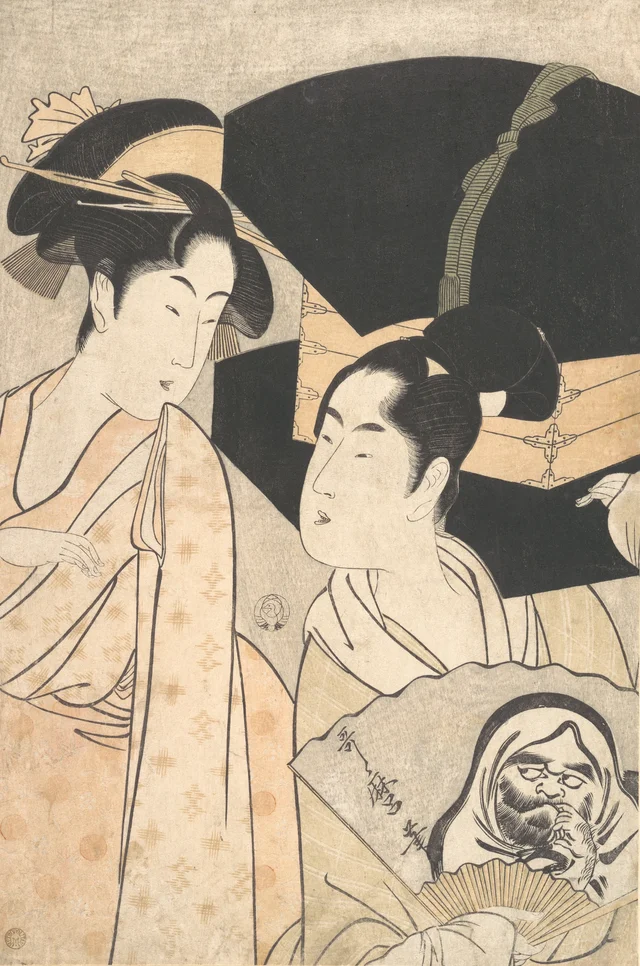
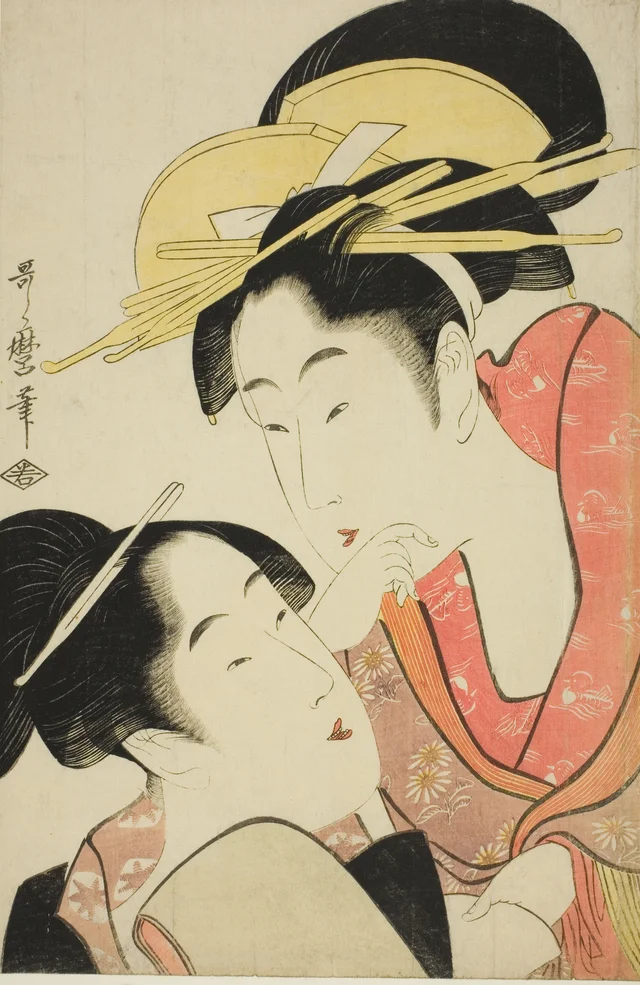
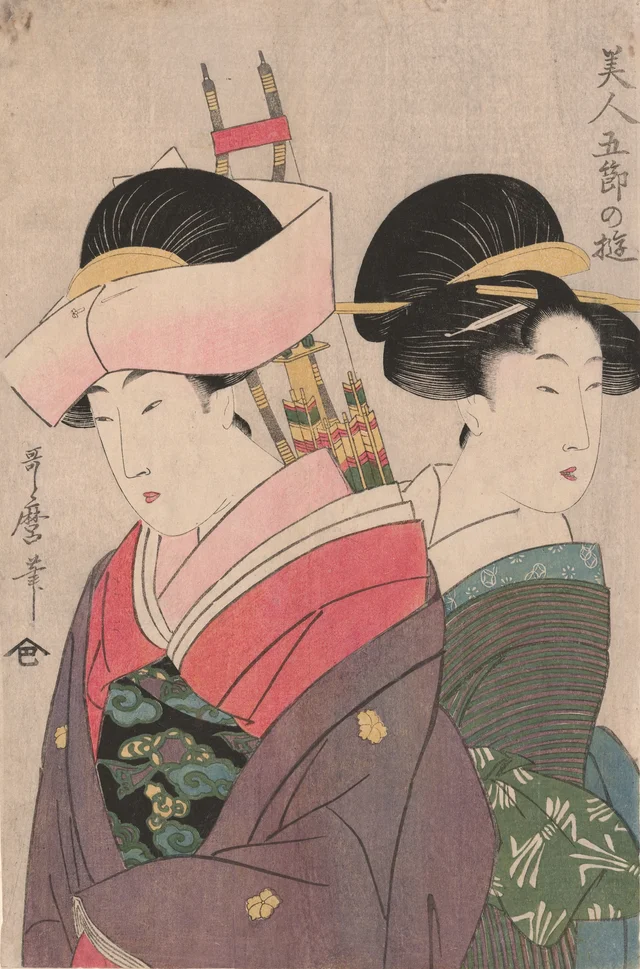
Beauty and Attendant on New Year’s Day, from the series “Pleasures for Beauties on the Five Festival Days" ("Bijin gosetsu no asobi"), Kitagawa Utamaro

Beauty and Attendant on New Year’s Day, from the series “Pleasures for Beauties on the Five Festival Days" ("Bijin gosetsu no asobi"), c. 1800.

Kitagawa Utamaro (Japanese), colour woodcut on paper

Art Institute of Chicago, United States
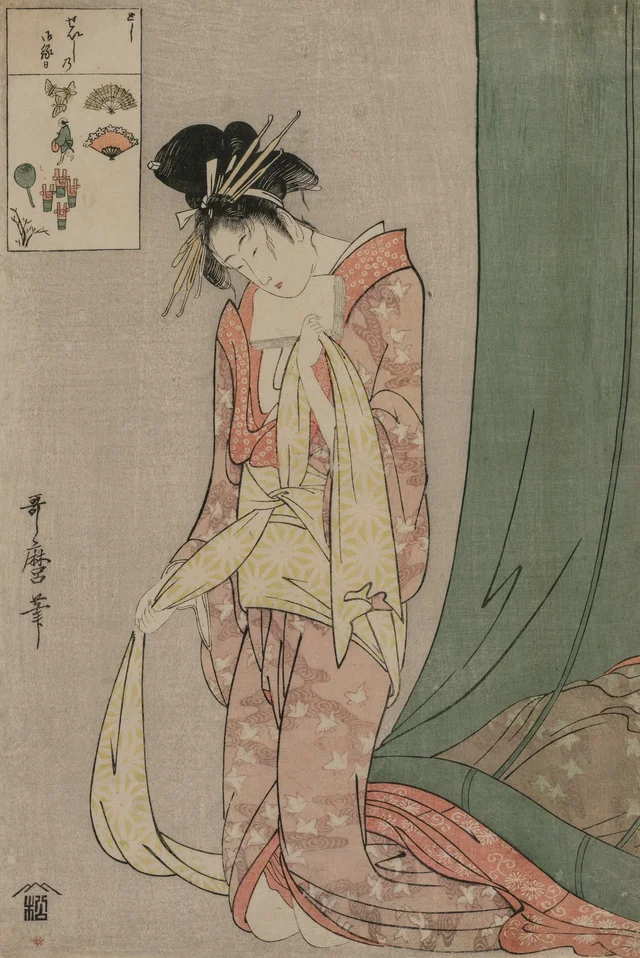
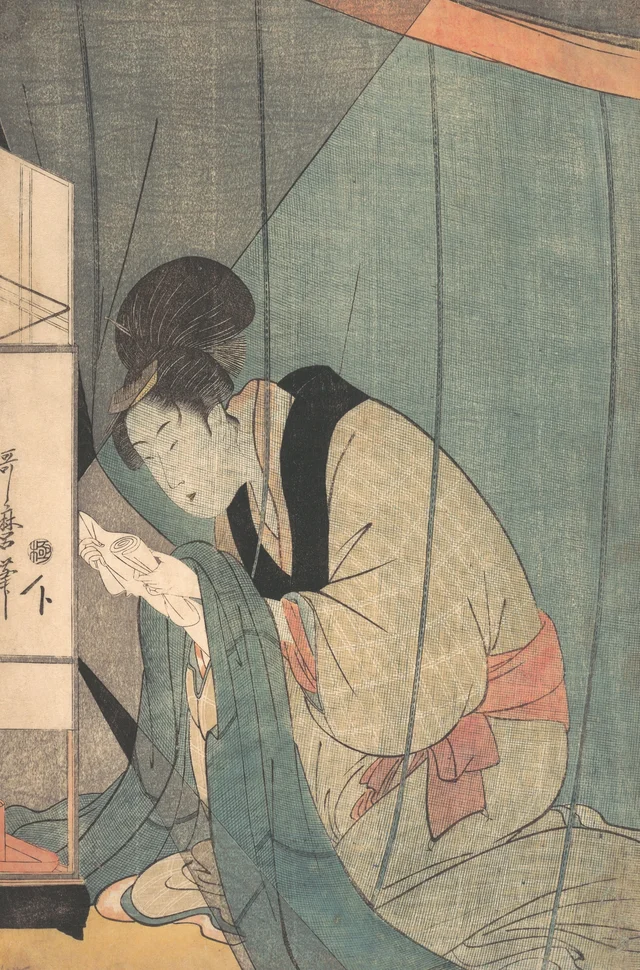
Woman Reading a Letter under a Mosquito Net, Kitagawa Utamaro

Woman Reading a Letter under a Mosquito Net, c. 1798.

Kitagawa Utamaro (Japanese), colour woodcut on paper

Metropolitan Museum of Art, United States

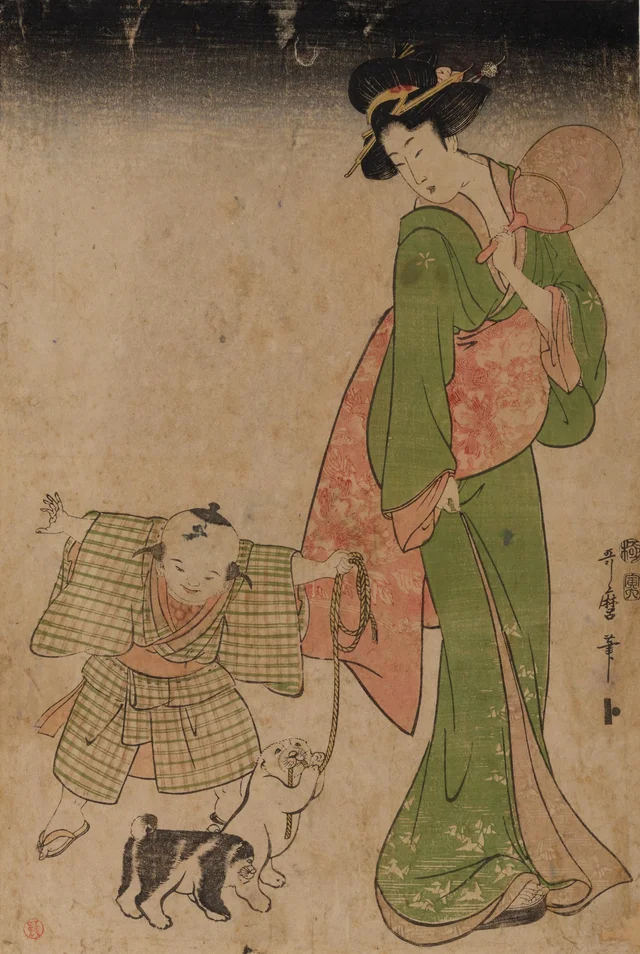
Woman and Child with Puppies, Kitagawa Utamaro

Woman and Child with Puppies, 1806.

美人子供に小犬 (museum title)

Kitagawa Utamaro (Japanese), colour woodcut on paper

Tokyo National Museum, Japan

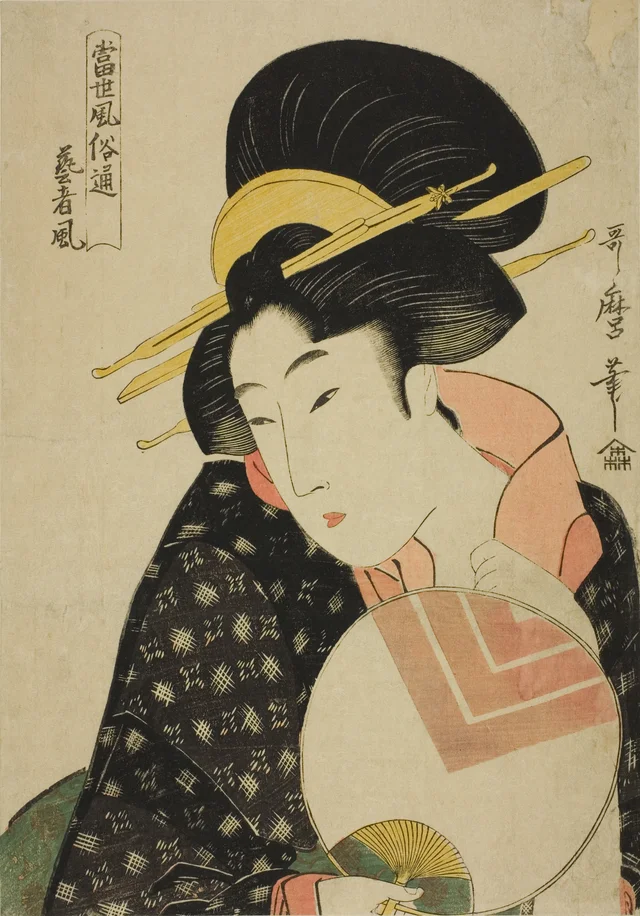
Geisha Style (geisha fū) from the series Guide to Contemporary Styles (Tōsei fūzoku tsū), Kitagawa Utamaro

Geisha Style (geisha fū) from the series Guide to Contemporary Styles (Tōsei fūzoku tsū), 1801.

Kitagawa Utamaro (Japanese), colour woodcut on paper

Art Institute of Chicago, United States

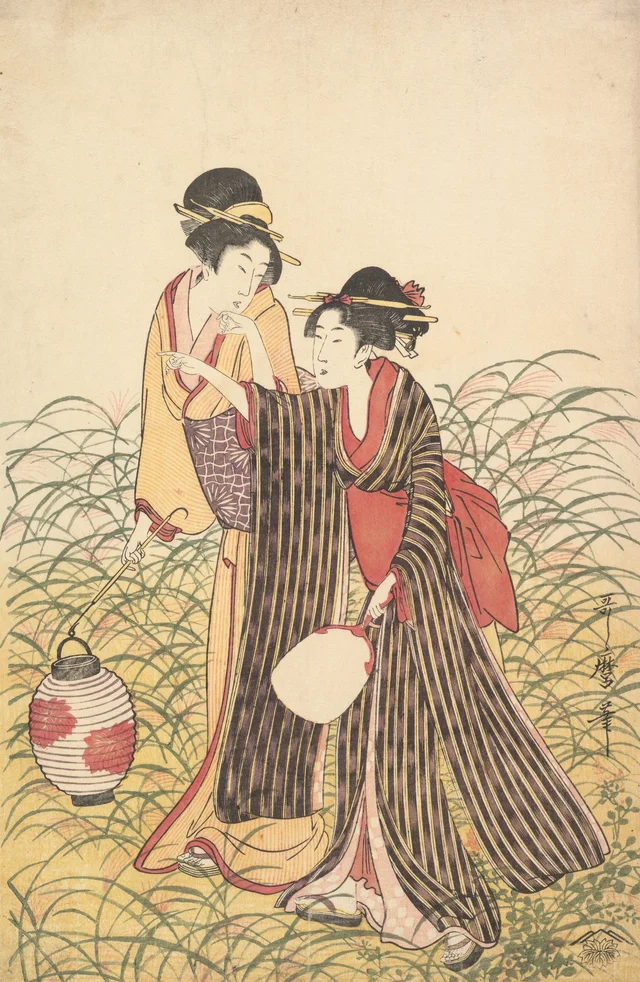
Elopers in Musashino, Kitagawa Utamaro

Elopers in Musashino, 19th century.

Kitagawa Utamaro (Japanese), colour woodcut on paper

Metropolitan Museum of Art, United States

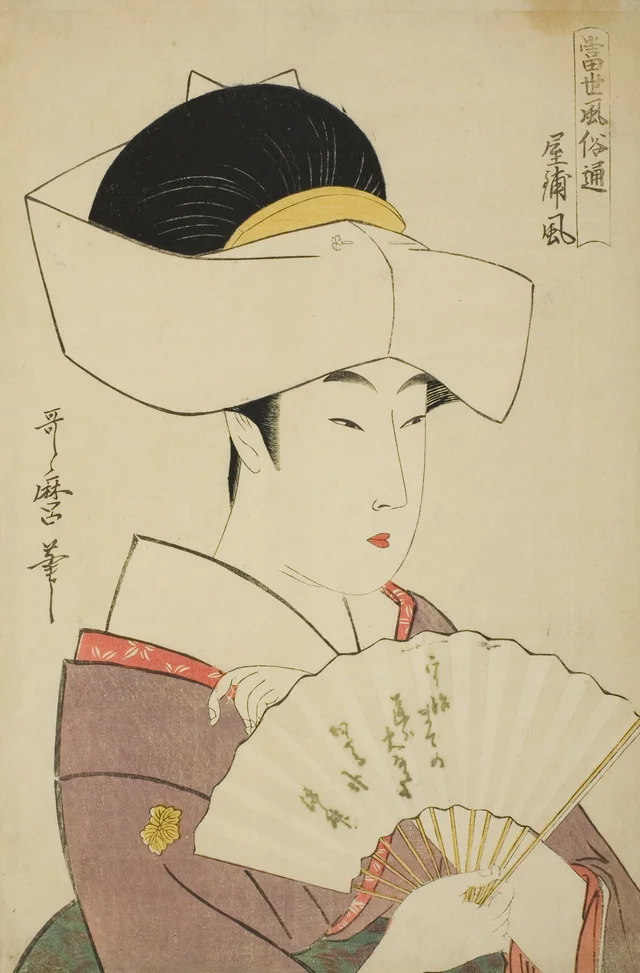
The Style of a Feudal Lord’s Household (Yashiki-fu), from the series Guide to Contemporary Styles (Tosei fuzoku tsu), Kitagawa Utamaro

The Style of a Feudal Lord’s Household (Yashiki-fu), from the series Guide to Contemporary Styles (Tosei fuzoku tsu), c. 1800.

Kitagawa Utamaro (Japanese), colour woodcut on paper

Art Institute of Chicago, United States

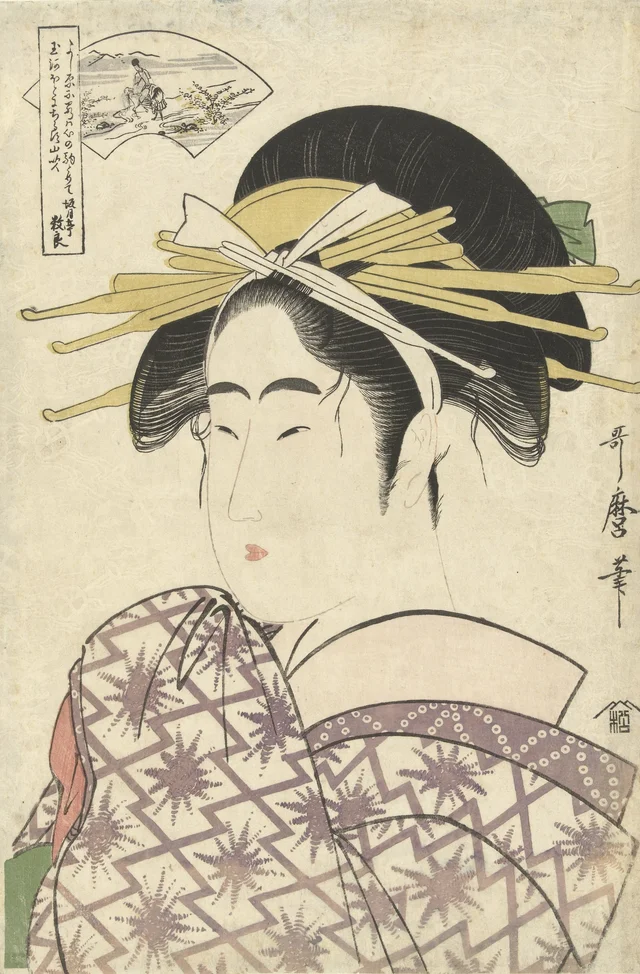
Takigawa of the Ōgiya from the series A Selection of Eastern Beauties, Kitagawa Utamaro

Takigawa of the Ōgiya from the series A Selection of Eastern Beauties, c. 1798.

Kitagawa Utamaro (Japanese), colour woodcut on paper

Cleveland Museum of Art, United States

Enjoying the Evening Cool Along the Sumida River, Kitagawa Utamaro

Enjoying the Evening Cool Along the Sumida River, c. 1797–1798.

Kitagawa Utamaro (Japanese), colour woodcut on paper

Cleveland Museum of Art, United States

A Young Girl Offering Tea to Another Woman, Kitagawa Utamaro

A Young Girl Offering Tea to Another Woman, c. 1797.

Kitagawa Utamaro (Japanese), colour woodcut on paper

Art Institute of Chicago, United States

Hanaogi of the Ogiya, from the series "Renowned Beauties Likened to the Six Immortal Poets (Komei bijin rokkasen)", Kitagawa Utamaro

Hanaogi of the Ogiya, from the series "Renowned Beauties Likened to the Six Immortal Poets (Komei bijin rokkasen)", c. 1795–1796.

Kitagawa Utamaro (Japanese), colour woodcut on paper

Art Institute of Chicago, United States

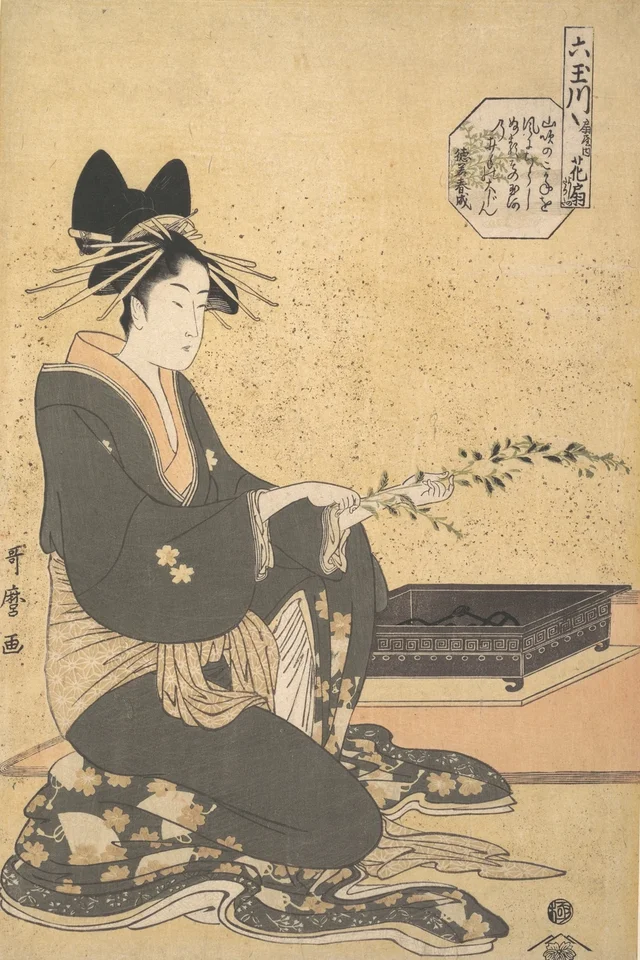
De zes Tama rivieren, Kitagawa Utamaro

De zes Tama rivieren, 1795–1800.

Kitagawa Utamaro (Japanese), colour woodcut on paper

Rijksmuseum, Netherlands

Ha... of the Southern Station (Nan'eki ha-jirushi), Kitagawa Utamaro

Ha... of the Southern Station (Nan'eki ha-jirushi), c. 1795–1796.

Kitagawa Utamaro (Japanese), colour woodcut on paper

Art Institute of Chicago, United States

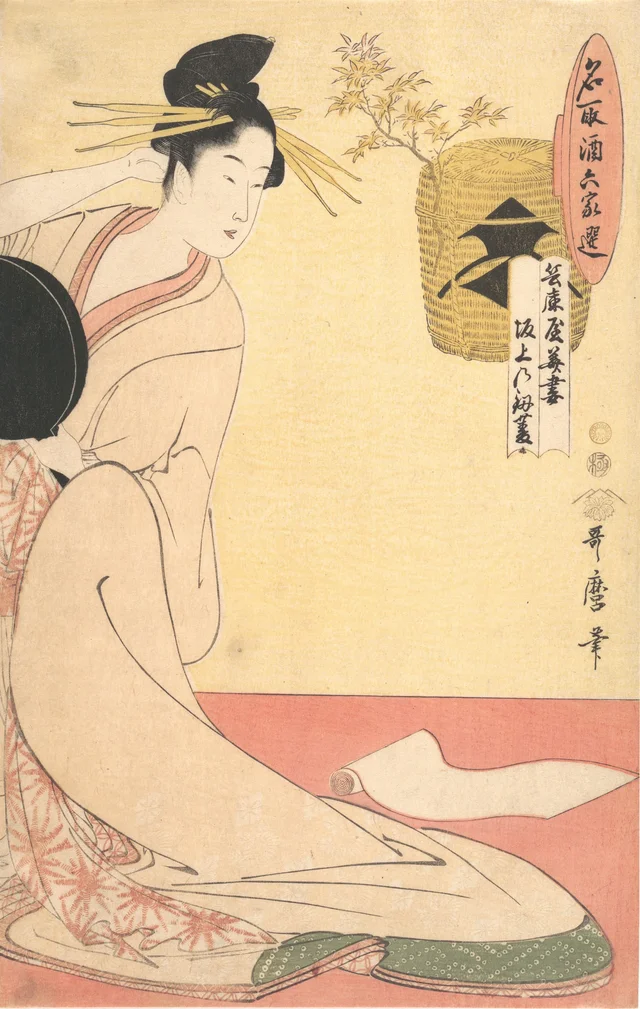
"Hanazuma of Hyōgoya, Kenbishi of Sakagami” from the series The Peers of Saké Likened to Select Denizens of Six Houses (Natori zake rokkasen: Hyōgoya Hanazuma, Sakagami no Kenbishi), Kitagawa Utamaro

"Hanazuma of Hyōgoya, Kenbishi of Sakagami” from the series The Peers of Saké Likened to Select Denizens of Six Houses (Natori zake rokkasen: Hyōgoya Hanazuma, Sakagami no Kenbishi), c. 1794.

Kitagawa Utamaro (Japanese), colour woodcut on paper

Metropolitan Museum of Art, United States

The Courtesans Somenosuke and Kisegawa of the Matsubaya, from the series "A Mirror of Courtesans of the Pleasure Quarters (Seiro yukun awase kagami)", Kitagawa Utamaro

The Courtesans Somenosuke and Kisegawa of the Matsubaya, from the series "A Mirror of Courtesans of the Pleasure Quarters (Seiro yukun awase kagami)", c. 1797.

Kitagawa Utamaro (Japanese), colour woodcut on paper

Art Institute of Chicago, United States

Takashima Ohisa, from the series "Renowned Beauties Likened to the Six Immortal Poets (Komei bijin rokkasen)", Kitagawa Utamaro

Takashima Ohisa, from the series "Renowned Beauties Likened to the Six Immortal Poets (Komei bijin rokkasen)", c. 1795–1796.

Kitagawa Utamaro (Japanese), colour woodcut on paper

Art Institute of Chicago, United States

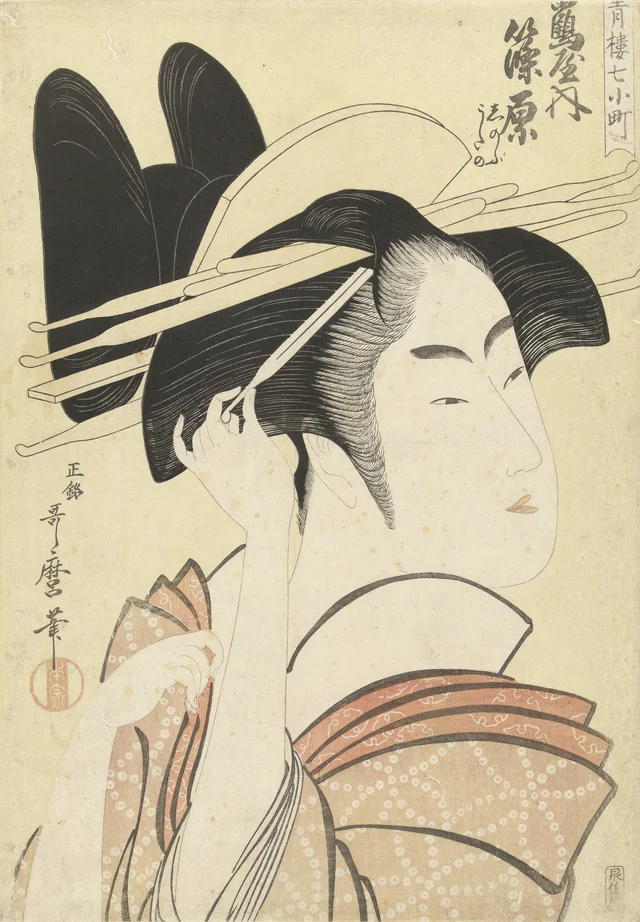
Tsuruya uchi Shinowara, Kitagawa Utamaro

Tsuruya uchi Shinowara, 1795–1800.

Kitagawa Utamaro (Japanese), colour woodcut on paper

Rijksmuseum, Netherlands

Kisegawa of the Matsubaya, from the series "Comparing the Charms of Five Beauties (Gonin bijin aikyo kurabe)", Kitagawa Utamaro

Kisegawa of the Matsubaya, from the series "Comparing the Charms of Five Beauties (Gonin bijin aikyo kurabe)", c. 1795–1796.

Kitagawa Utamaro (Japanese), colour woodcut on paper

Art Institute of Chicago, United States

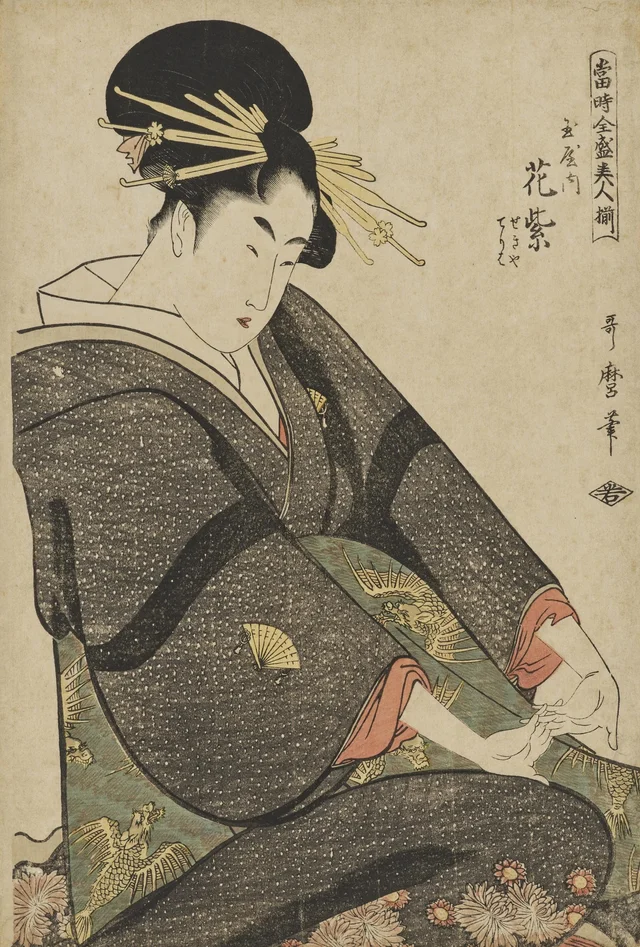
"Hanamurasaki, Sekiya, and Teriha of Tamaya" from the Series "Lineup of Contemporary Popular Beauties", Kitagawa Utamaro

"Hanamurasaki, Sekiya, and Teriha of Tamaya" from the Series "Lineup of Contemporary Popular Beauties", 1794.

當時全盛美人揃・玉屋内花紫、せきや、てりは (museum title)

Kitagawa Utamaro (Japanese), colour woodcut on paper

Tokyo National Museum, Japan

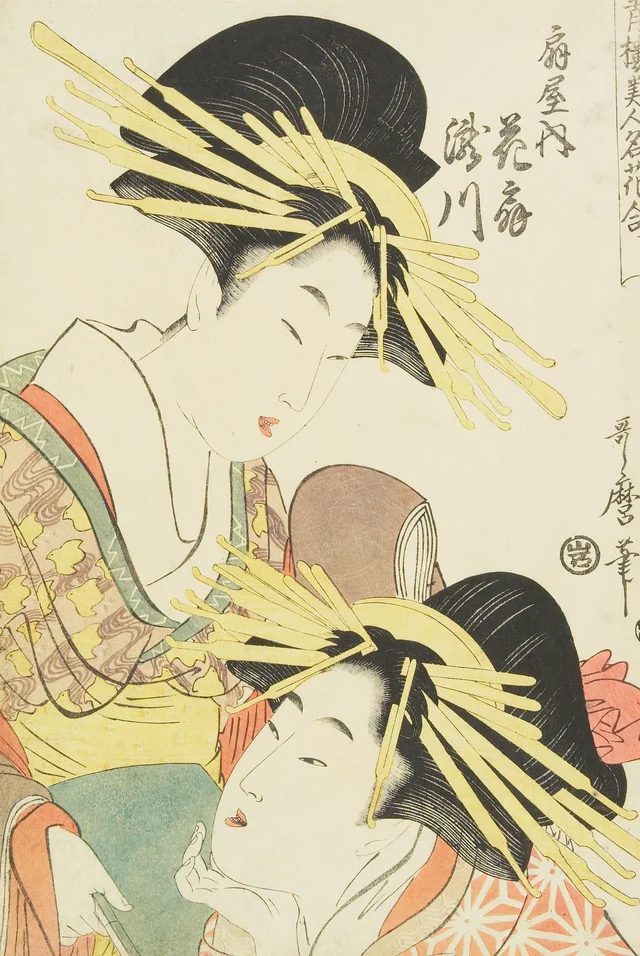
The Courtesans Hanaōgi and Takigawa of the Ōgiya House, Kitagawa Utamaro

The Courtesans Hanaōgi and Takigawa of the Ōgiya House, c. 1805.

Kitagawa Utamaro (Japanese), colour woodcut on paper

Minneapolis Institute of Art, United States
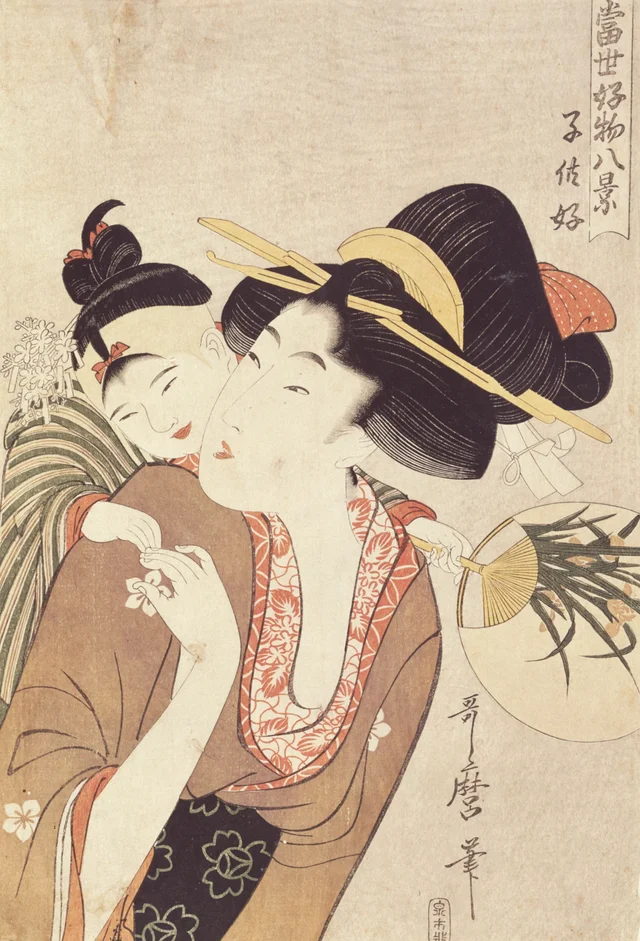
Fondness for Children, from the series Eight Views of Present-Day Favorites, Kitagawa Utamaro

Fondness for Children, from the series Eight Views of Present-Day Favorites, 19th century.

當世好物八景・子供好 (museum title)

Kitagawa Utamaro (Japanese), colour woodcut on paper

Tokyo National Museum, Japan
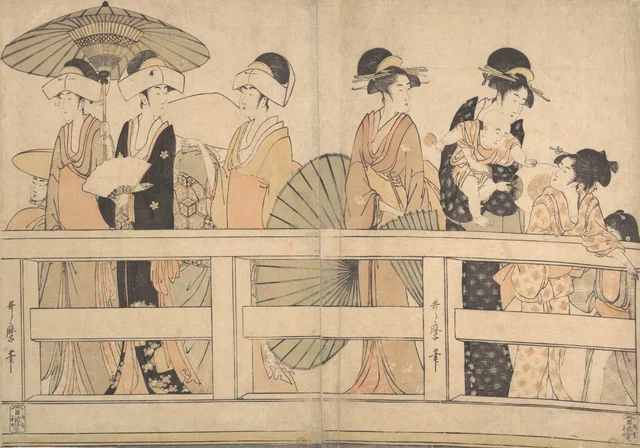
Enjoying the Cool Evening Breeze on and under the Bridge, Kitagawa Utamaro

Enjoying the Cool Evening Breeze on and under the Bridge, c. 1800.

Kitagawa Utamaro (Japanese), colour woodcut on paper

Metropolitan Museum of Art, United States

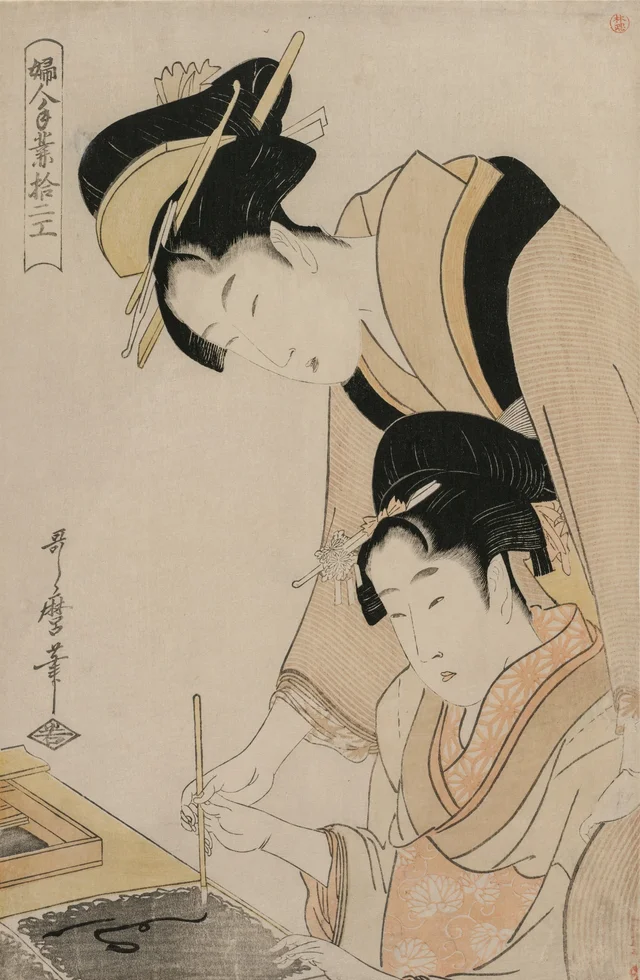
Mother Teaching her Daughter Calligraphy, from the series, Twelve Occupations of Women, Kitagawa Utamaro

Mother Teaching her Daughter Calligraphy, from the series, Twelve Occupations of Women, c. 1798.

Kitagawa Utamaro (Japanese), colour woodcut on paper

Cleveland Museum of Art, United States

Fan Vendor, Kitagawa Utamaro

Fan Vendor, c. 1797.

Kitagawa Utamaro (Japanese), colour woodcut on paper

Metropolitan Museum of Art, United States

The Habit of Boisterousness (Sawagashiki kuse), from the series "Seven Bad Habits (Nakute nana kuse)", Kitagawa Utamaro

The Habit of Boisterousness (Sawagashiki kuse), from the series "Seven Bad Habits (Nakute nana kuse)", c. 1797.

Kitagawa Utamaro (Japanese), colour woodcut on paper

Art Institute of Chicago, United States
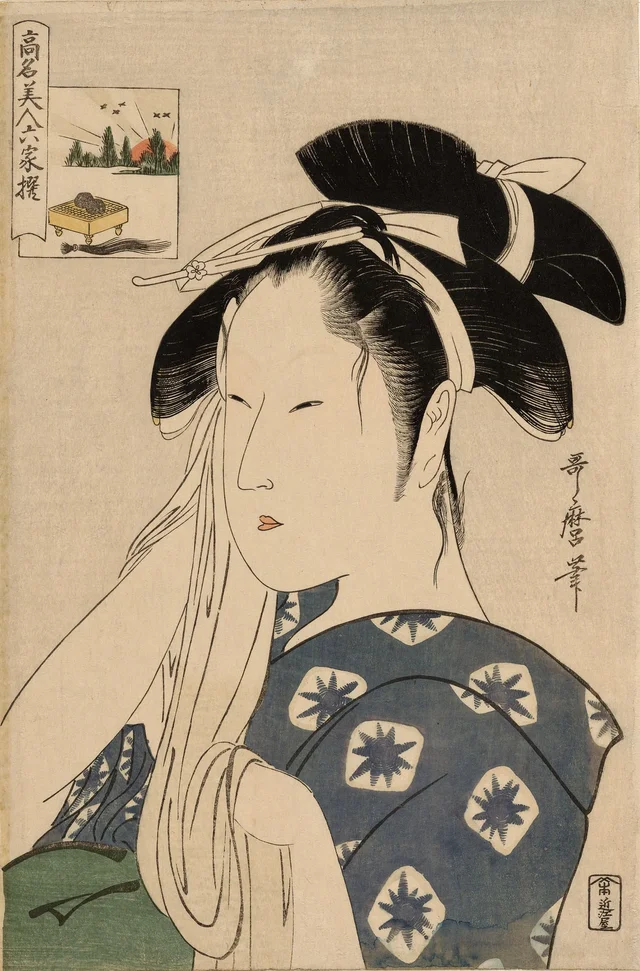
The Asahiya Widow, from the series “Renowned Beauties Likened to the Six Immortal Poets" ("Komei bijin rokkasen"), Kitagawa Utamaro

The Asahiya Widow, from the series “Renowned Beauties Likened to the Six Immortal Poets" ("Komei bijin rokkasen"), c. 1795–1796.

Kitagawa Utamaro (Japanese), colour woodcut on paper

Art Institute of Chicago, United States

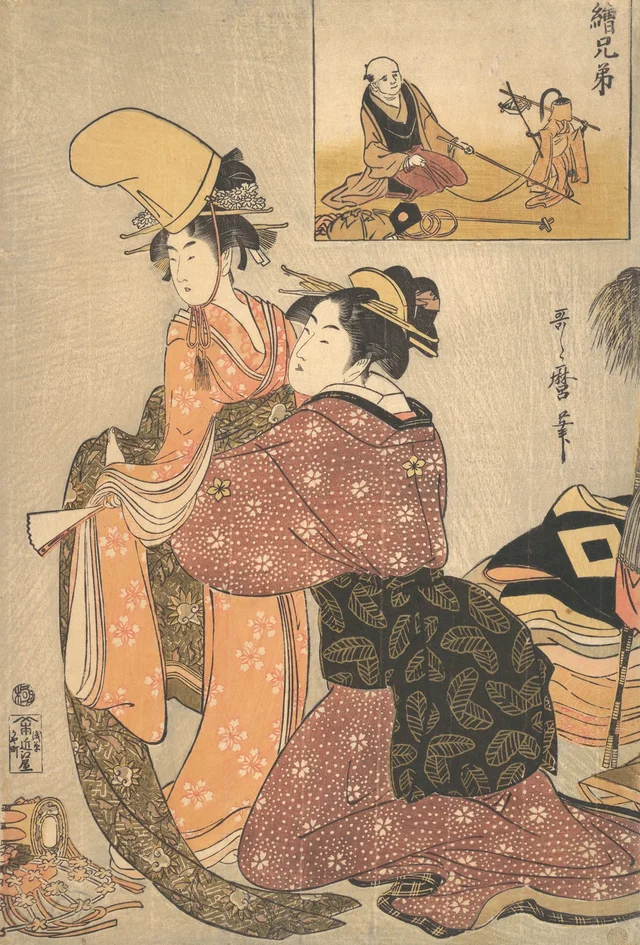
A Woman Dressing a Girl for a the Kabuki Dance “Musume Dojōji,” with “Brother Picture” (E-kyōdai) of a Monkey Trainer, Kitagawa Utamaro

A Woman Dressing a Girl for a the Kabuki Dance “Musume Dojōji,” with “Brother Picture” (E-kyōdai) of a Monkey Trainer, c. 1795–1796.

Kitagawa Utamaro (Japanese), colour woodcut on paper

Metropolitan Museum of Art, United States
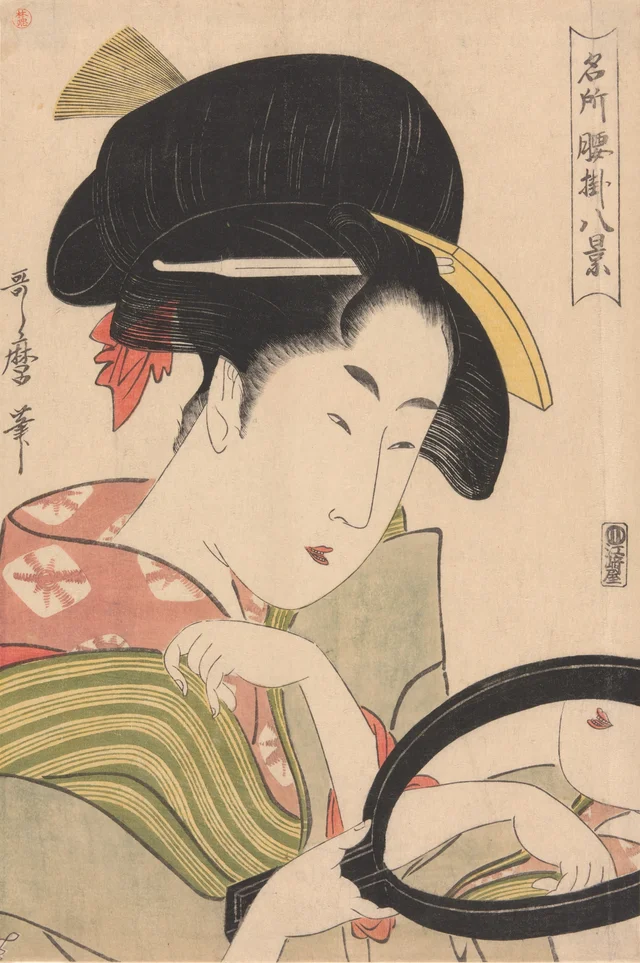
Mirror, from the series “Eight Views of Tea-stalls in Celebrated Places" ("Meisho koshikake hakkei"), Kitagawa Utamaro

Mirror, from the series “Eight Views of Tea-stalls in Celebrated Places" ("Meisho koshikake hakkei"), c. 1795–1796.

Kitagawa Utamaro (Japanese), colour woodcut on paper

Art Institute of Chicago, United States

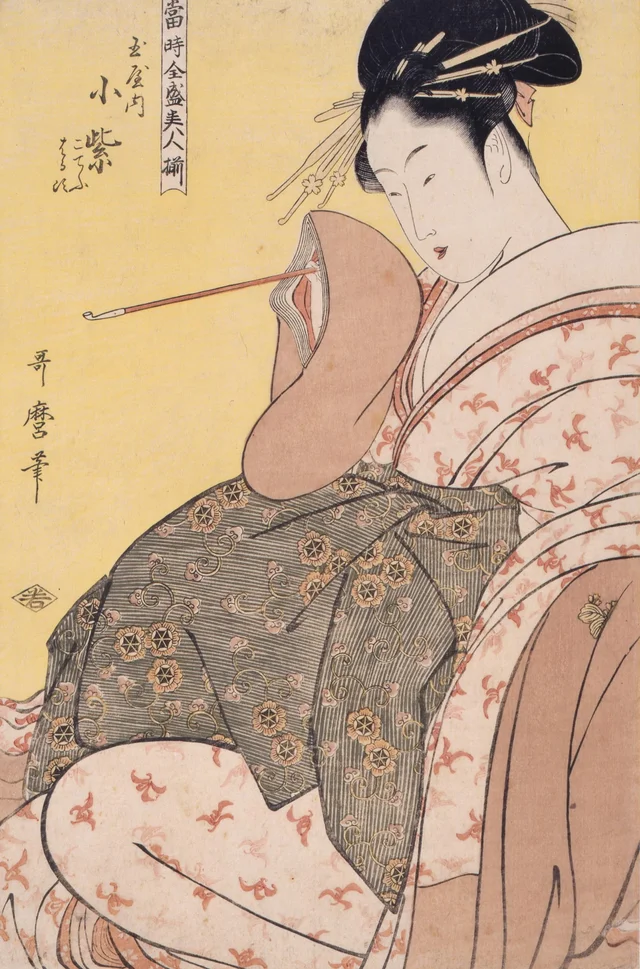
"Komurasaki of the Tamaya with the Attendants Kochō and Haruji" from the Series "Collection of Contemporary Popular Beauties", Kitagawa Utamaro

"Komurasaki of the Tamaya with the Attendants Kochō and Haruji" from the Series "Collection of Contemporary Popular Beauties", 1794.

當時全盛美人揃・玉屋内小紫、こてふ、はる次 (museum title)

Kitagawa Utamaro (Japanese), colour woodcut on paper

Tokyo National Museum, Japan
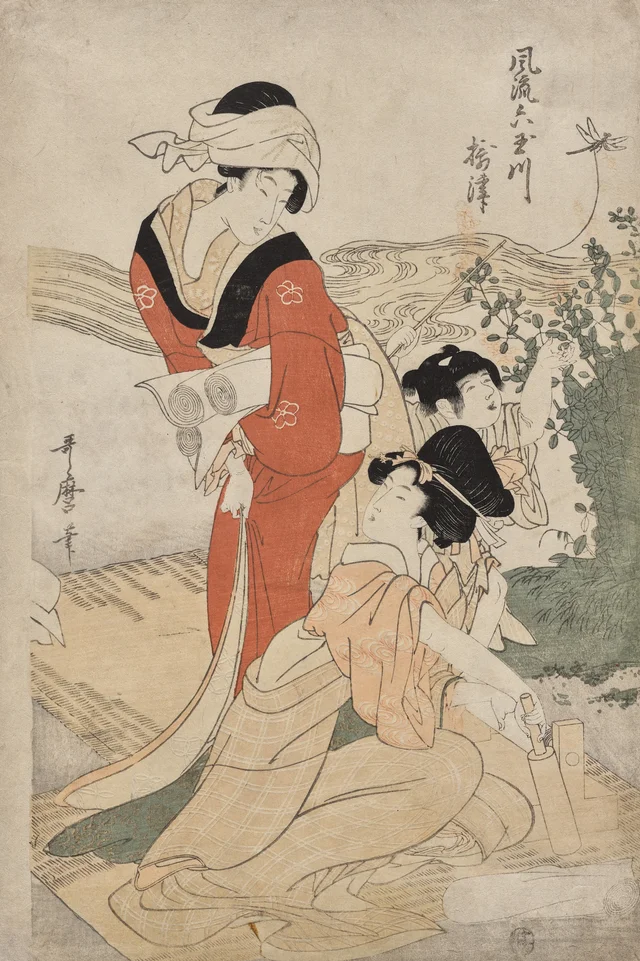
Musashi Province from the series Fashionable Six Jewel Rivers (Furyu Mu Tamagawa), Kitagawa Utamaro

Musashi Province from the series Fashionable Six Jewel Rivers (Furyu Mu Tamagawa), c. 1804.

Kitagawa Utamaro (Japanese), colour woodcut on paper

Cleveland Museum of Art, United States

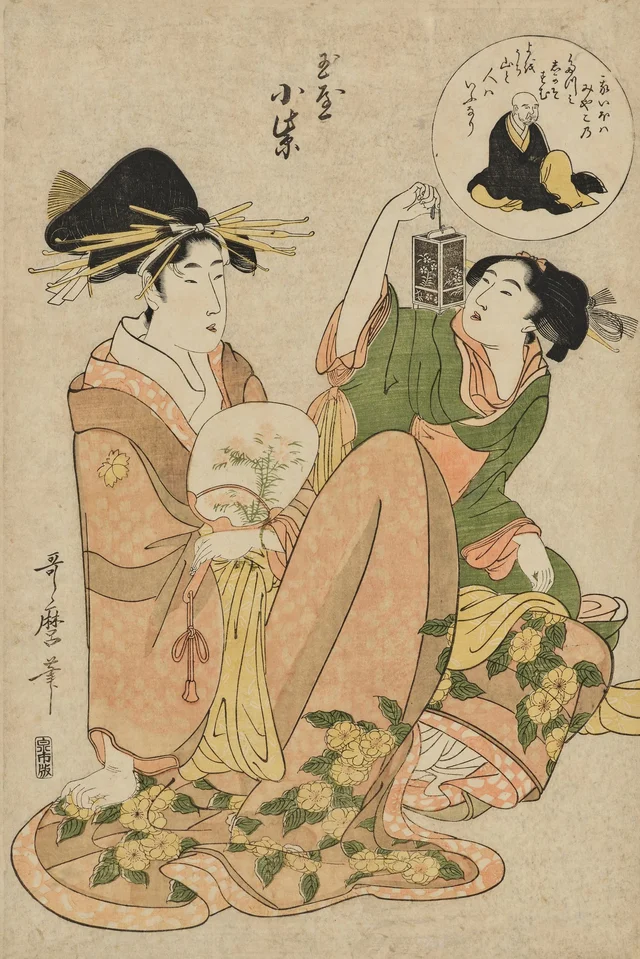
"Komurasaki of the Tamaya" from the Series "Courtesans for the Six Poetic Sages", Kitagawa Utamaro

"Komurasaki of the Tamaya" from the Series "Courtesans for the Six Poetic Sages", 19th century.

遊女見立六歌仙・玉屋小紫 喜撰法師 (museum title)

Kitagawa Utamaro (Japanese), colour woodcut on paper

Tokyo National Museum, Japan

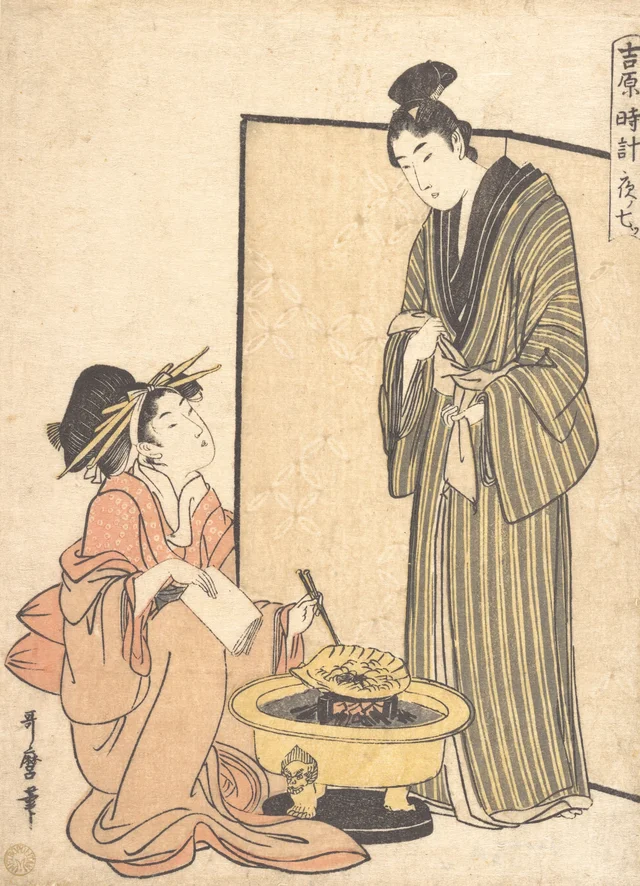
The Seventh Hour of the Night, Kitagawa Utamaro

The Seventh Hour of the Night, c. 1800.

Kitagawa Utamaro (Japanese), colour woodcut on paper

Metropolitan Museum of Art, United States

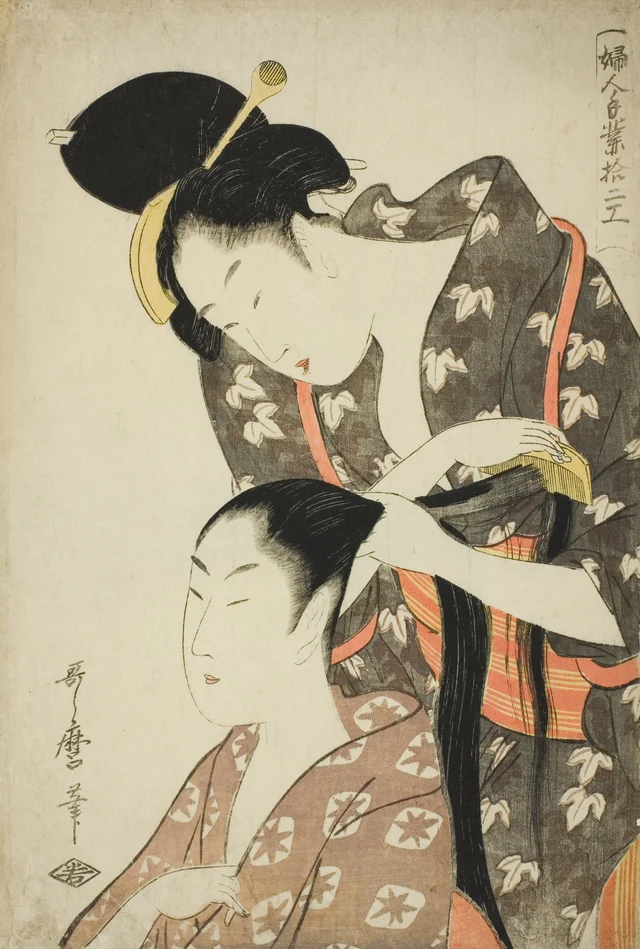
Hairdresser, from the series "Twelve Types of Women's Handicraft (Fujin tewaza juni ko)", Kitagawa Utamaro

Hairdresser, from the series "Twelve Types of Women's Handicraft (Fujin tewaza juni ko)", c. 1798–1799.

Kitagawa Utamaro (Japanese), colour woodcut on paper

Art Institute of Chicago, United States
Geisha Walking through the Snow at Night, Kitagawa Utamaro

Geisha Walking through the Snow at Night, c. 1797.

Kitagawa Utamaro (Japanese), colour woodcut on paper

Metropolitan Museum of Art, United States
The Habit of Criticizing Others (Ta o soshiru kuse), from the series "Seven Bad Habits (Nakute nana kuse)", Kitagawa Utamaro

The Habit of Criticizing Others (Ta o soshiru kuse), from the series "Seven Bad Habits (Nakute nana kuse)", c. 1797.

Kitagawa Utamaro (Japanese), colour woodcut on paper

Art Institute of Chicago, United States
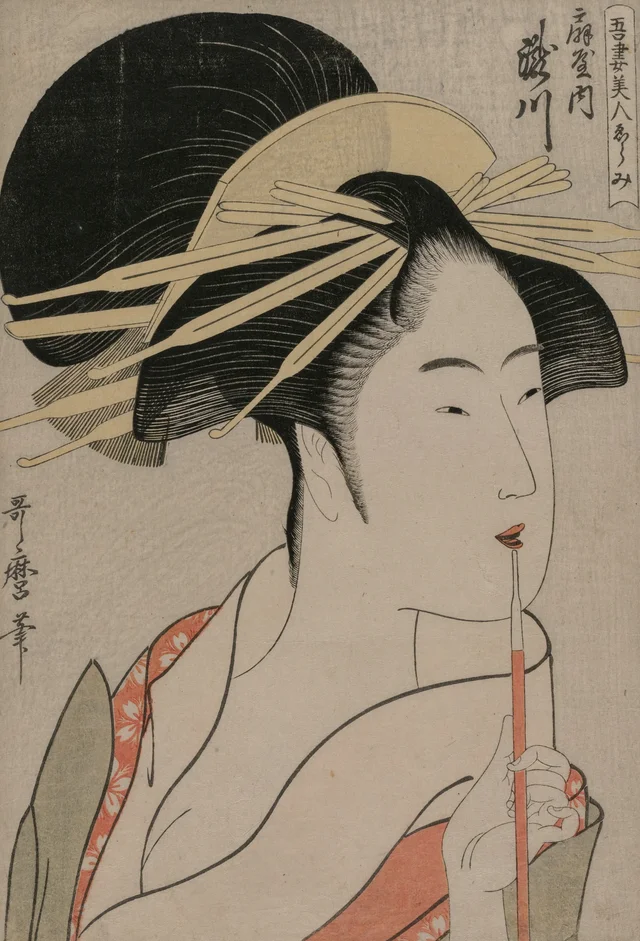
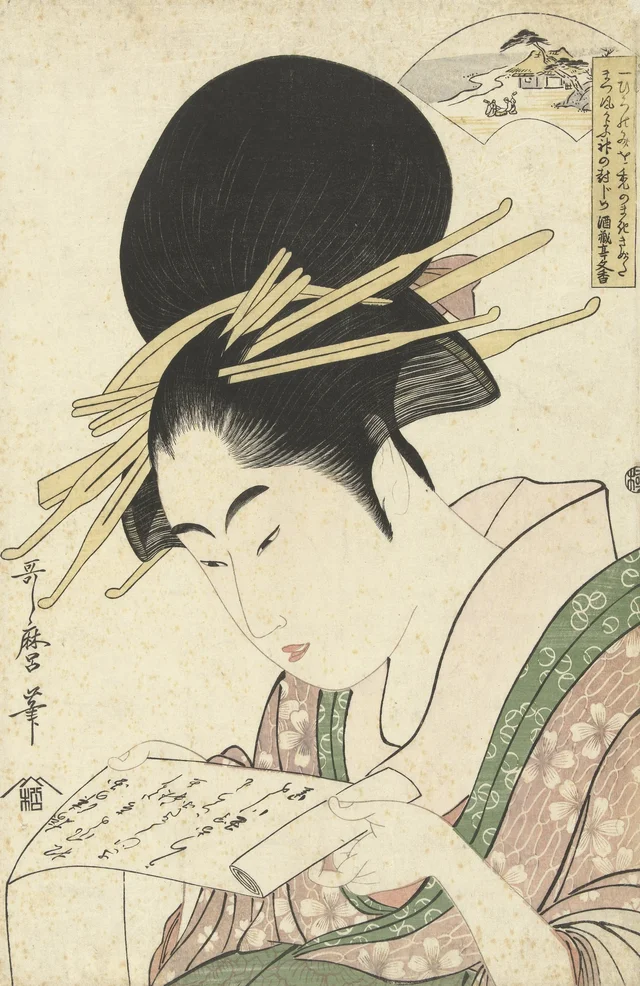
Daimonjiya uchi Hitomoto, Kitagawa Utamaro

Daimonjiya uchi Hitomoto, c. 1795–1800.

Kitagawa Utamaro (Japanese), colour woodcut on paper

Rijksmuseum, Netherlands

The Oiran Hanaogi of Ogiya, from the series “Six Jewel Rivers” (Mutamagawa), Kitagawa Utamaro

The Oiran Hanaogi of Ogiya, from the series “Six Jewel Rivers” (Mutamagawa), c. 1795–1796.

Kitagawa Utamaro (Japanese), colour woodcut on paper

Metropolitan Museum of Art, United States

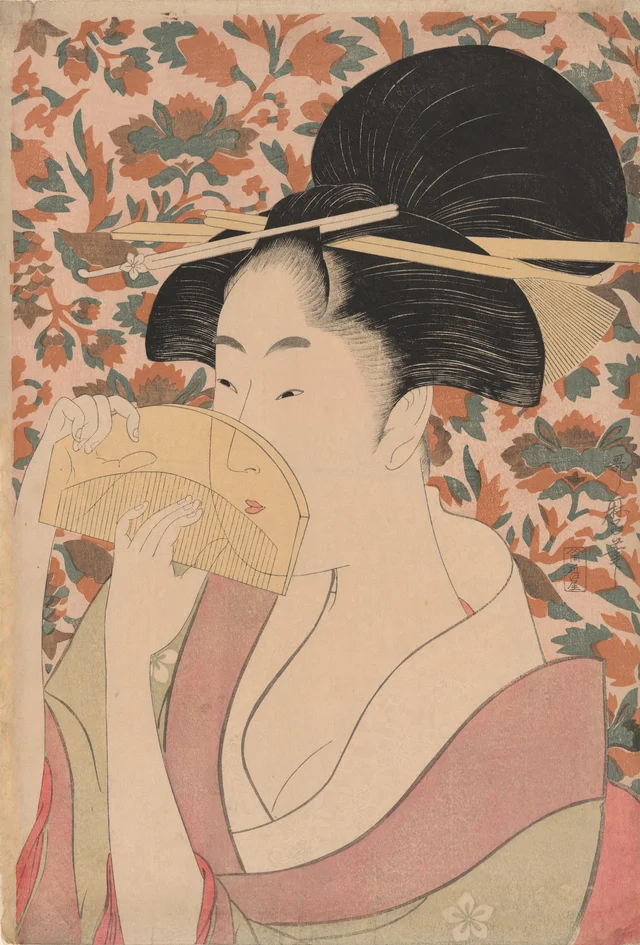
Woman Holding a Tortoise-shell Hair-comb, Kitagawa Utamaro

Woman Holding a Tortoise-shell Hair-comb, c. 1795–1796.

Kitagawa Utamaro (Japanese), colour woodcut on paper

Art Institute of Chicago, United States

“Hanaōgi of the Gomeirō,” from the series Comparing the Charms of Beauties (Bijin kiryō kurabe: Gomeirō Hanaōgi), Kitagawa Utamaro

“Hanaōgi of the Gomeirō,” from the series Comparing the Charms of Beauties (Bijin kiryō kurabe: Gomeirō Hanaōgi), c. 1794–1795.

Kitagawa Utamaro (Japanese), colour woodcut on paper

Metropolitan Museum of Art, United States

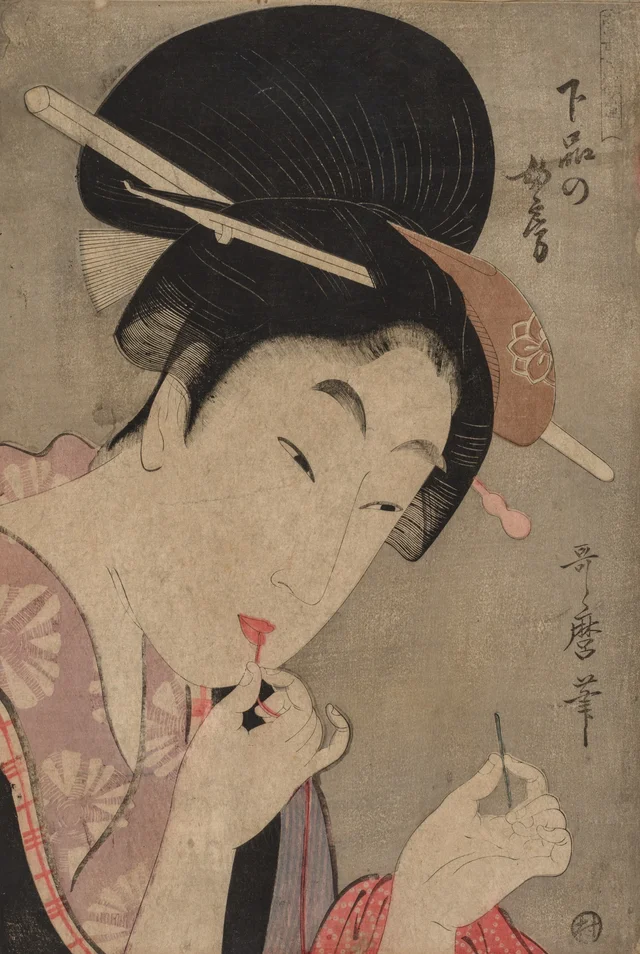
A Wife of the Lower Rank (Gebon no nyōbō), from the series A Guide to Women's Contemporary Styles (Tōsei onna fūzoku tsū), Kitagawa Utamaro

A Wife of the Lower Rank (Gebon no nyōbō), from the series A Guide to Women's Contemporary Styles (Tōsei onna fūzoku tsū), c. 1801–1802.

Kitagawa Utamaro (Japanese), colour woodcut on paper

Cleveland Museum of Art, United States
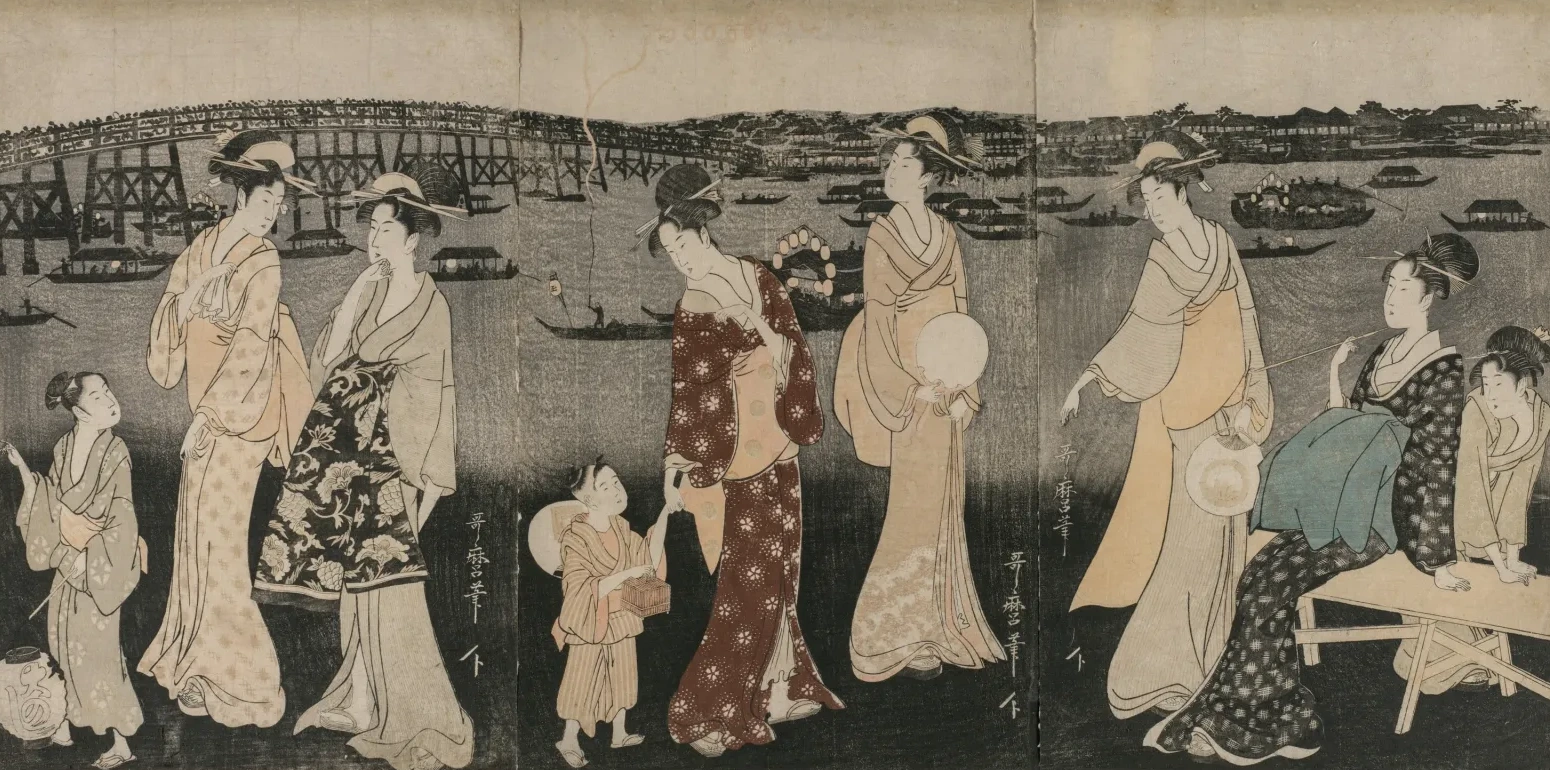
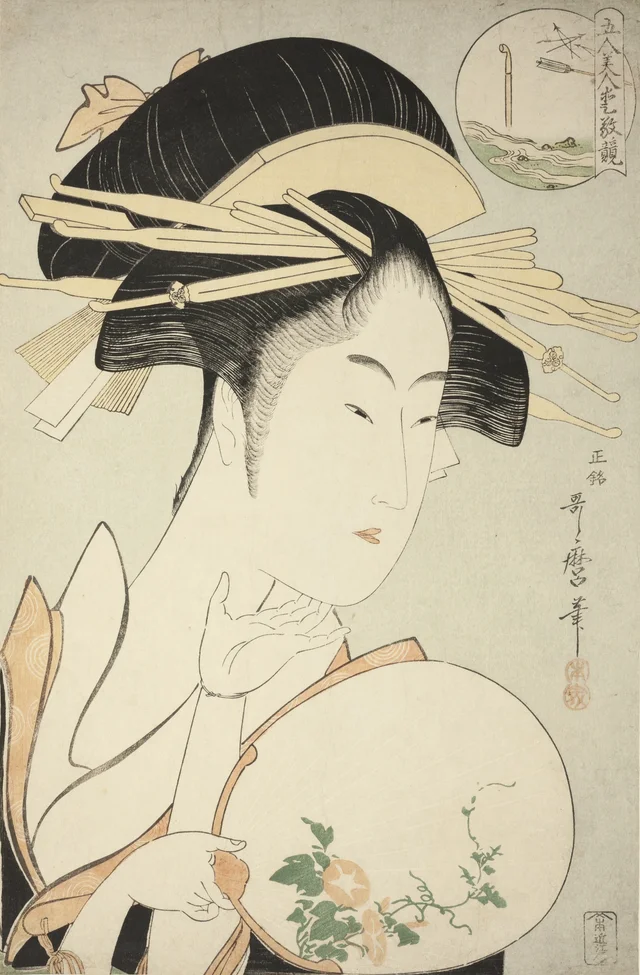
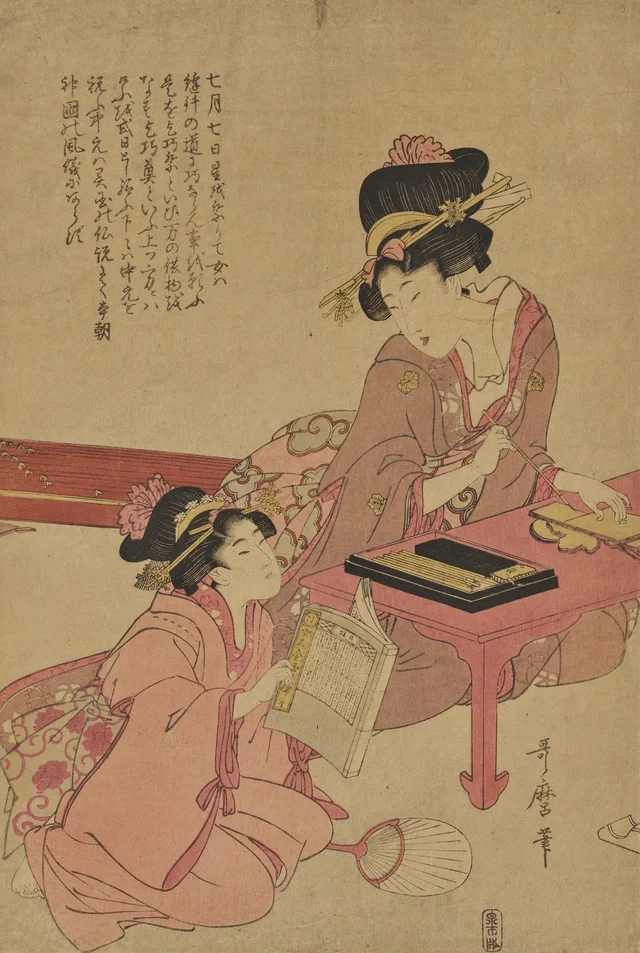
"Tanabata" from the Series "The Five Traditional Japanese Festivals", Kitagawa Utamaro

"Tanabata" from the Series "The Five Traditional Japanese Festivals", 19th century.

五節句・七夕 (museum title)

Kitagawa Utamaro (Japanese), colour woodcut on paper

Tokyo National Museum, Japan

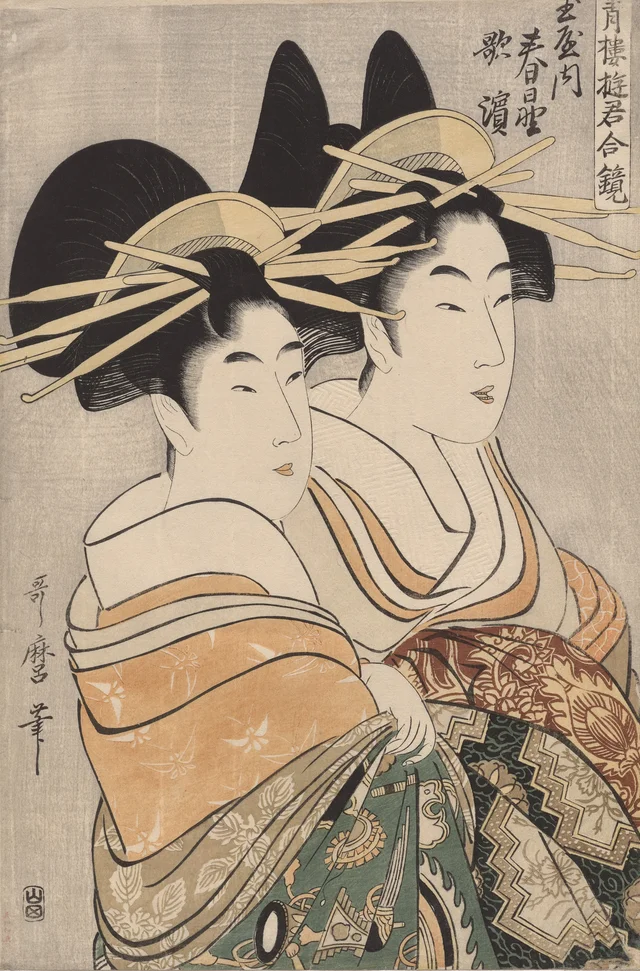
The Courtesans Kasugano and Utahama of Tamaya, from Courtesans of the Pleasure Quarters in Double Mirrors, Kitagawa Utamaro

The Courtesans Kasugano and Utahama of Tamaya, from Courtesans of the Pleasure Quarters in Double Mirrors, c. 1800.

Kitagawa Utamaro (Japanese), colour woodcut on paper

Cleveland Museum of Art, United States
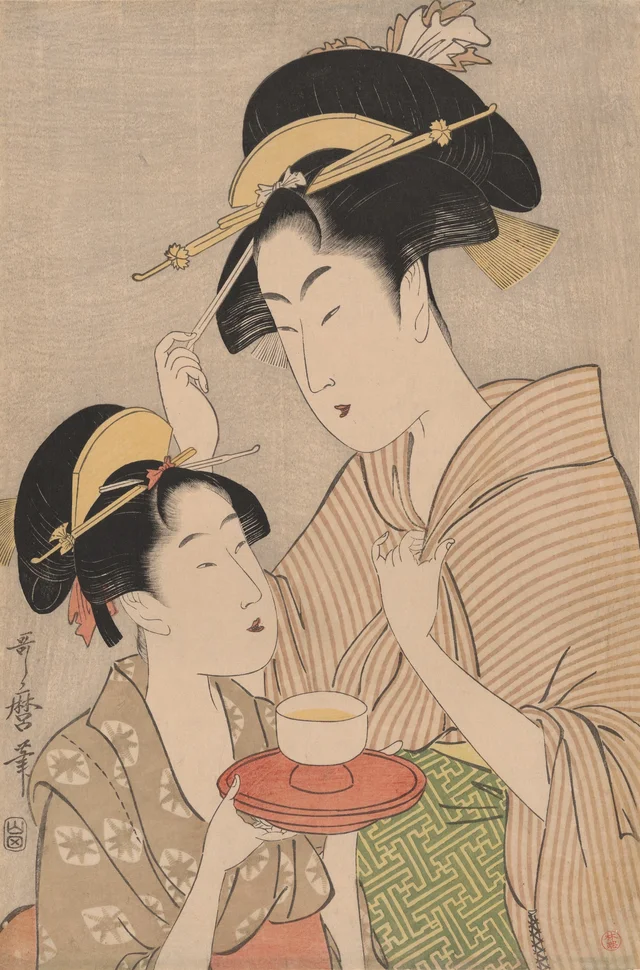
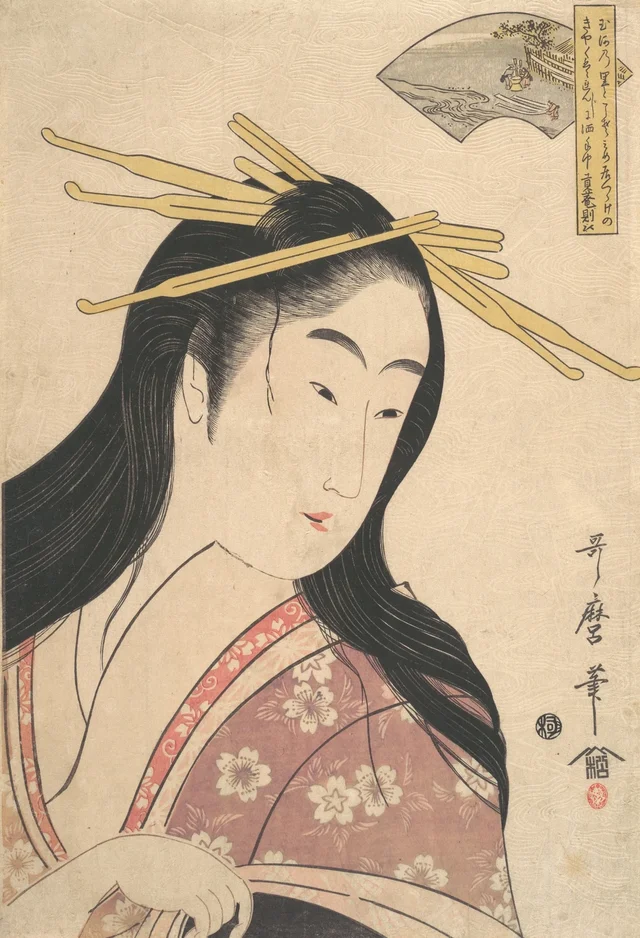
Tetsukuri no Tamagawa, from the series, "Six Tama Rivers" (Mu Tamagawa), Kitagawa Utamaro

Tetsukuri no Tamagawa, from the series, "Six Tama Rivers" (Mu Tamagawa), c. 1798.

Kitagawa Utamaro (Japanese), colour woodcut on paper

Metropolitan Museum of Art, United States

Hanaōgi of Ōgiya from the series Picture Puzzles, Kitagawa Utamaro

Hanaōgi of Ōgiya from the series Picture Puzzles, c. 1797.

Kitagawa Utamaro (Japanese), colour woodcut on paper

Cleveland Museum of Art, United States

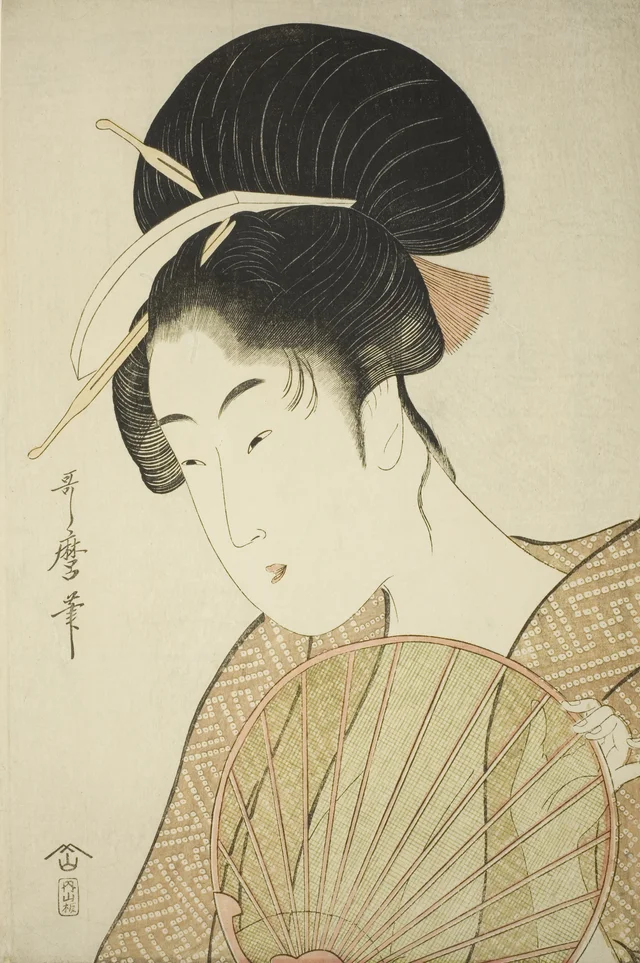
Woman Holding a Round Fan, Kitagawa Utamaro

Woman Holding a Round Fan, c. 1797.

Kitagawa Utamaro (Japanese), colour woodcut on paper

Art Institute of Chicago, United States
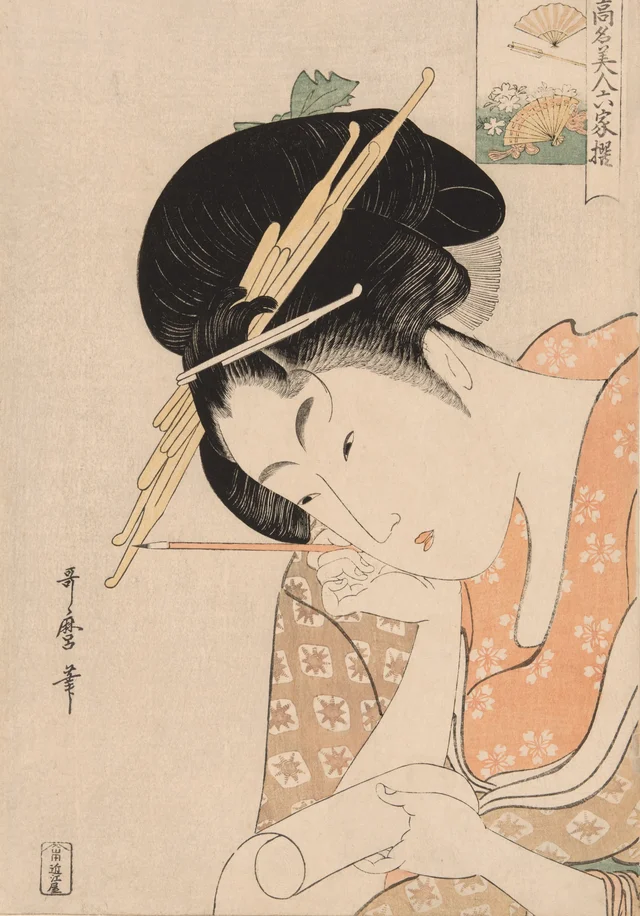
De zes Juwelen rivieren, Kitagawa Utamaro

De zes Juwelen rivieren, 1795–1800.

Kitagawa Utamaro (Japanese), colour woodcut on paper

Rijksmuseum, Netherlands
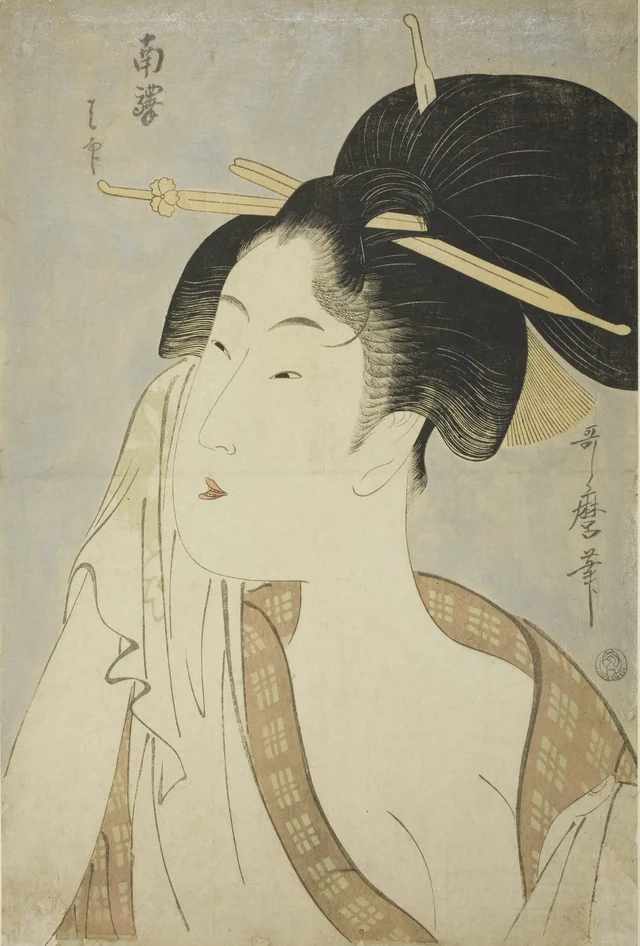
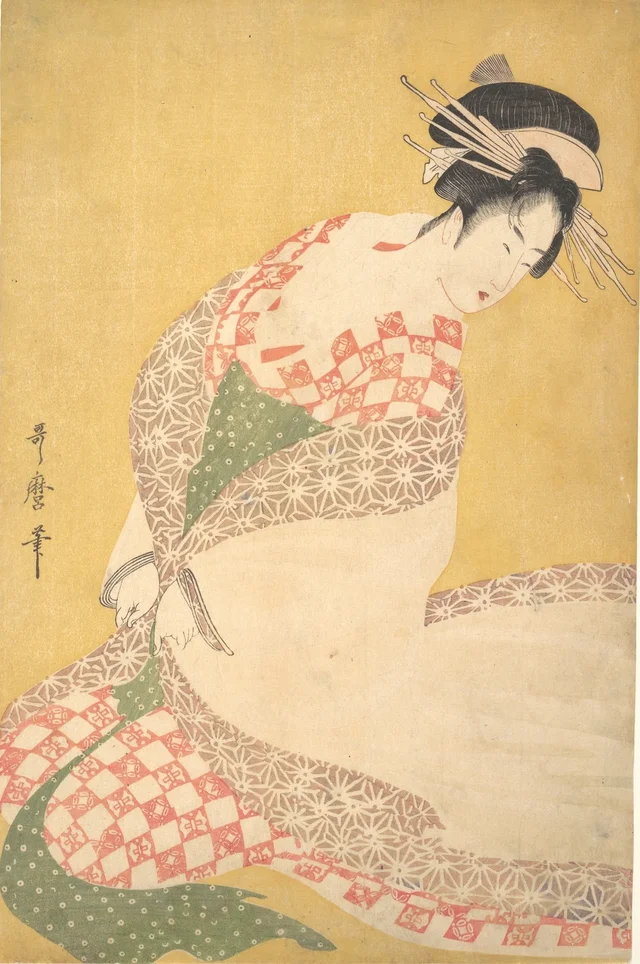
The Outer Robe, Kitagawa Utamaro

The Outer Robe, c. 1795.

Kitagawa Utamaro (Japanese), colour woodcut on paper

Metropolitan Museum of Art, United States
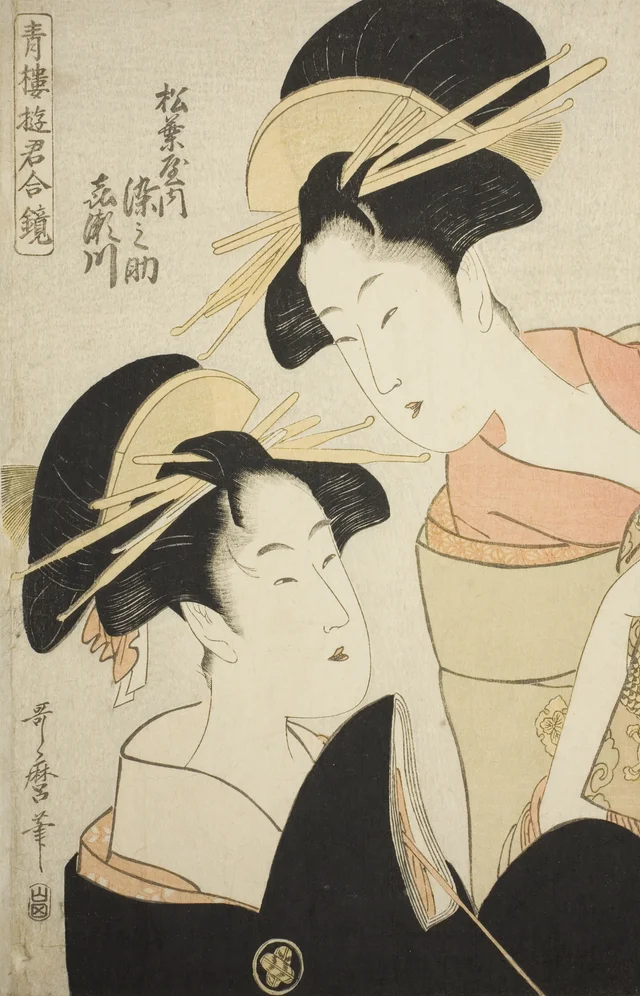
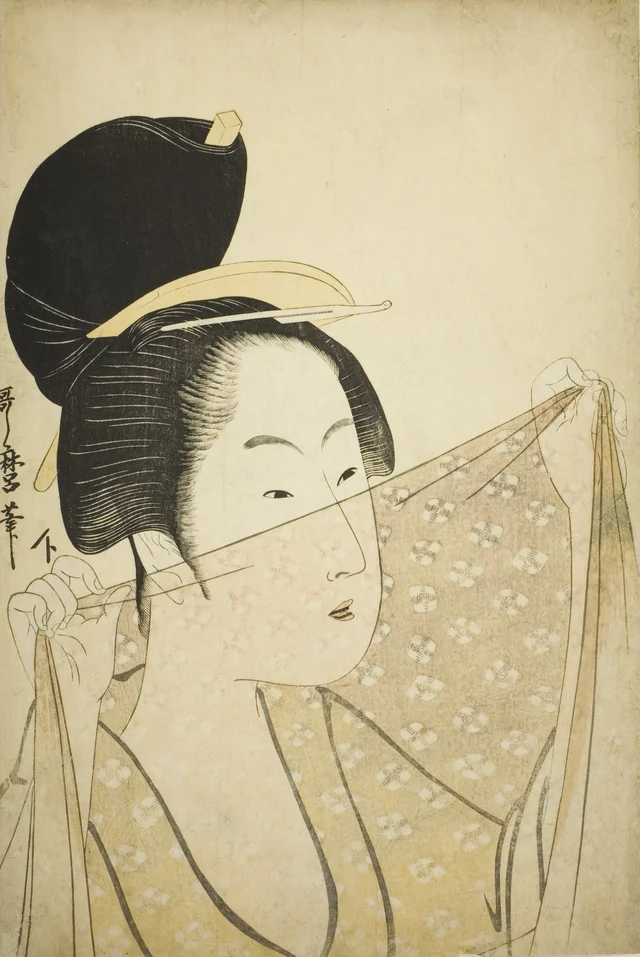
Woman Holding up a Piece of Fabric (Nuno o kazasu onna), Kitagawa Utamaro

Woman Holding up a Piece of Fabric (Nuno o kazasu onna), c. 1795–1796.

Kitagawa Utamaro (Japanese), colour woodcut on paper

Art Institute of Chicago, United States