Useum

Edo

76 works by 5 artists

76 works featuring “Edo” by 5 artists, from the 18th to the 20th century, held in 8 museums.

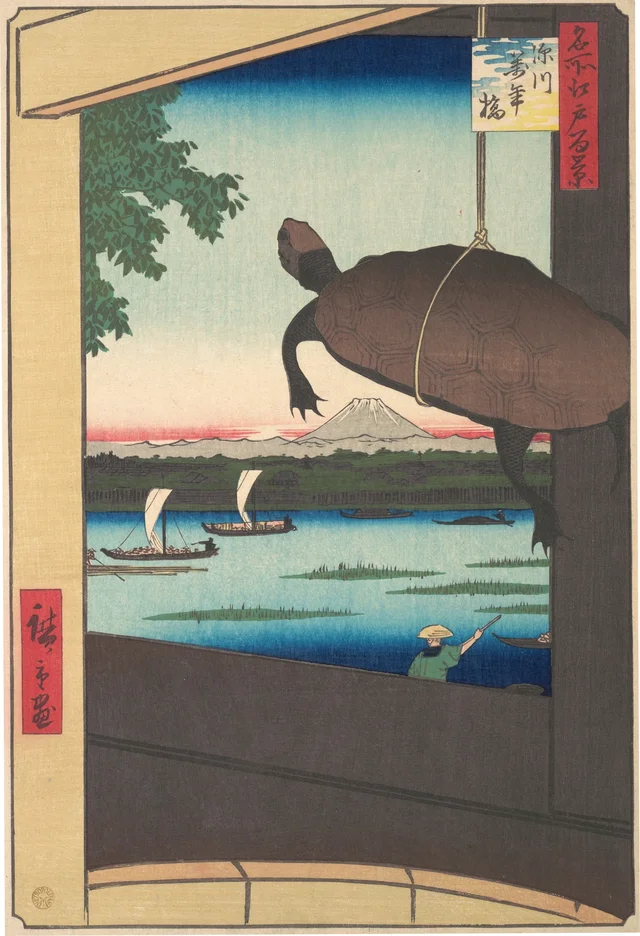
Mannen Bridge, Fukagawa, from the series One Hundred Famous Views of Edo (Meisho Edo hyakkei), Utagawa Hiroshige

Mannen Bridge, Fukagawa, from the series One Hundred Famous Views of Edo (Meisho Edo hyakkei), 1858.

Mannen Bridge, Fukagawa (museum title)

Utagawa Hiroshige (Japanese), colour woodcut on paper

Metropolitan Museum of Art, United States

Courtesan Hitomoto of the Daimonjiya, Kitagawa Utamaro

Courtesan Hitomoto of the Daimonjiya, c. 1801–1802.

Kitagawa Utamaro (Japanese), colour woodcut on paper

Minneapolis Institute of Art, United States

Takigawa of the Ōgiya from the series A Selection of Eastern Beauties, Kitagawa Utamaro

Takigawa of the Ōgiya from the series A Selection of Eastern Beauties, c. 1798.

Kitagawa Utamaro (Japanese), colour woodcut on paper

Cleveland Museum of Art, United States

Tsuruya uchi Shinowara, Kitagawa Utamaro

Tsuruya uchi Shinowara, 1795–1800.

Kitagawa Utamaro (Japanese), colour woodcut on paper

Rijksmuseum, Netherlands

"Hanazuma of Hyōgoya, Kenbishi of Sakagami” from the series The Peers of Saké Likened to Select Denizens of Six Houses (Natori zake rokkasen: Hyōgoya Hanazuma, Sakagami no Kenbishi), Kitagawa Utamaro

"Hanazuma of Hyōgoya, Kenbishi of Sakagami” from the series The Peers of Saké Likened to Select Denizens of Six Houses (Natori zake rokkasen: Hyōgoya Hanazuma, Sakagami no Kenbishi), c. 1794.

Kitagawa Utamaro (Japanese), colour woodcut on paper

Metropolitan Museum of Art, United States
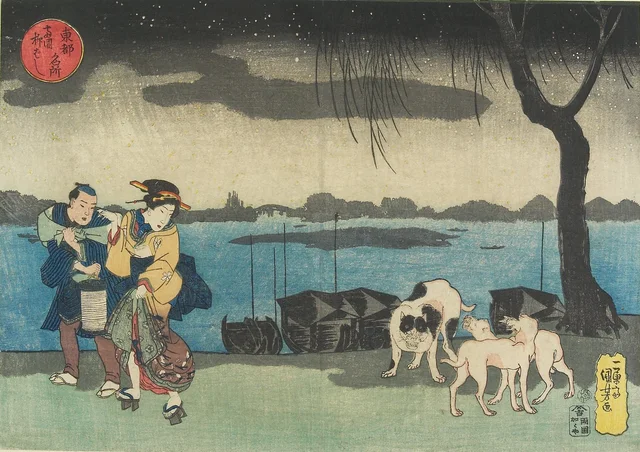
Surugadai, from the series "Famous Places in the Eastern Capital (Toto Meisho)", Utagawa Kuniyoshi

Surugadai, from the series "Famous Places in the Eastern Capital (Toto Meisho)", c. 1832–1833.

Utagawa Kuniyoshi (Japanese), colour woodcut on paper

Art Institute of Chicago, United States

“Hanaōgi of the Gomeirō,” from the series Comparing the Charms of Beauties (Bijin kiryō kurabe: Gomeirō Hanaōgi), Kitagawa Utamaro

“Hanaōgi of the Gomeirō,” from the series Comparing the Charms of Beauties (Bijin kiryō kurabe: Gomeirō Hanaōgi), c. 1794–1795.

Kitagawa Utamaro (Japanese), colour woodcut on paper

Metropolitan Museum of Art, United States

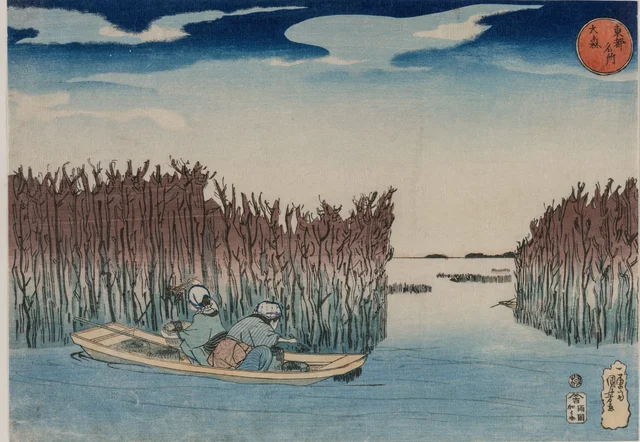
Ōmori, from the series Famous Places in the Eastern Capital, Utagawa Kuniyoshi

Ōmori, from the series Famous Places in the Eastern Capital, 1830s.

Utagawa Kuniyoshi (Japanese), colour woodcut on paper

Cleveland Museum of Art, United States

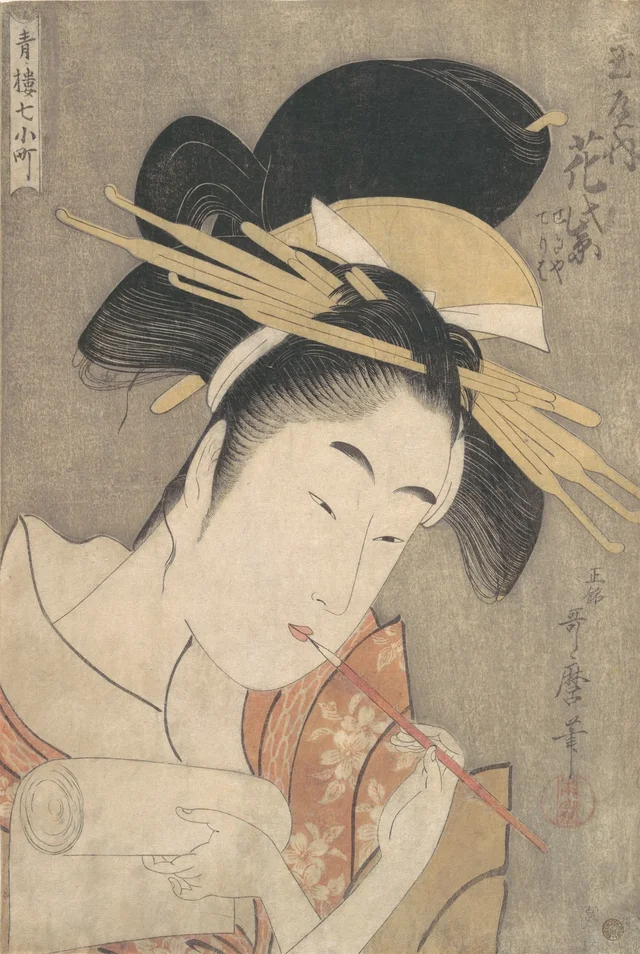
“Hanamurasaki of the Tamaya,” from the series Seven Komachi of the Pleasure Quarters (Seirō Nana Komachi), Kitagawa Utamaro

“Hanamurasaki of the Tamaya,” from the series Seven Komachi of the Pleasure Quarters (Seirō Nana Komachi), c. 1790.

Kitagawa Utamaro (Japanese), colour woodcut on paper

Metropolitan Museum of Art, United States

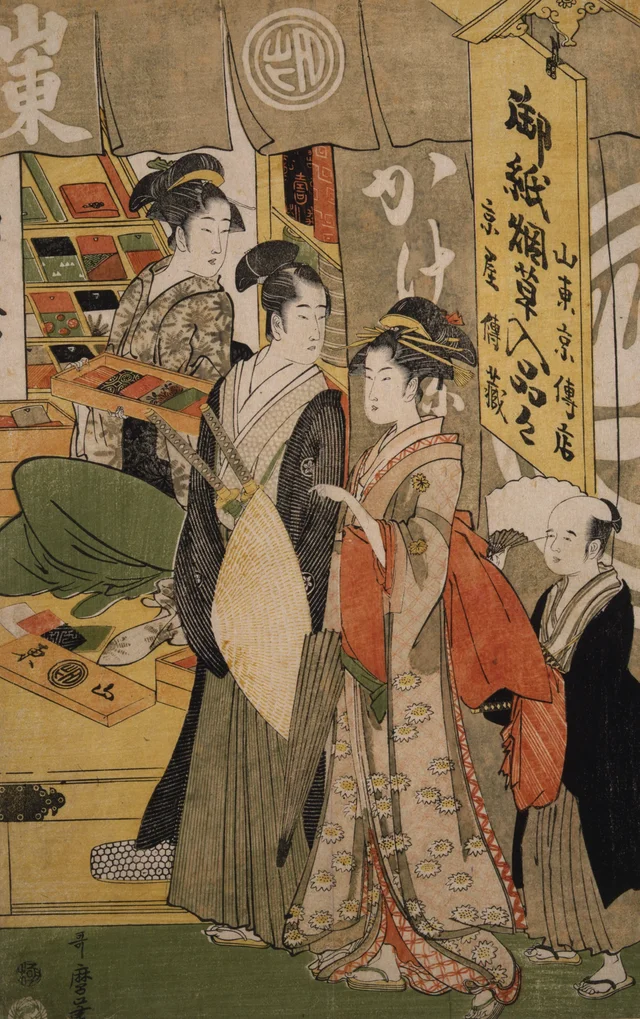
The Shop of Santō Kyōden, Kitagawa Utamaro

The Shop of Santō Kyōden, 18th century.

山東京伝の店 (museum title)

Kitagawa Utamaro (Japanese), colour woodcut on paper

Tokyo National Museum, Japan

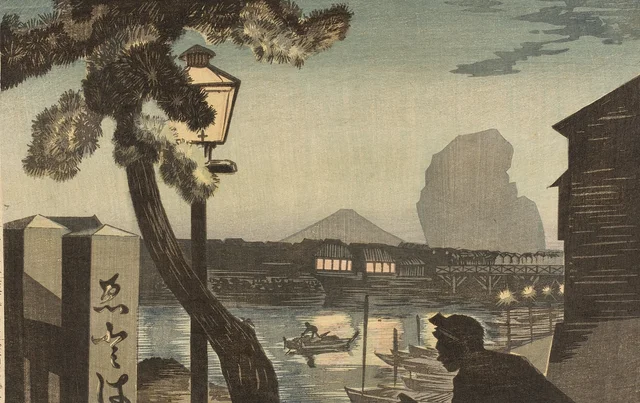
Mt. Fuji at Dusk from Edo Bridge, Kobayashi Kiyochika

Mt. Fuji at Dusk from Edo Bridge, 1879.

Kobayashi Kiyochika (Japanese), color woodblock print

Los Angeles County Museum of Art, United States

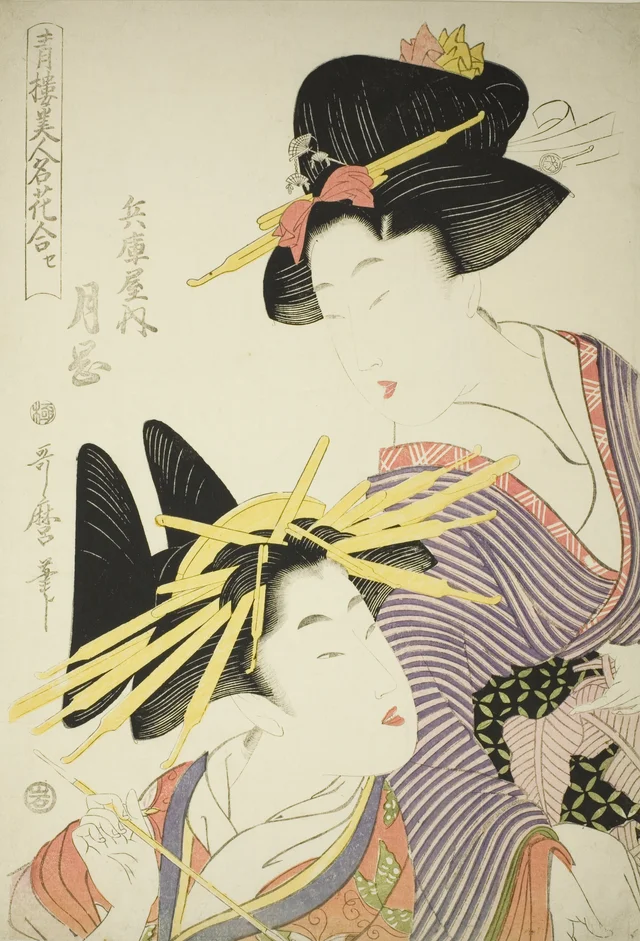
Tsukioka of the Hyogoya (Hyogoya uchi tsukioka), from the series "Seiro bijin meika awase", Kitagawa Utamaro

Tsukioka of the Hyogoya (Hyogoya uchi tsukioka), from the series "Seiro bijin meika awase", c. 1801.

Kitagawa Utamaro (Japanese), colour woodcut on paper

Art Institute of Chicago, United States

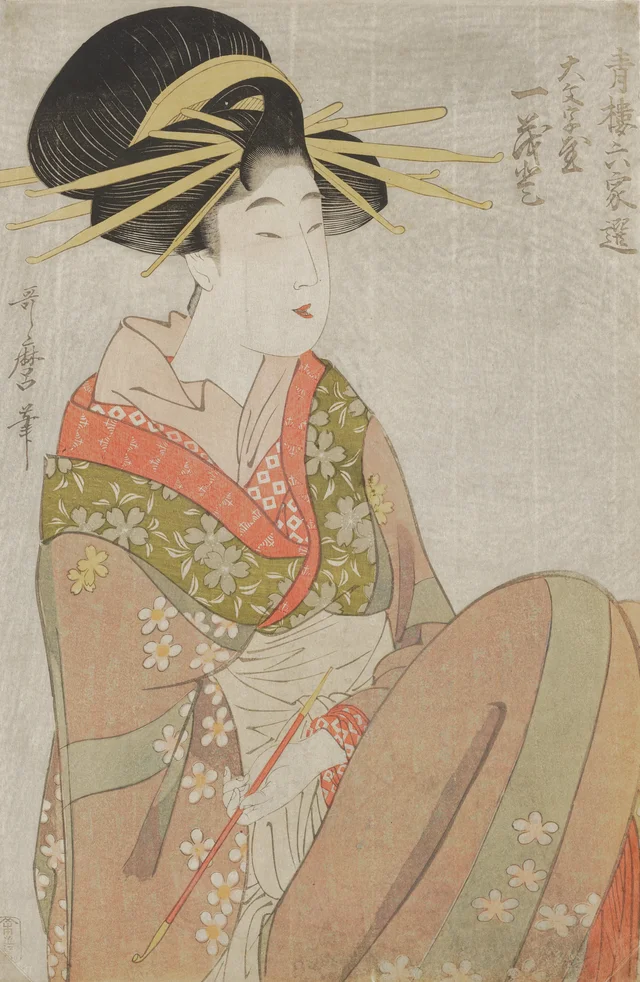
Hanaōgi of Ōgiya from the series Picture Puzzles, Kitagawa Utamaro

Hanaōgi of Ōgiya from the series Picture Puzzles, c. 1797.

Kitagawa Utamaro (Japanese), colour woodcut on paper

Cleveland Museum of Art, United States

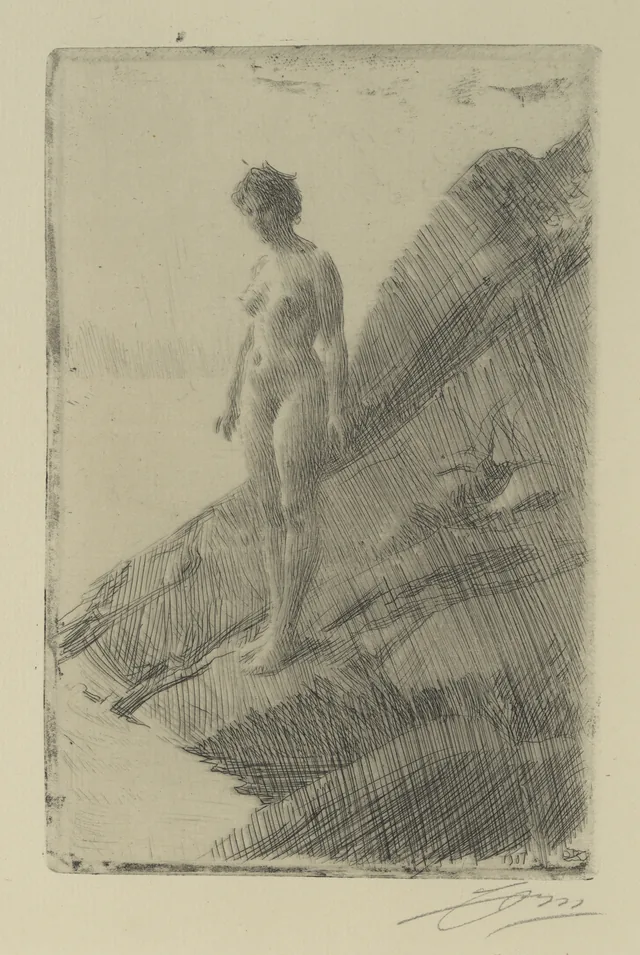
Edö, Anders Zorn

Edö, 1907.

Anders Zorn (Swedish), etching

Thiel Gallery, Sweden

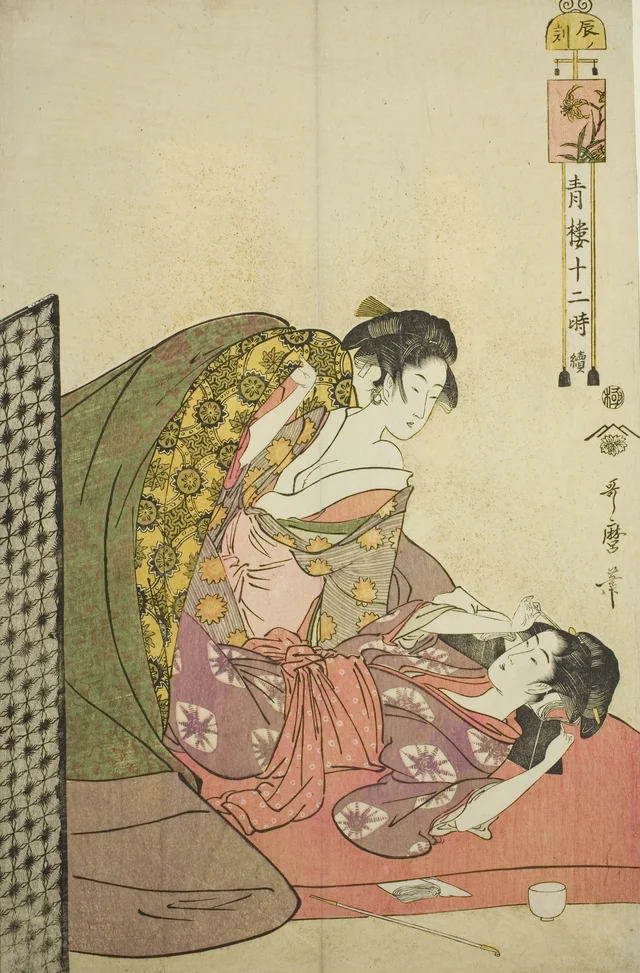
Hour of the Dragon (Tatsu no koku), from the series "Twelve Hours in Yoshiwara (Seiro juni toki tsuzuki)", Kitagawa Utamaro

Hour of the Dragon (Tatsu no koku), from the series "Twelve Hours in Yoshiwara (Seiro juni toki tsuzuki)", c. 1794.

Kitagawa Utamaro (Japanese), colour woodcut on paper

Art Institute of Chicago, United States

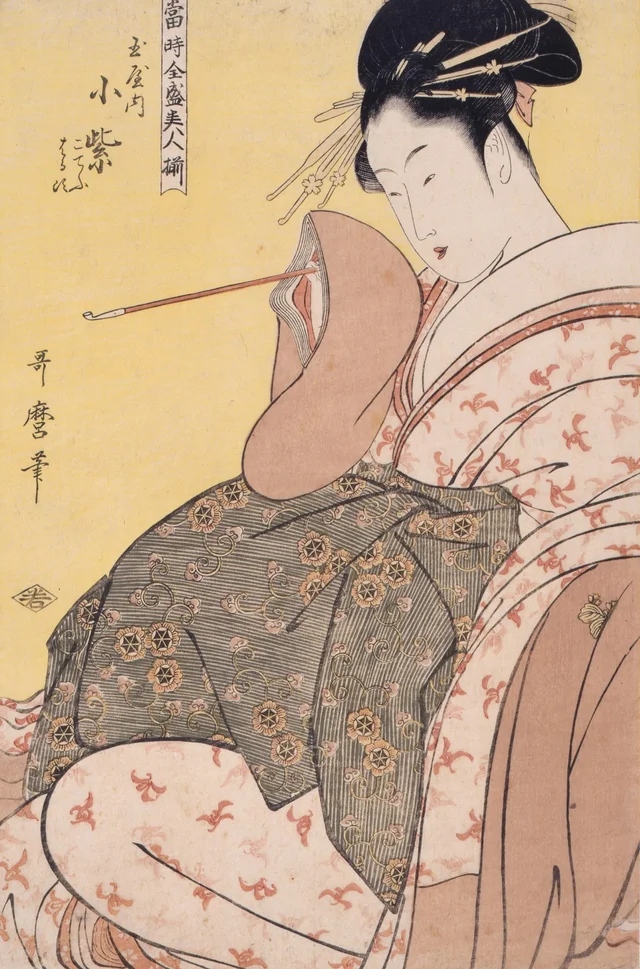
"Komurasaki of the Tamaya with the Attendants Kochō and Haruji" from the Series "Collection of Contemporary Popular Beauties", Kitagawa Utamaro

"Komurasaki of the Tamaya with the Attendants Kochō and Haruji" from the Series "Collection of Contemporary Popular Beauties", 1794.

當時全盛美人揃・玉屋内小紫、こてふ、はる次 (museum title)

Kitagawa Utamaro (Japanese), colour woodcut on paper

Tokyo National Museum, Japan

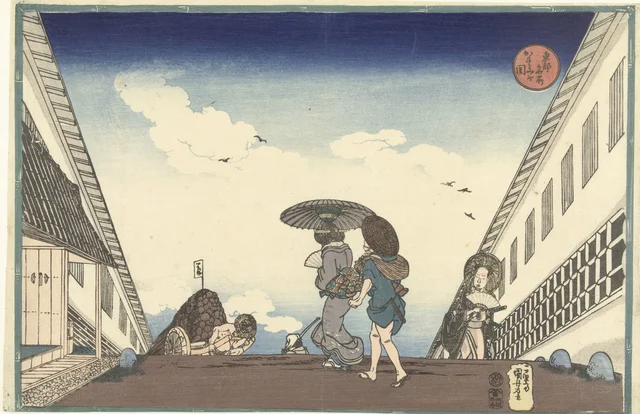
Kasumigaseki, Utagawa Kuniyoshi

Kasumigaseki, 1831–1833.

Utagawa Kuniyoshi (Japanese), colour woodcut on paper

Rijksmuseum, Netherlands

Yanagibashi Bridge at Ryo_goku, Utagawa Kuniyoshi

Yanagibashi Bridge at Ryo_goku, 1830–1844.

Utagawa Kuniyoshi (Japanese), colour woodcut on paper

Minneapolis Institute of Art, United States
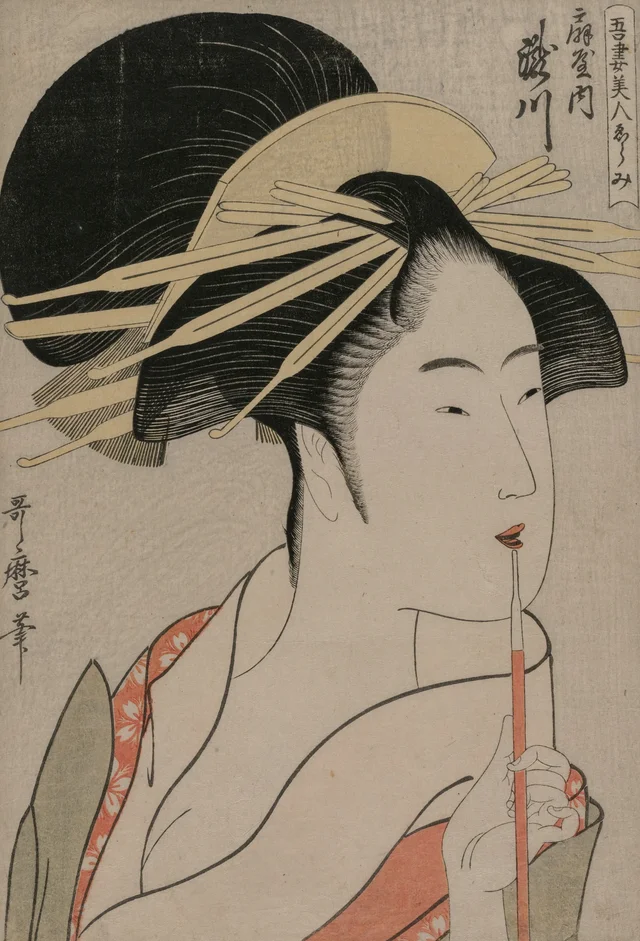
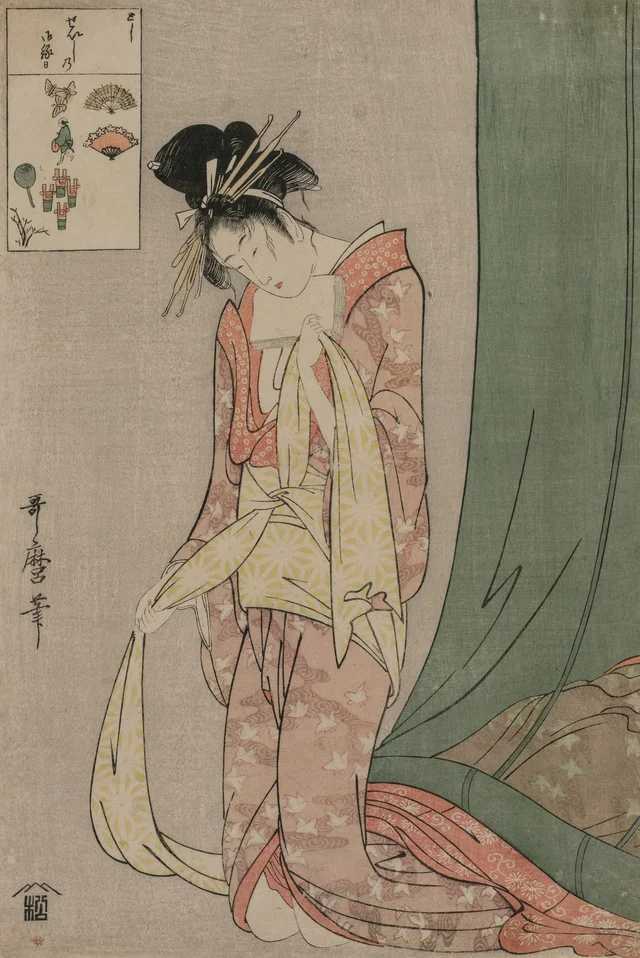
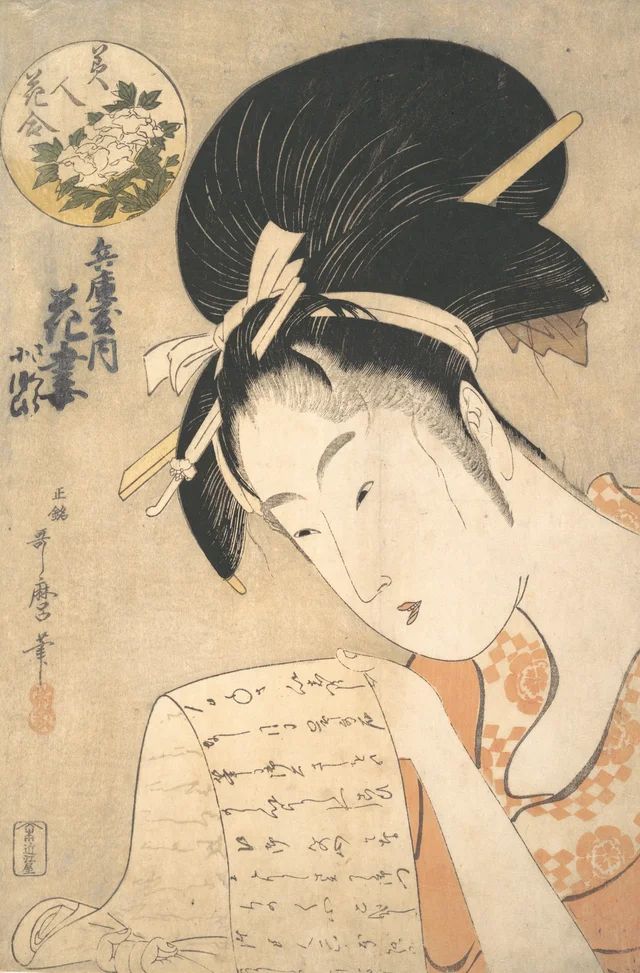
“The Courtesan Hanazuma Reading a Letter,” from the series Beauties Compared to Flowers (Bijin hana awase), Kitagawa Utamaro

“The Courtesan Hanazuma Reading a Letter,” from the series Beauties Compared to Flowers (Bijin hana awase), 1790s.

Kitagawa Utamaro (Japanese), colour woodcut on paper

Metropolitan Museum of Art, United States

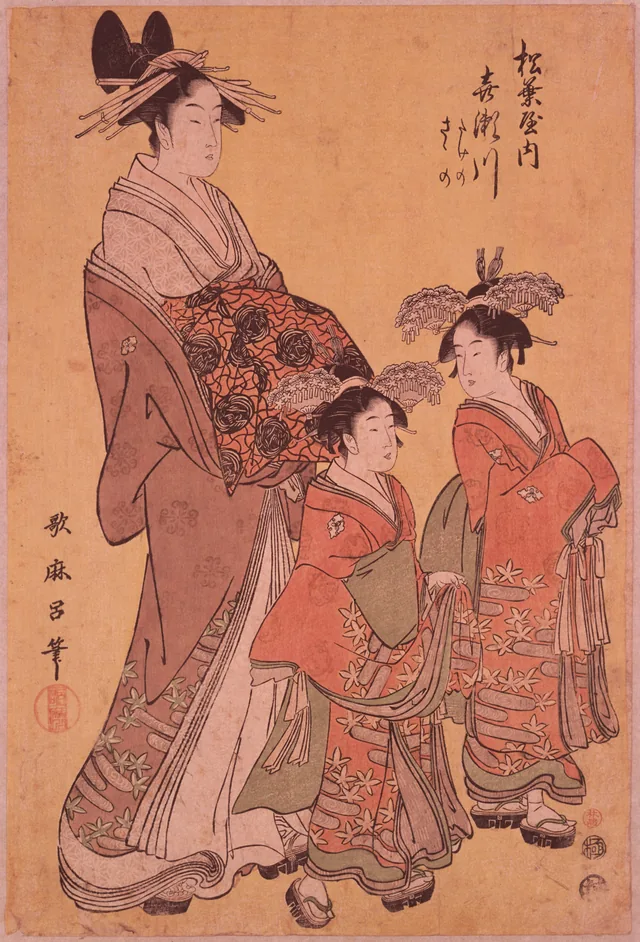
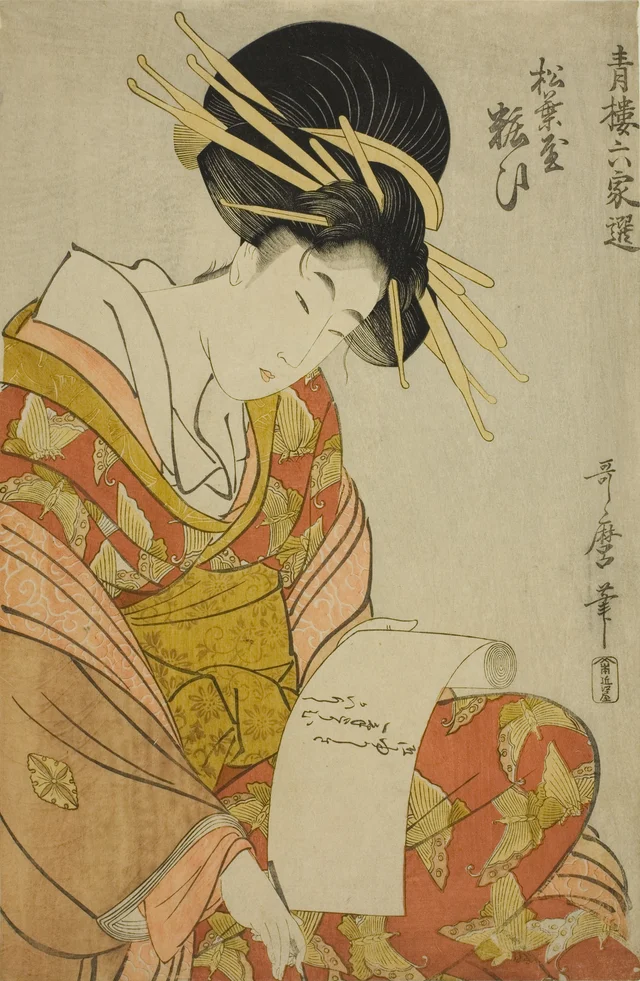
Kisegawa of the Matsubaya, sheet of a pentaptych, Kitagawa Utamaro

Kisegawa of the Matsubaya, sheet of a pentaptych, 18th century.

松葉屋内喜瀬川 (museum title)

Kitagawa Utamaro (Japanese), colour woodcut on paper

Tokyo National Museum, Japan

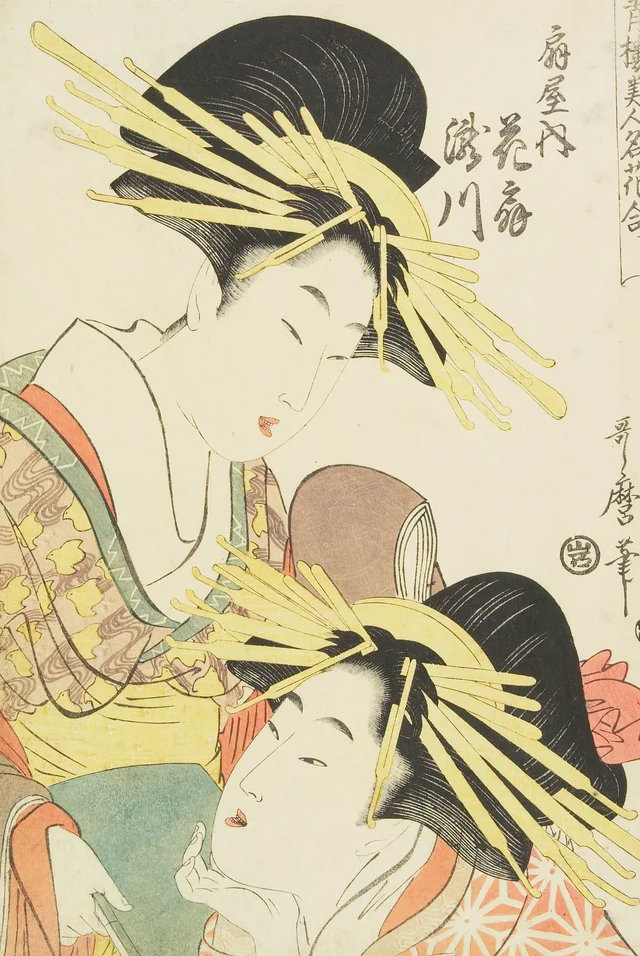
The Courtesans Hanaōgi and Takigawa of the Ōgiya House, Kitagawa Utamaro

The Courtesans Hanaōgi and Takigawa of the Ōgiya House, c. 1805.

Kitagawa Utamaro (Japanese), colour woodcut on paper

Minneapolis Institute of Art, United States

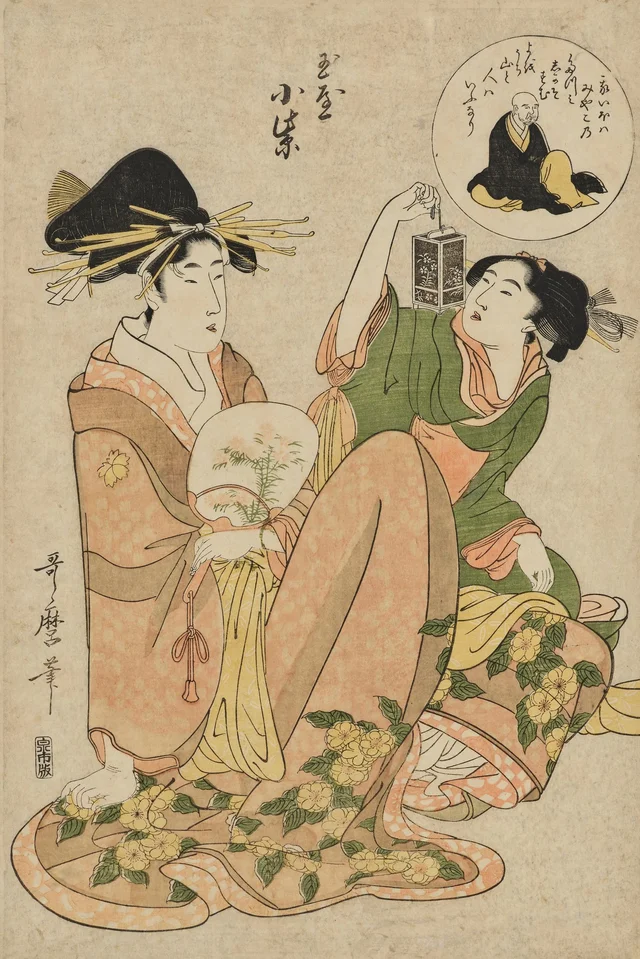
"Komurasaki of the Tamaya" from the Series "Courtesans for the Six Poetic Sages", Kitagawa Utamaro

"Komurasaki of the Tamaya" from the Series "Courtesans for the Six Poetic Sages", 19th century.

遊女見立六歌仙・玉屋小紫 喜撰法師 (museum title)

Kitagawa Utamaro (Japanese), colour woodcut on paper

Tokyo National Museum, Japan

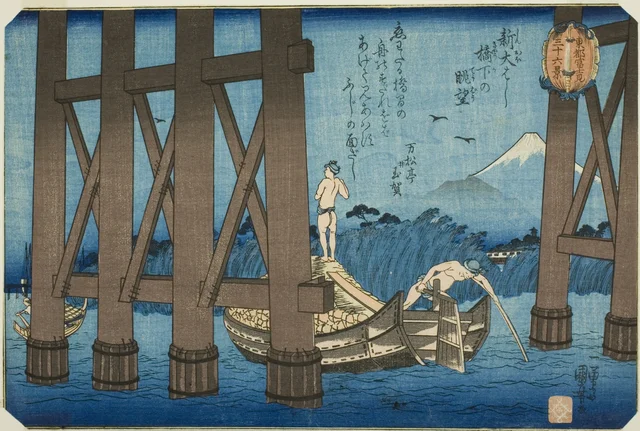
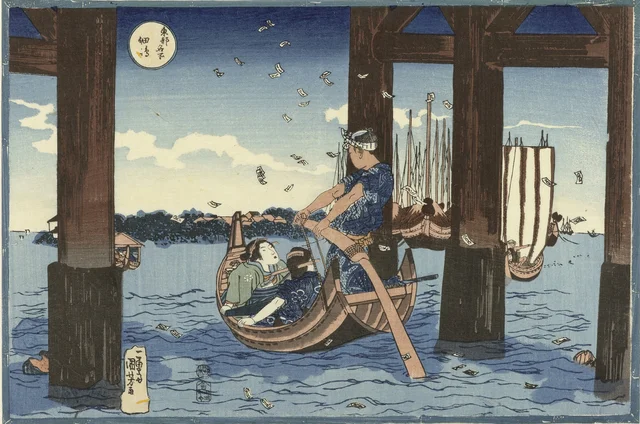
Distant View from beneath Shin Ohashi Bridge (Shin Ohashi kyoka no chobo), from the series "Thirty-six Views of Mount Fuji Seen from the Eastern Capital (Toto Fujimi sanjurokkei)", Utagawa Kuniyoshi

Distant View from beneath Shin Ohashi Bridge (Shin Ohashi kyoka no chobo), from the series "Thirty-six Views of Mount Fuji Seen from the Eastern Capital (Toto Fujimi sanjurokkei)", c. 1843.

Utagawa Kuniyoshi (Japanese), colour woodcut on paper

Art Institute of Chicago, United States

The Niwaka Performers, Kitagawa Utamaro

The Niwaka Performers, c. 1795.

Kitagawa Utamaro (Japanese), colour woodcut on paper

Metropolitan Museum of Art, United States

Hour of the Rat [12pm] (Ne no koku), from the series "The Twelve Hours in Yoshiwara (Seiro juni toki tsuzuki)", Kitagawa Utamaro

Hour of the Rat [12pm] (Ne no koku), from the series "The Twelve Hours in Yoshiwara (Seiro juni toki tsuzuki)", c. 1794.

Kitagawa Utamaro (Japanese), colour woodcut on paper

Art Institute of Chicago, United States

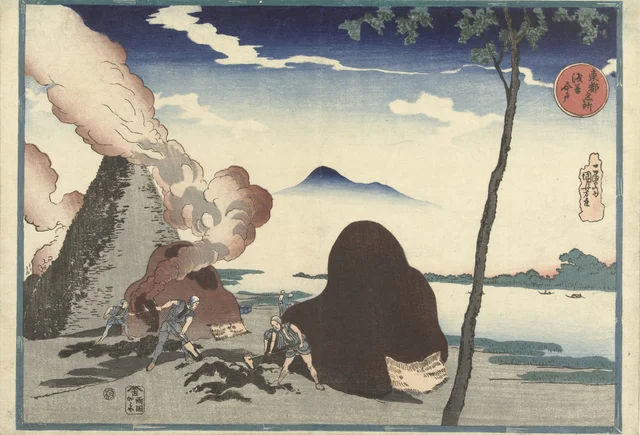
Tsukuda Island, Utagawa Kuniyoshi

Tsukuda Island, 1831–1835.

Utagawa Kuniyoshi (Japanese), colour woodcut on paper

Rijksmuseum, Netherlands

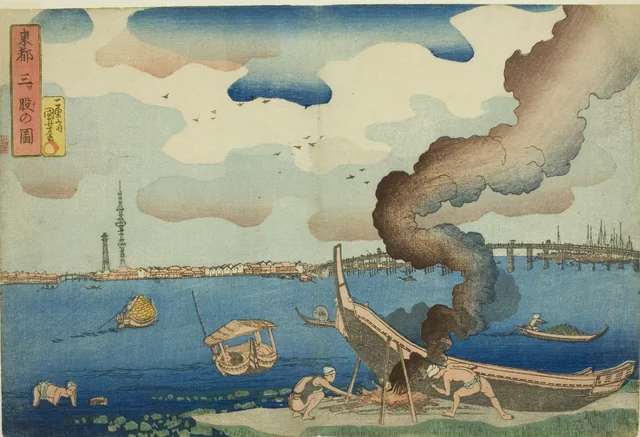
View of Mitsumata in the Eastern Capital (Toto Mitsumata no zu), from the series "Views of the Eastern Capital (Toto no zu)", Utagawa Kuniyoshi

View of Mitsumata in the Eastern Capital (Toto Mitsumata no zu), from the series "Views of the Eastern Capital (Toto no zu)", 1830s.

Utagawa Kuniyoshi (Japanese), colour woodcut on paper

Art Institute of Chicago, United States

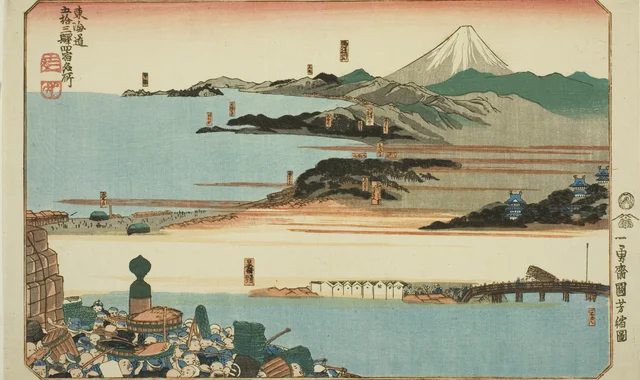
Nihonbashi, Shinagawa, Kawasaki, and Kanagawa, from the series "Famous Places on the Fifty-three Stations of the Tokaido, Four Stations (Tokaido gojusan eki yonshuku meisho)", Utagawa Kuniyoshi

Nihonbashi, Shinagawa, Kawasaki, and Kanagawa, from the series "Famous Places on the Fifty-three Stations of the Tokaido, Four Stations (Tokaido gojusan eki yonshuku meisho)", c. 1830–1835.

Utagawa Kuniyoshi (Japanese), colour woodcut on paper

Art Institute of Chicago, United States

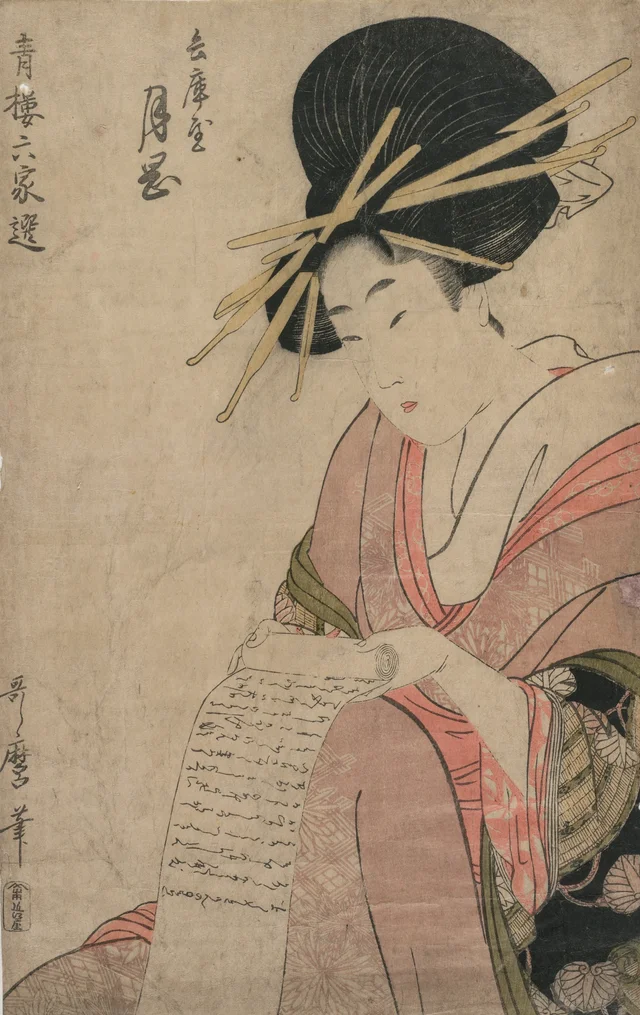
The Courtesan Tsukioka of Hyogoya Rolling a Letter (from the series A Selection of Six Authors in the Green Houses), Kitagawa Utamaro

The Courtesan Tsukioka of Hyogoya Rolling a Letter (from the series A Selection of Six Authors in the Green Houses), 1790s.

Kitagawa Utamaro (Japanese), colour woodcut on paper

Cleveland Museum of Art, United States
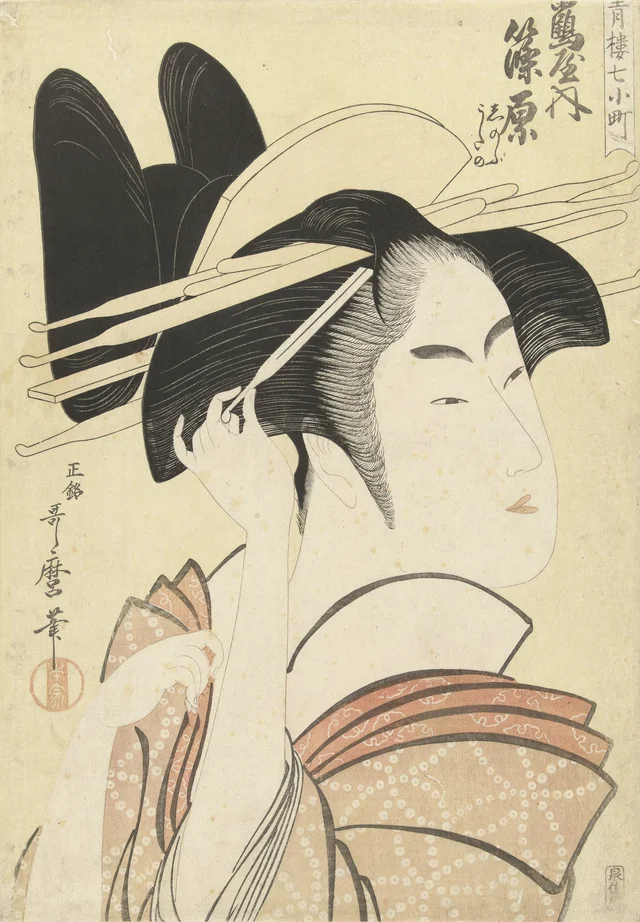
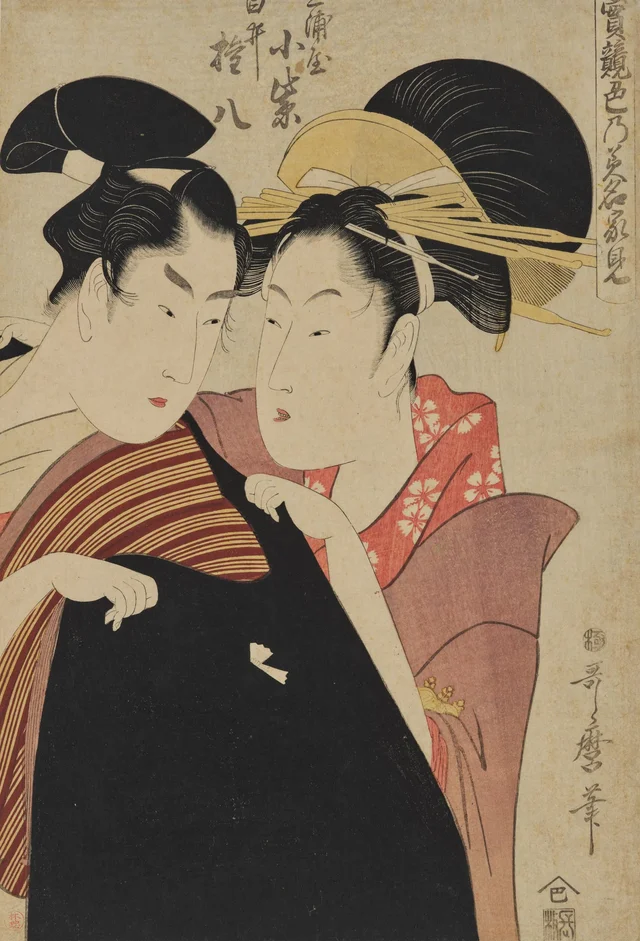
"Shirai Gonpachi and Miuraya Komurasaki" from the Series "Competition of Devotees to Love", Kitagawa Utamaro

"Shirai Gonpachi and Miuraya Komurasaki" from the Series "Competition of Devotees to Love", 18th century.

實竸色乃美名家見・三浦屋小紫 白井権八 (museum title)

Kitagawa Utamaro (Japanese), colour woodcut on paper

Tokyo National Museum, Japan

Yosooi of the Matsubaya, from the series Selections from Six Houses in Yoshiwara (Seiro rokkasen) (Matsubaya Yosooi), Kitagawa Utamaro

Yosooi of the Matsubaya, from the series Selections from Six Houses in Yoshiwara (Seiro rokkasen) (Matsubaya Yosooi), c. 1801.

Kitagawa Utamaro (Japanese), colour woodcut on paper

Art Institute of Chicago, United States

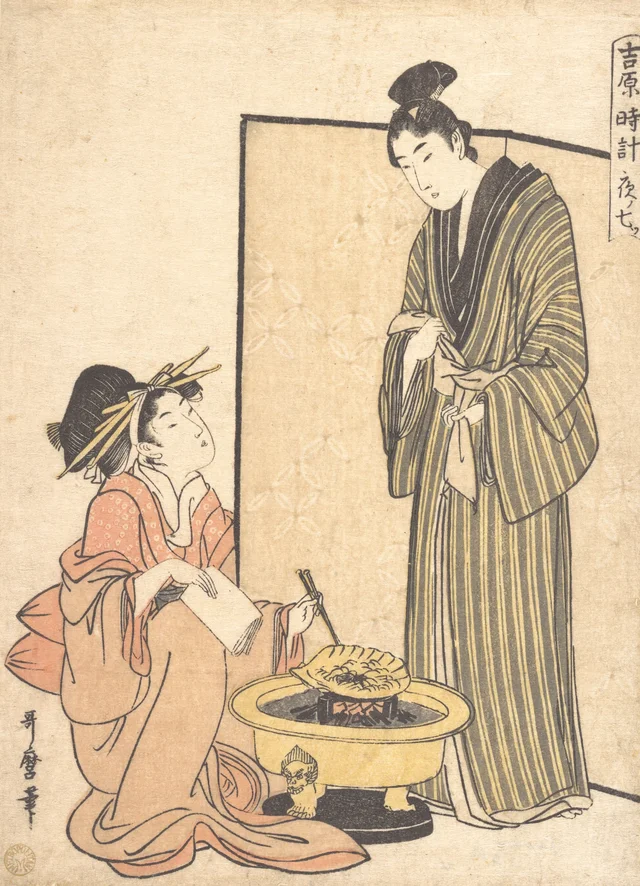
The Seventh Hour of the Night, Kitagawa Utamaro

The Seventh Hour of the Night, c. 1800.

Kitagawa Utamaro (Japanese), colour woodcut on paper

Metropolitan Museum of Art, United States

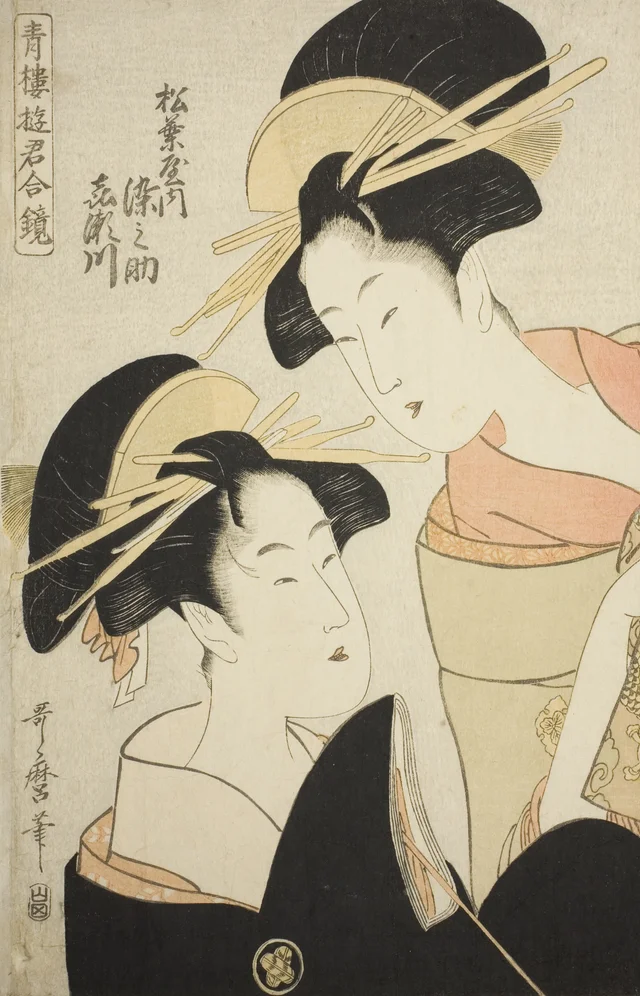
The Courtesans Somenosuke and Kisegawa of the Matsubaya, from the series "A Mirror of Courtesans of the Pleasure Quarters (Seiro yukun awase kagami)", Kitagawa Utamaro

The Courtesans Somenosuke and Kisegawa of the Matsubaya, from the series "A Mirror of Courtesans of the Pleasure Quarters (Seiro yukun awase kagami)", c. 1797.

Kitagawa Utamaro (Japanese), colour woodcut on paper

Art Institute of Chicago, United States

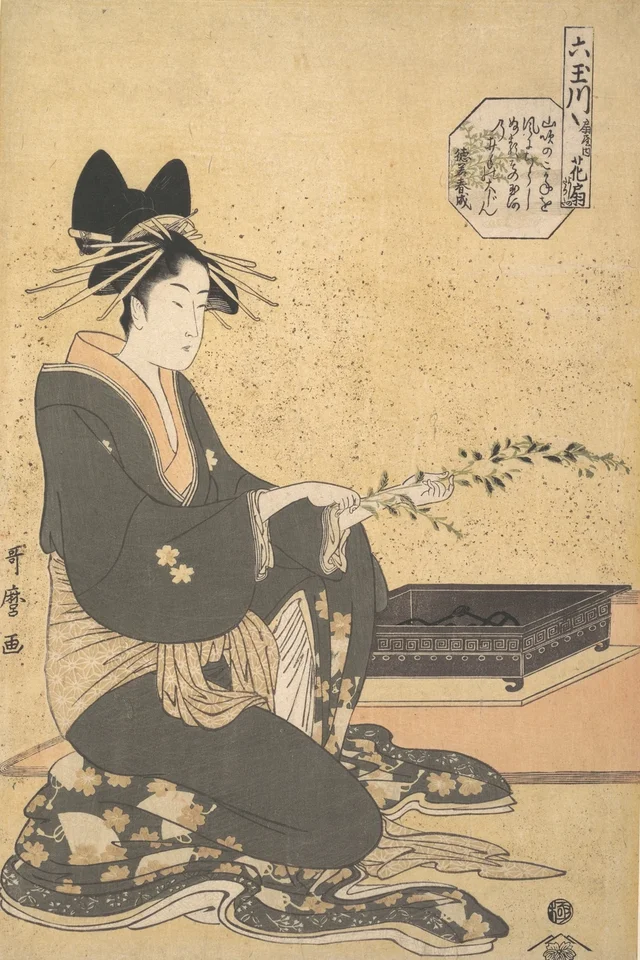
The Oiran Hanaogi of Ogiya, from the series “Six Jewel Rivers” (Mutamagawa), Kitagawa Utamaro

The Oiran Hanaogi of Ogiya, from the series “Six Jewel Rivers” (Mutamagawa), c. 1795–1796.

Kitagawa Utamaro (Japanese), colour woodcut on paper

Metropolitan Museum of Art, United States

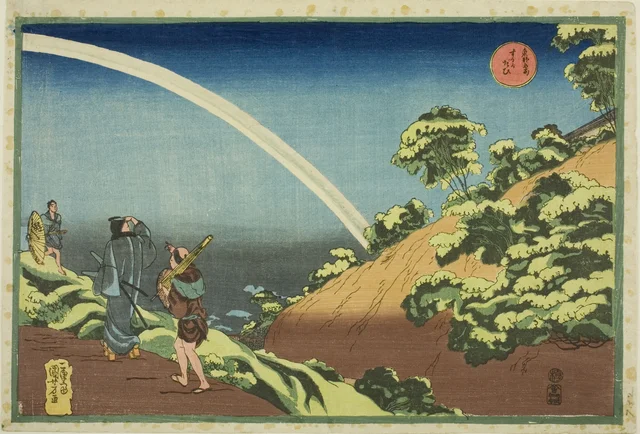
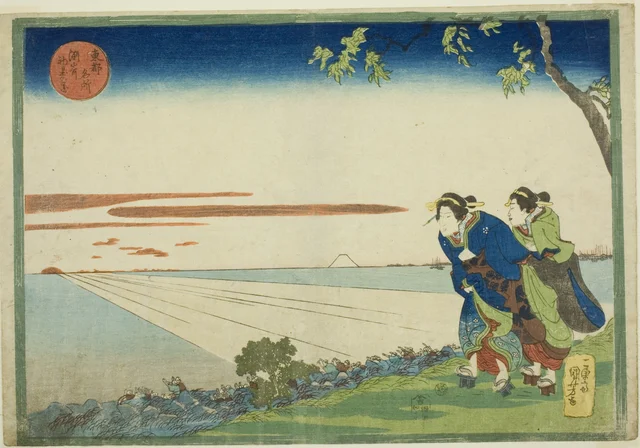
Sunrise on New Year's Day at Susaki (Susaki hatsu hinode no zu), from the series "Famous Places in the Eastern Capital (Toto meisho)", Utagawa Kuniyoshi

Sunrise on New Year's Day at Susaki (Susaki hatsu hinode no zu), from the series "Famous Places in the Eastern Capital (Toto meisho)", c. 1832–1833.

Utagawa Kuniyoshi (Japanese), colour woodcut on paper

Art Institute of Chicago, United States

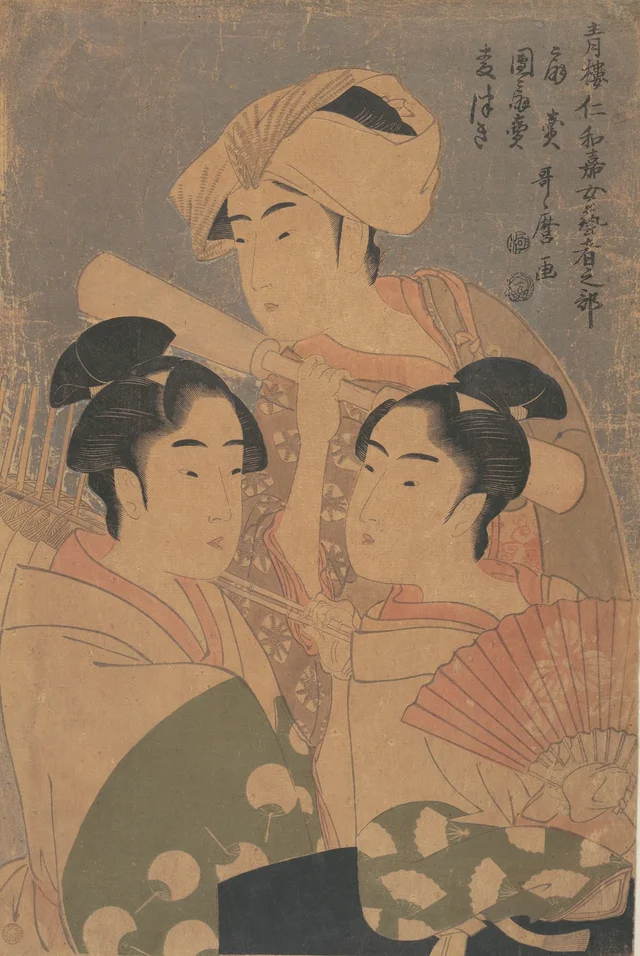
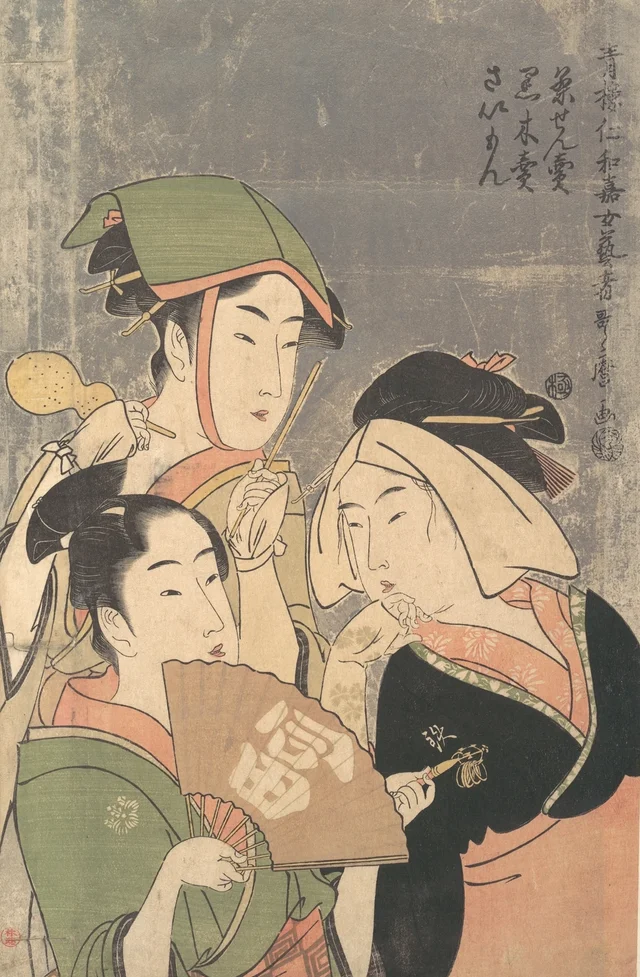
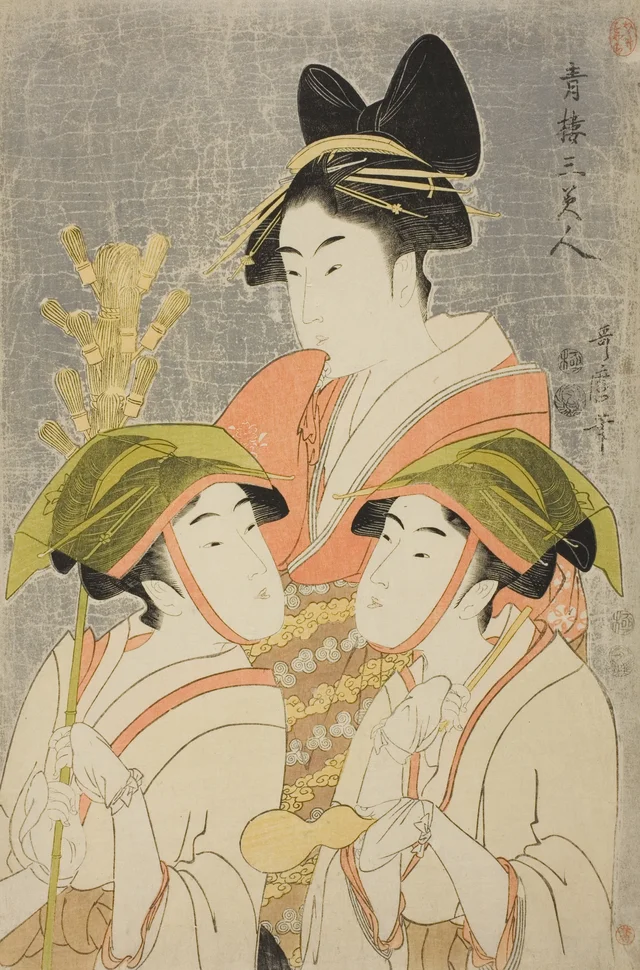
Three Niwaka Performers, Chasenuri, Kurokiri, and Saimon (Tea-whisk Seller, Firewood Seller, Shrine Festival Perfomer), from the “Geisha of the Yoshiwara Niwaka Festival” (Seiro Niwaka Onna Geisha), Kitagawa Utamaro

Three Niwaka Performers, Chasenuri, Kurokiri, and Saimon (Tea-whisk Seller, Firewood Seller, Shrine Festival Perfomer), from the “Geisha of the Yoshiwara Niwaka Festival” (Seiro Niwaka Onna Geisha), c. 1794.

Kitagawa Utamaro (Japanese), colour woodcut on paper

Metropolitan Museum of Art, United States

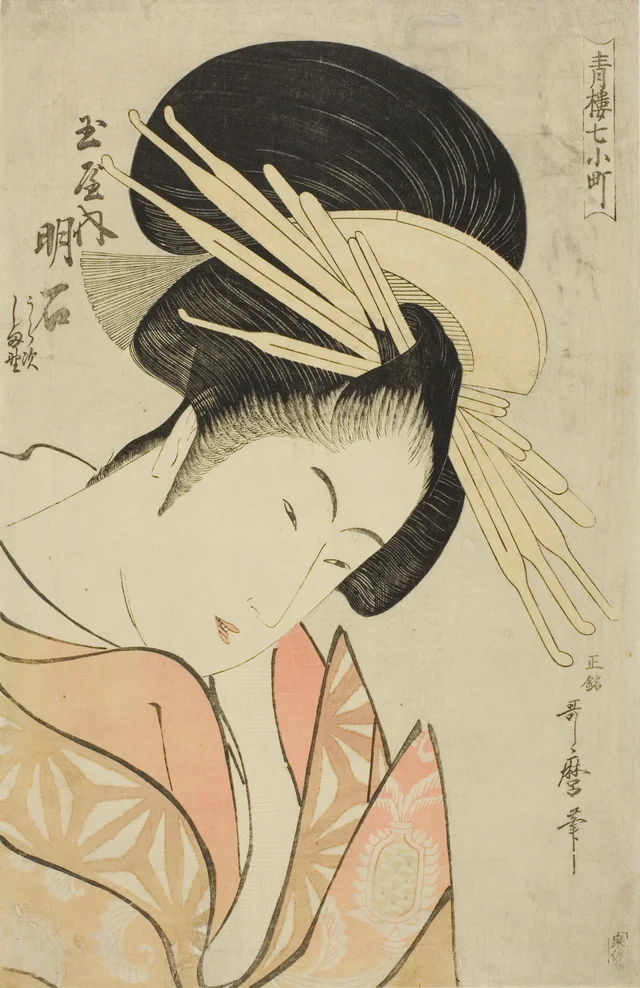
Akashi of the Tamaya, from the series Seven Komachis of Yoshiwara (Seiro nana Komachi) (Tamaya uchi Akashi, Uraji, Shimano), Kitagawa Utamaro

Akashi of the Tamaya, from the series Seven Komachis of Yoshiwara (Seiro nana Komachi) (Tamaya uchi Akashi, Uraji, Shimano), c. 1794–1795.

Kitagawa Utamaro (Japanese), colour woodcut on paper

Art Institute of Chicago, United States

Three Beauties of Yoshiwara (Seiro san bijin), Kitagawa Utamaro

Three Beauties of Yoshiwara (Seiro san bijin), 1793.

Kitagawa Utamaro (Japanese), colour woodcut on paper

Art Institute of Chicago, United States

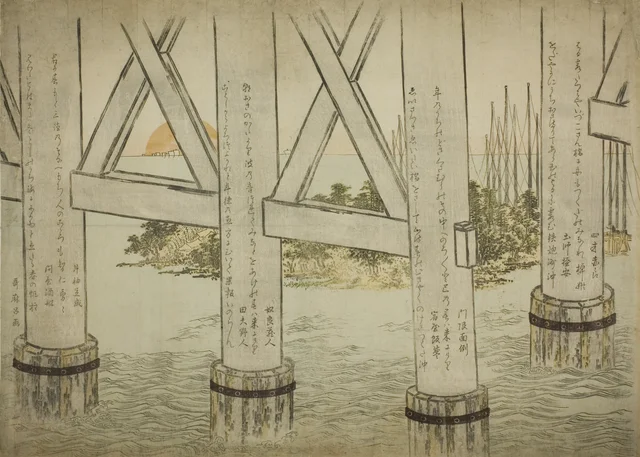
Pillars of Eitai Bridge, Kitagawa Utamaro

Pillars of Eitai Bridge, 1785.

Kitagawa Utamaro (Japanese), colour woodcut on paper

Art Institute of Chicago, United States

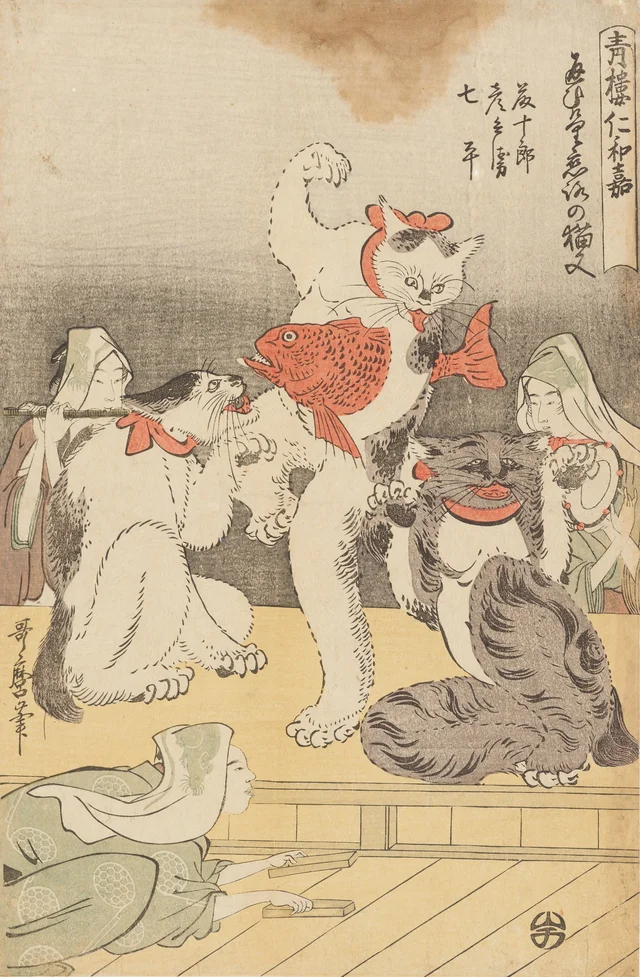
Cats Imitating the Niwaka Festival in the Pleasure Quarter, Kitagawa Utamaro

Cats Imitating the Niwaka Festival in the Pleasure Quarter, 18th century.

青樓仁和嘉・通ひけり恋路の猫又 (museum title)

Kitagawa Utamaro (Japanese), colour woodcut on paper

Tokyo National Museum, Japan

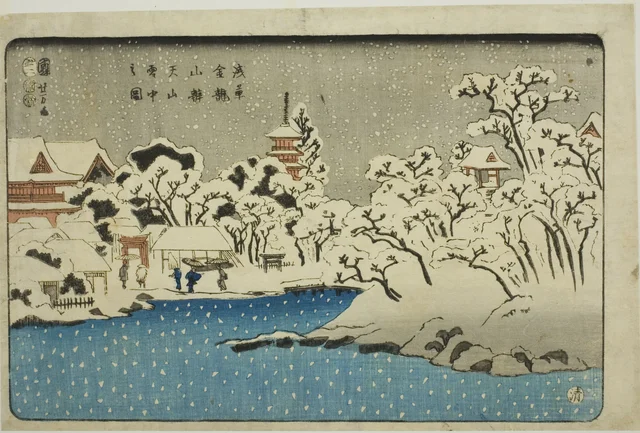
Snow on Benten Hill at Kinryuzan Temple in Asakusa (Asakusa Kinryuzan Bentenyama setchu no zu), Utagawa Kuniyoshi

Snow on Benten Hill at Kinryuzan Temple in Asakusa (Asakusa Kinryuzan Bentenyama setchu no zu), 1853.

Utagawa Kuniyoshi (Japanese), colour woodcut on paper

Art Institute of Chicago, United States

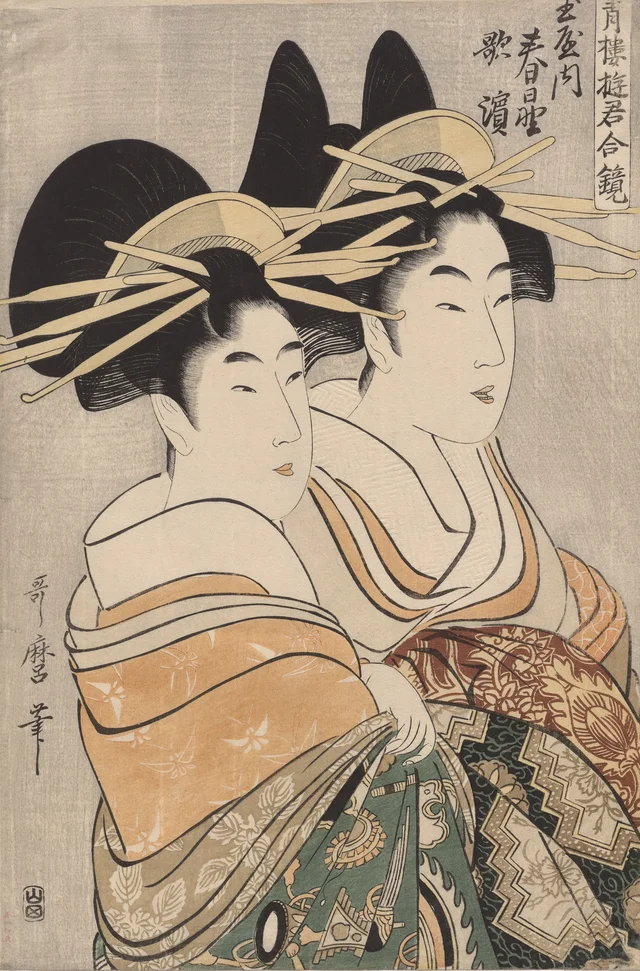
The Courtesans Kasugano and Utahama of Tamaya, from Courtesans of the Pleasure Quarters in Double Mirrors, Kitagawa Utamaro

The Courtesans Kasugano and Utahama of Tamaya, from Courtesans of the Pleasure Quarters in Double Mirrors, c. 1800.

Kitagawa Utamaro (Japanese), colour woodcut on paper

Cleveland Museum of Art, United States

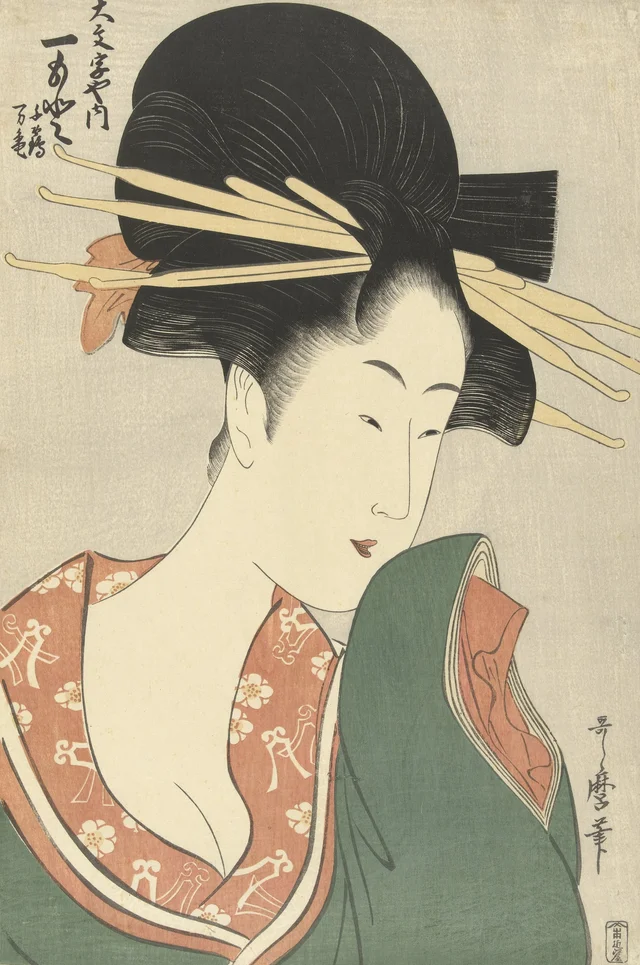
Daimonjiya uchi Hitomoto, Kitagawa Utamaro

Daimonjiya uchi Hitomoto, c. 1795–1800.

Kitagawa Utamaro (Japanese), colour woodcut on paper

Rijksmuseum, Netherlands
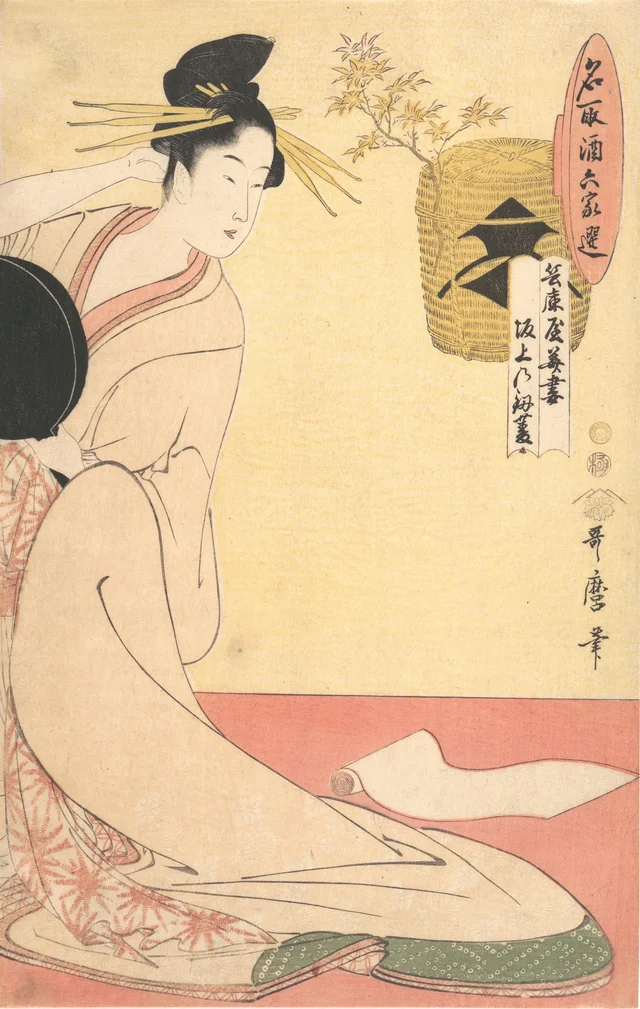
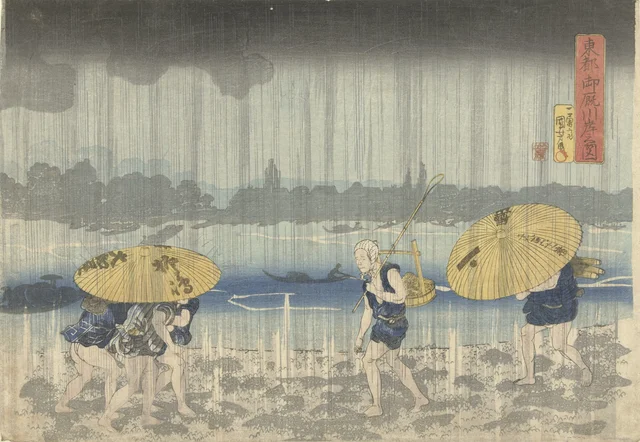
The Onmaya Riverbank in the Eastern Capital, Utagawa Kuniyoshi

The Onmaya Riverbank in the Eastern Capital, 1832–1836.

De Onmaya rivieroever in de Oostelijke hoofdstad (museum title)

Utagawa Kuniyoshi (Japanese), colour woodcut on paper

Rijksmuseum, Netherlands

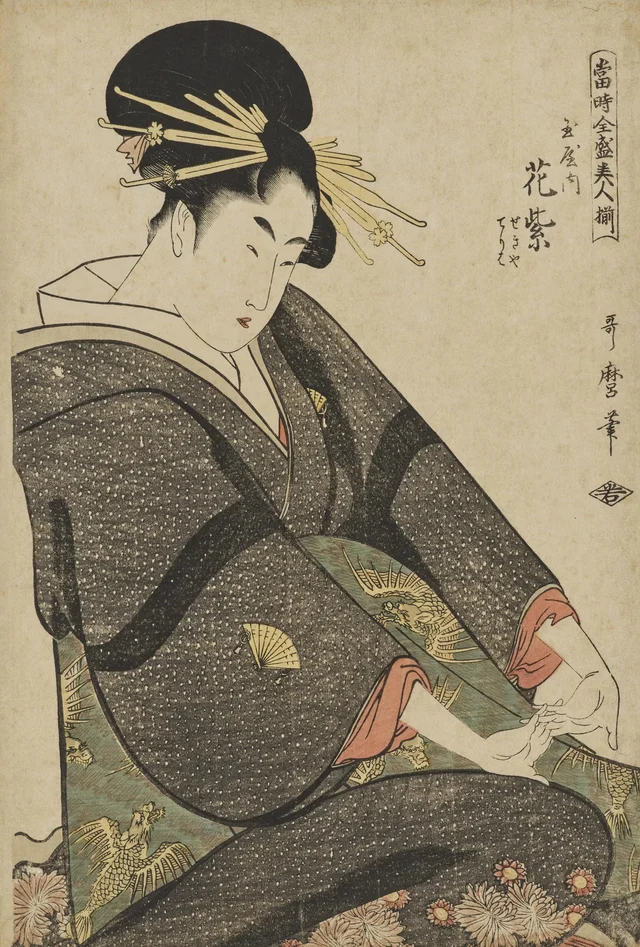
"Hanamurasaki, Sekiya, and Teriha of Tamaya" from the Series "Lineup of Contemporary Popular Beauties", Kitagawa Utamaro

"Hanamurasaki, Sekiya, and Teriha of Tamaya" from the Series "Lineup of Contemporary Popular Beauties", 1794.

當時全盛美人揃・玉屋内花紫、せきや、てりは (museum title)

Kitagawa Utamaro (Japanese), colour woodcut on paper

Tokyo National Museum, Japan

Asakusa Imado, Utagawa Kuniyoshi

Asakusa Imado, 1831–1835.

Utagawa Kuniyoshi (Japanese), colour woodcut on paper

Rijksmuseum, Netherlands

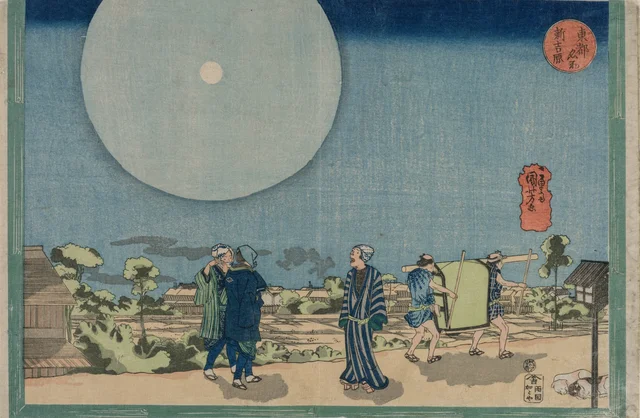
New Yoshiwara (Shin Yoshiwara), from the series Famous Places in the Eastern Capital, Utagawa Kuniyoshi

New Yoshiwara (Shin Yoshiwara), from the series Famous Places in the Eastern Capital, 1830s.

Utagawa Kuniyoshi (Japanese), colour woodcut on paper

Cleveland Museum of Art, United States

View of Hashiba in the Eastern Capital (Toto Hashiba no zu), from the series "Views of the Eastern Capital (Toto no zu)", Utagawa Kuniyoshi

View of Hashiba in the Eastern Capital (Toto Hashiba no zu), from the series "Views of the Eastern Capital (Toto no zu)", 1830s.

Utagawa Kuniyoshi (Japanese), colour woodcut on paper

Art Institute of Chicago, United States
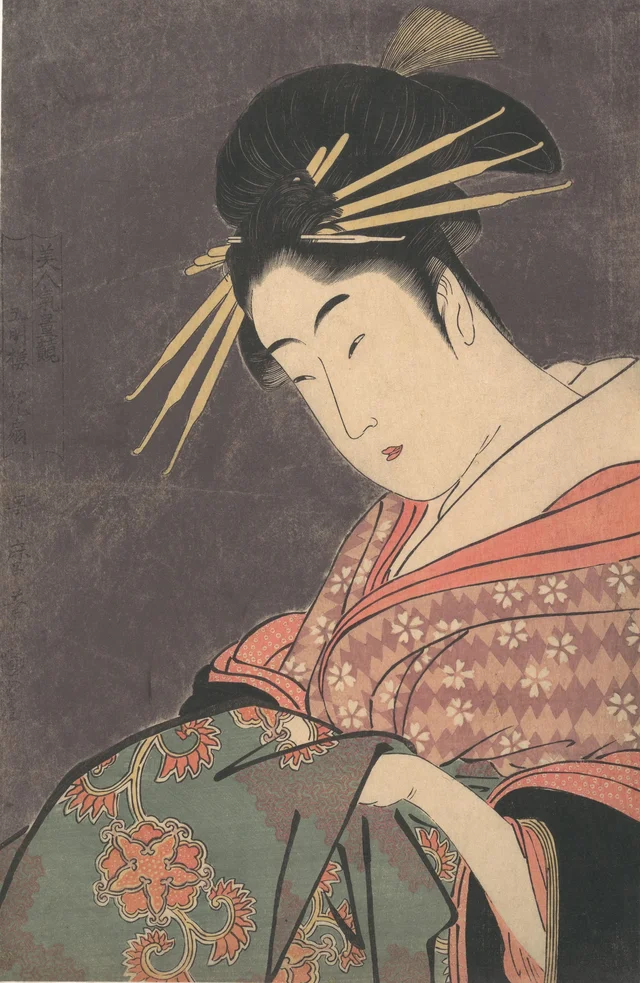
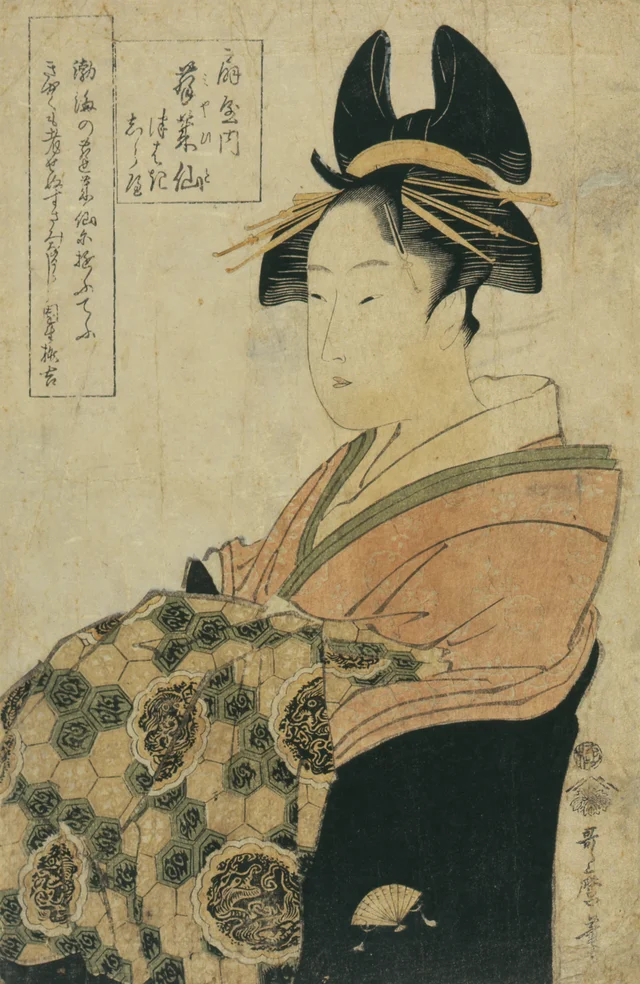
Hōraisen of the Ōgiya, with Tsubaki and Shirabe, Kitagawa Utamaro

Hōraisen of the Ōgiya, with Tsubaki and Shirabe, 18th century.

扇屋内蓬莱仙、つはき、しらへ (museum title)

Kitagawa Utamaro (Japanese), colour woodcut on paper

Tokyo National Museum, Japan
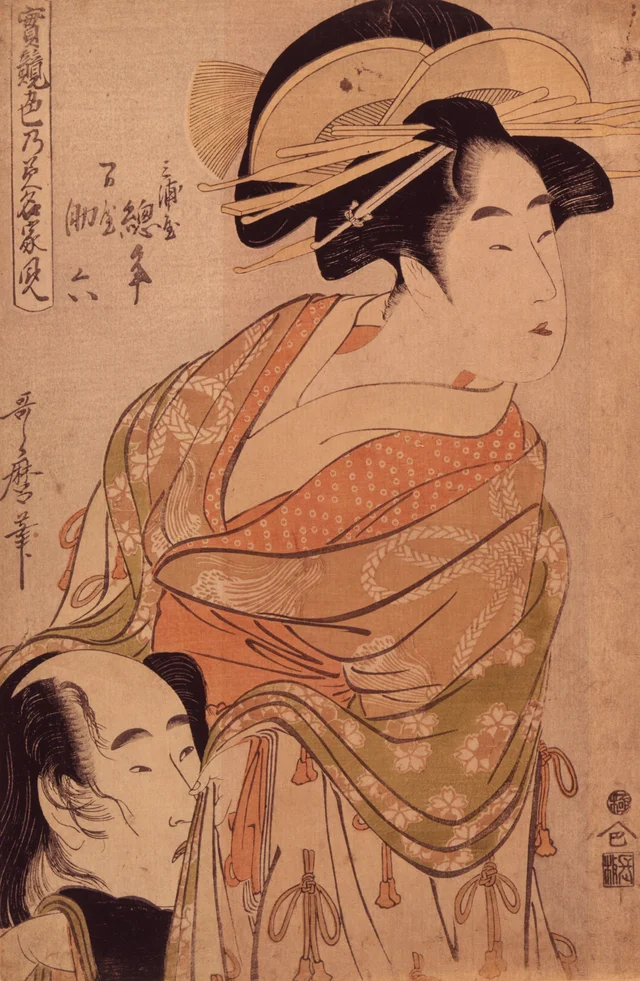
Competition of Actual Devotees to Love: Agemaki and Sukeroku, Kitagawa Utamaro

Competition of Actual Devotees to Love: Agemaki and Sukeroku, 18th century.

實竸色乃美名家見・三浦屋總角、万屋助六 (museum title)

Kitagawa Utamaro (Japanese), colour woodcut on paper

Tokyo National Museum, Japan