Useum

Hairpin

155 works by 7 artists

155 works featuring “Hairpin” by 7 artists, from the 18th to the 20th century, held in 8 museums.

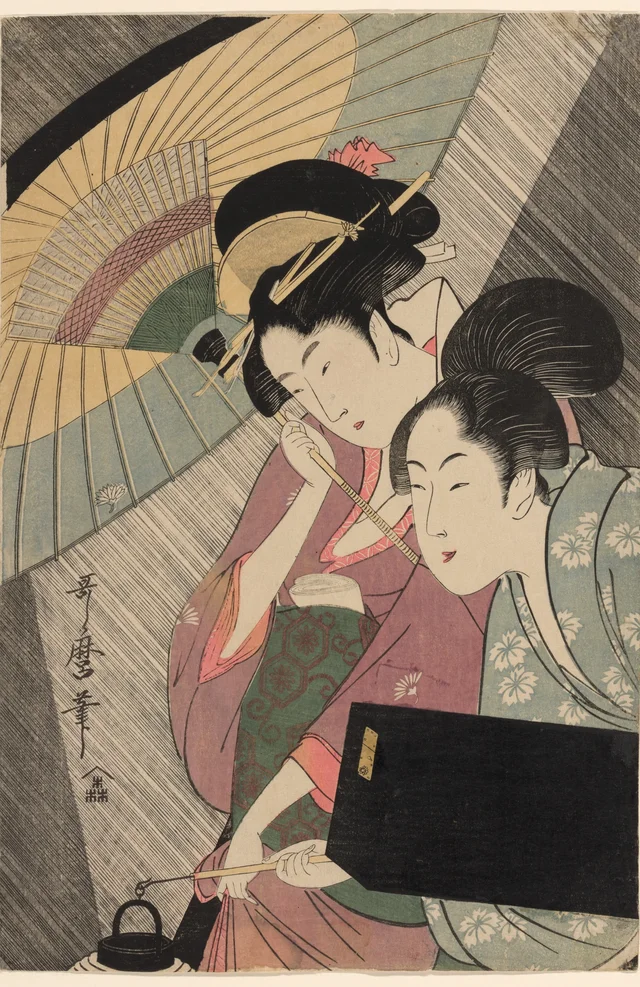
Geisha and Attendant on a Rainy Night, Kitagawa Utamaro

Geisha and Attendant on a Rainy Night, c. 1797.

Kitagawa Utamaro (Japanese), colour woodcut on paper

Art Institute of Chicago, United States

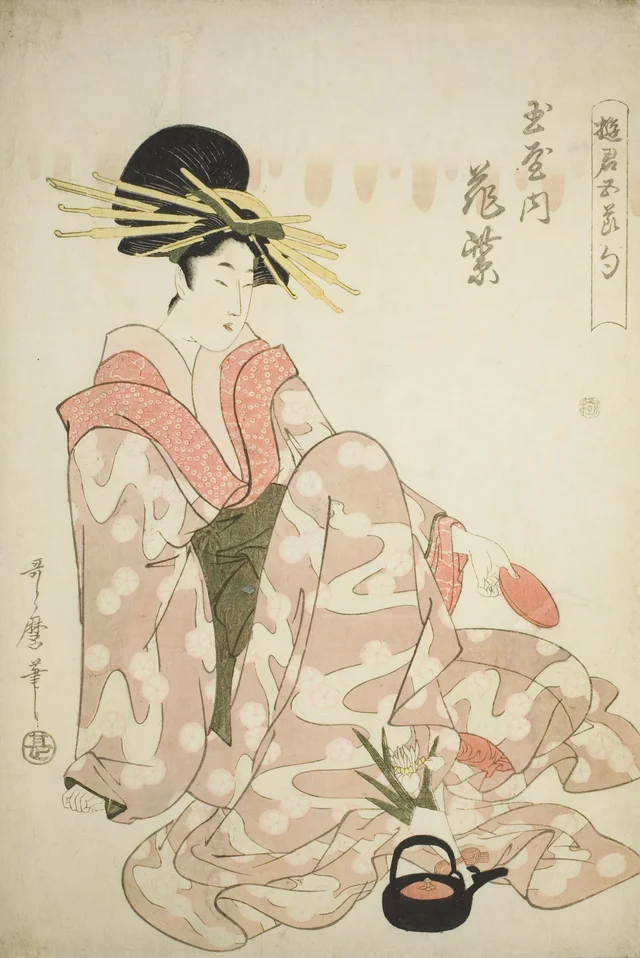
The Courtesan Hanamurasaki of the Tamaya, from the series "Courtesans of the Five Festivals (Yukun gosekku)", Kitagawa Utamaro

The Courtesan Hanamurasaki of the Tamaya, from the series "Courtesans of the Five Festivals (Yukun gosekku)", c. 1805.

Kitagawa Utamaro (Japanese), colour woodcut on paper

Art Institute of Chicago, United States
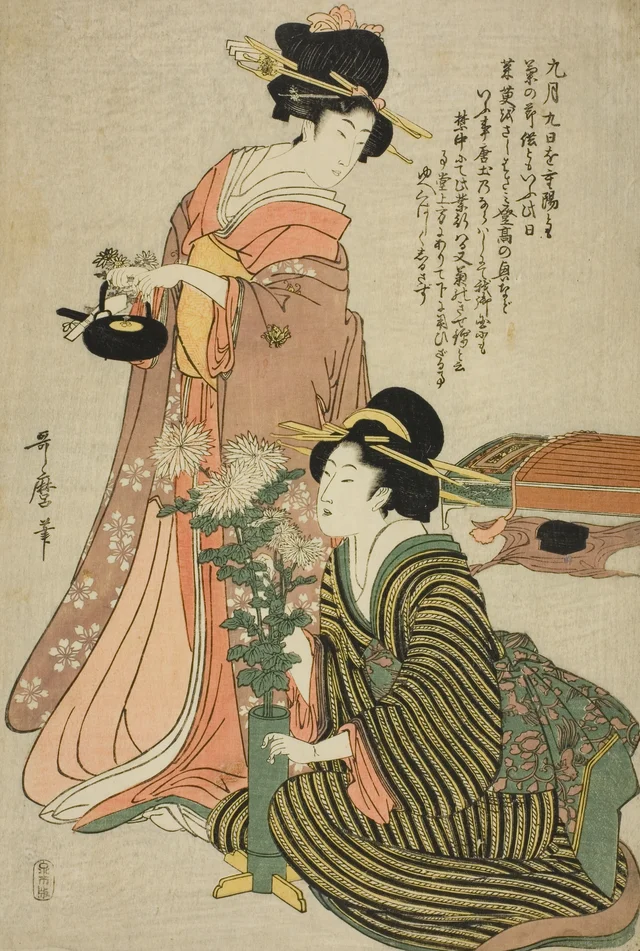
The Chrysanthemum Festival in the Ninth Month, from an untitled pentaptych of the five festivals, Kitagawa Utamaro

The Chrysanthemum Festival in the Ninth Month, from an untitled pentaptych of the five festivals, c. 1803.

Kitagawa Utamaro (Japanese), colour woodcut on paper

Art Institute of Chicago, United States
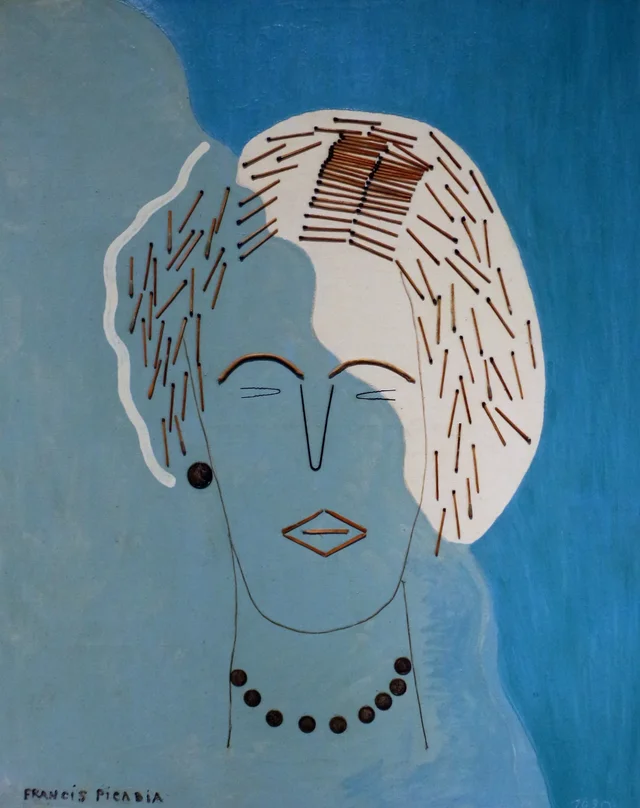
Untitled (Match-Woman I), Francis Picabia

Untitled (Match-Woman I), 1920.

Francis Picabia (French), oil on canvas with matchsticks, hairpins and string

Art Institute of Chicago, United States
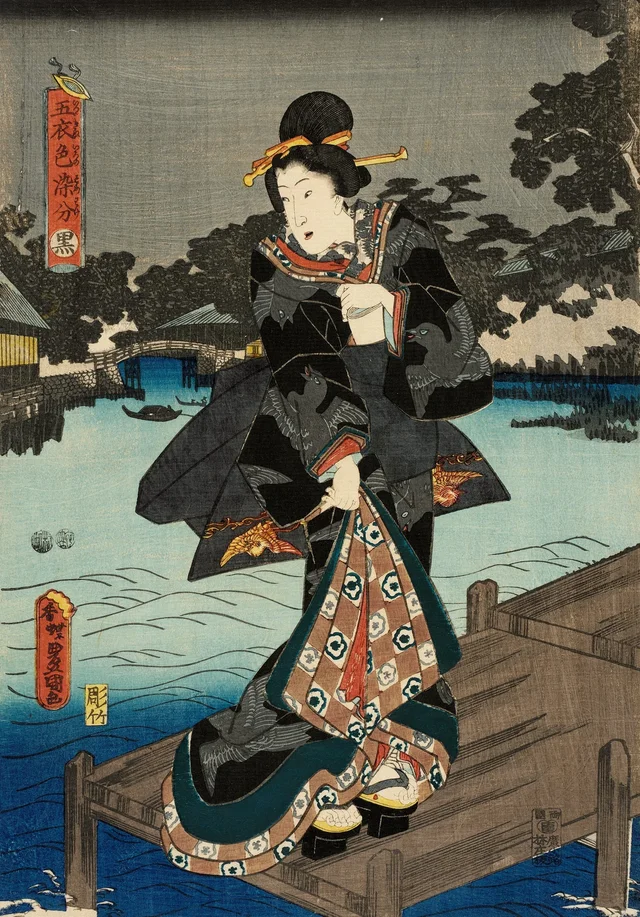
Black, Utagawa Kunisada

Black, c. 1847–1852.

Utagawa Kunisada (Japanese), color woodblock print

Los Angeles County Museum of Art, United States

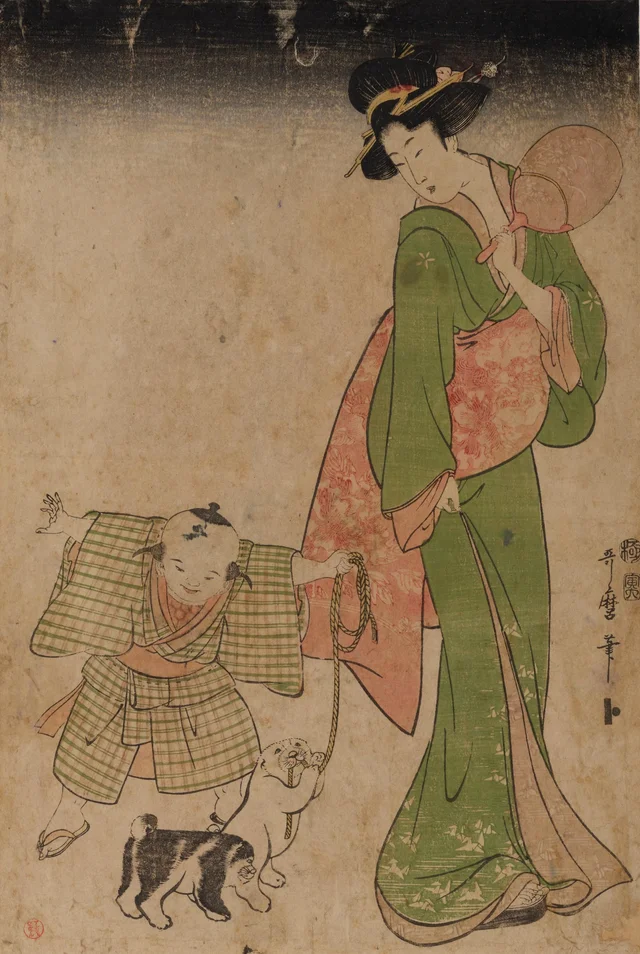
Woman and Child with Puppies, Kitagawa Utamaro

Woman and Child with Puppies, 1806.

美人子供に小犬 (museum title)

Kitagawa Utamaro (Japanese), colour woodcut on paper

Tokyo National Museum, Japan

Looking Observant: The Appearance of a Kyoto Waitress of the Meiji Era, Tsukioka Yoshitoshi

Looking Observant: The Appearance of a Kyoto Waitress of the Meiji Era, 1888.

Tsukioka Yoshitoshi (Japanese), color woodblock print

Los Angeles County Museum of Art, United States

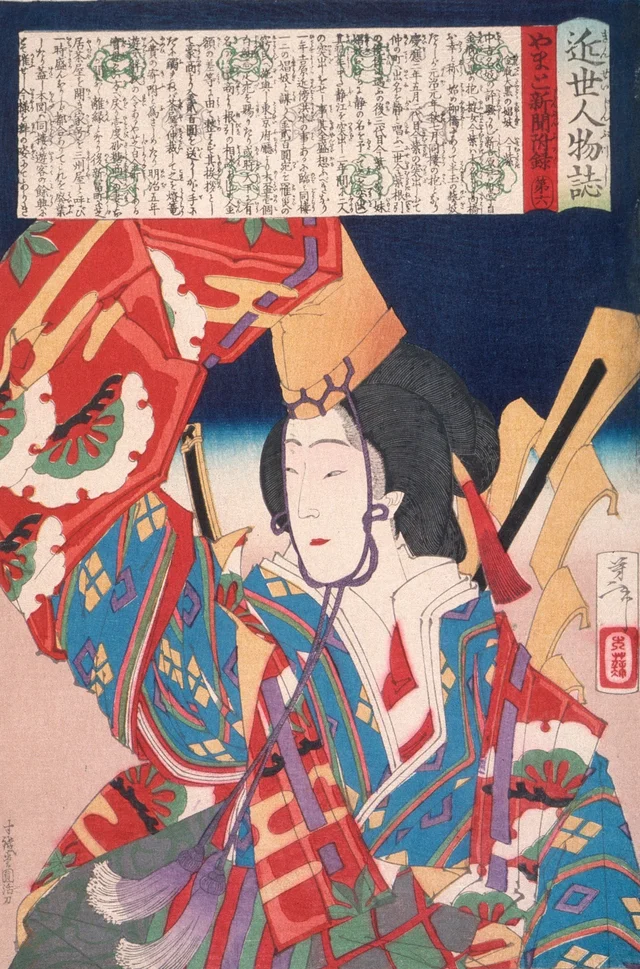
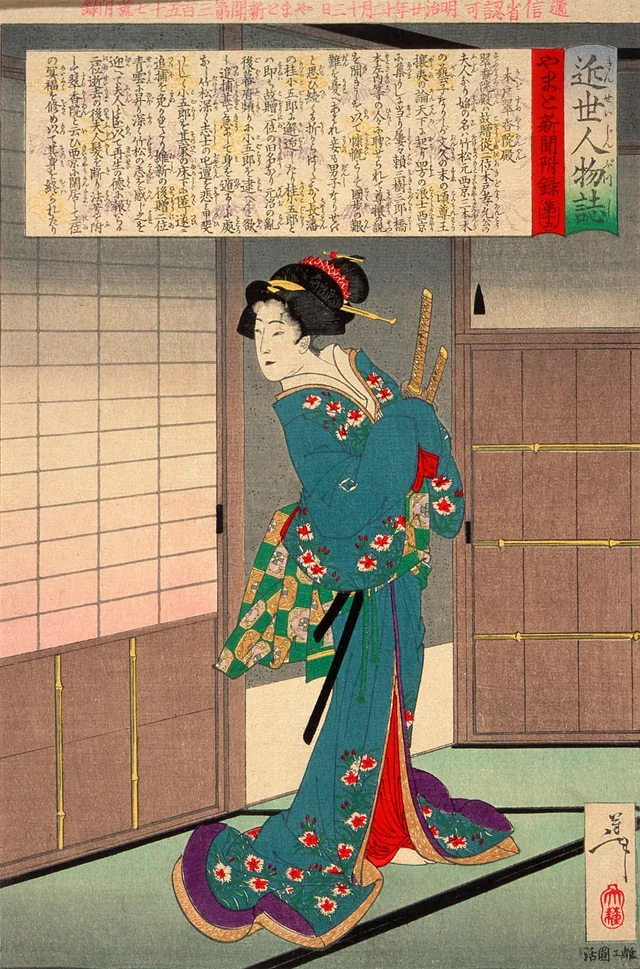
Lady Kido Suikōin, Tsukioka Yoshitoshi

Lady Kido Suikōin, 1887.

Tsukioka Yoshitoshi (Japanese), color woodblock print

Los Angeles County Museum of Art, United States

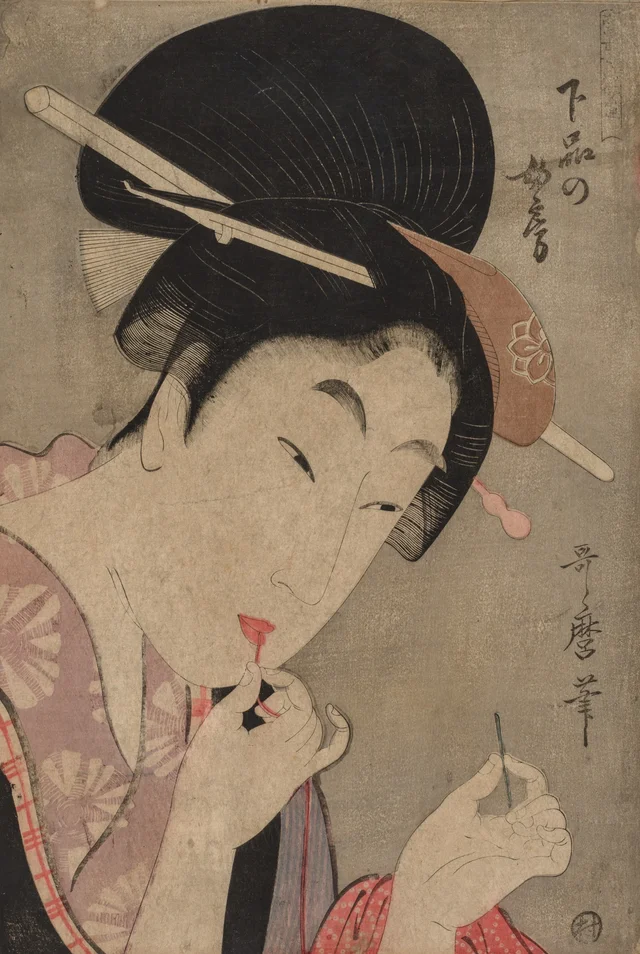
A Wife of the Lower Rank (Gebon no nyōbō), from the series A Guide to Women's Contemporary Styles (Tōsei onna fūzoku tsū), Kitagawa Utamaro

A Wife of the Lower Rank (Gebon no nyōbō), from the series A Guide to Women's Contemporary Styles (Tōsei onna fūzoku tsū), c. 1801–1802.

Kitagawa Utamaro (Japanese), colour woodcut on paper

Cleveland Museum of Art, United States

White, Utagawa Kunisada

White, c. 1847–1852.

Utagawa Kunisada (Japanese), color woodblock print

Los Angeles County Museum of Art, United States

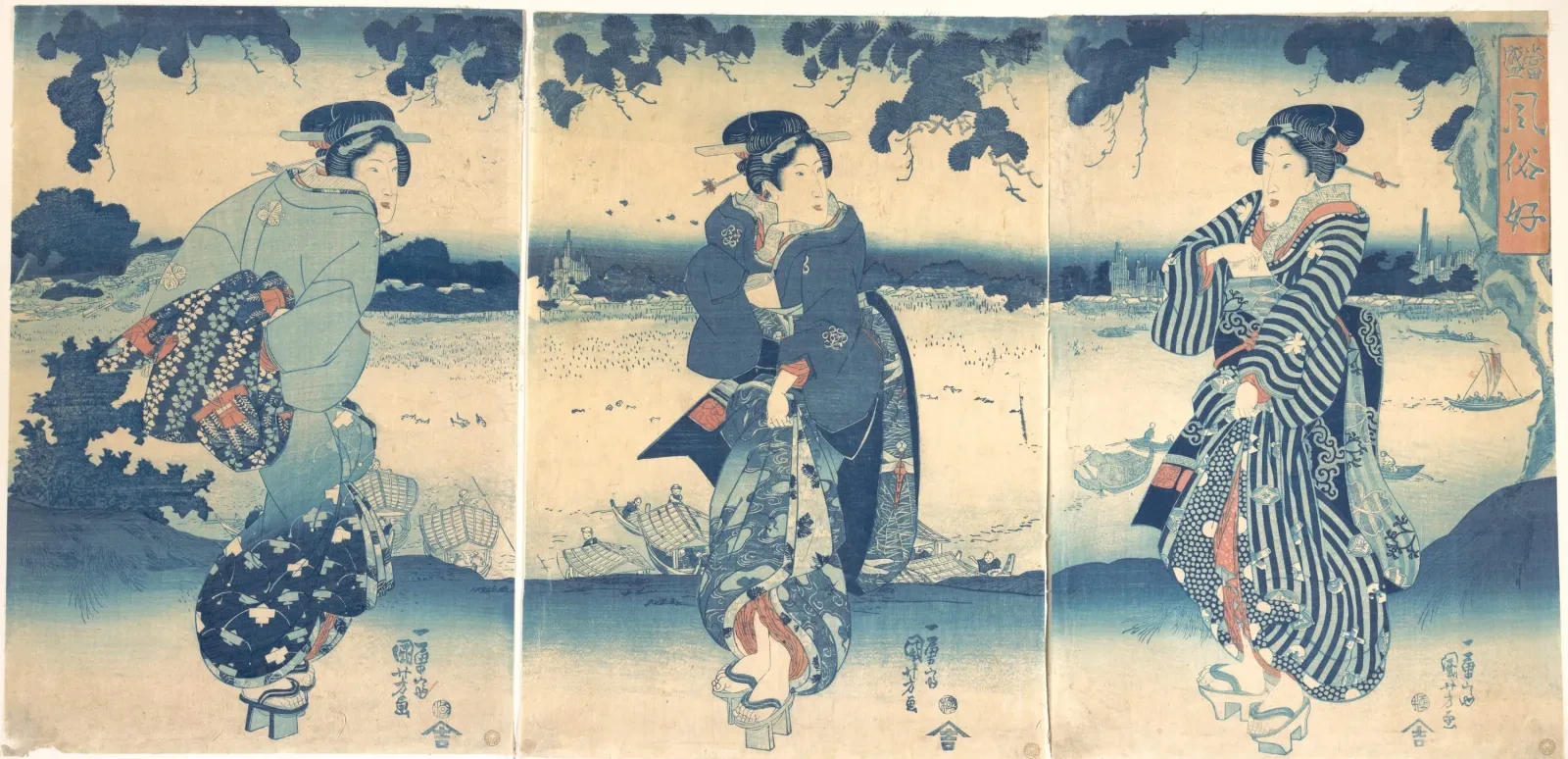
Women Near a River, Utagawa Kuniyoshi

Women Near a River, c. 1850.

Utagawa Kuniyoshi (Japanese), colour woodcut on paper

Metropolitan Museum of Art, United States

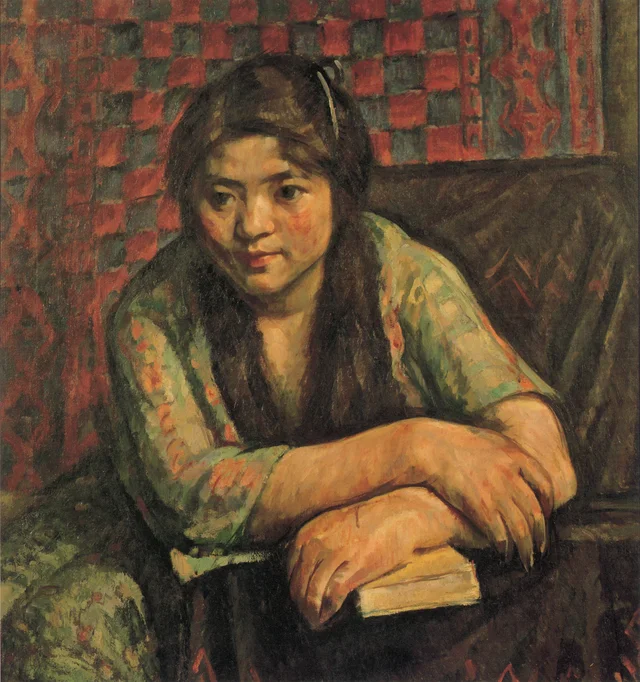
A Girl, Nakamura Tsune

A Girl, 1914.

小女 (museum title)

Nakamura Tsune (Japanese), oil on canvas

Nakamuraya Salon Museum of Art, Japan

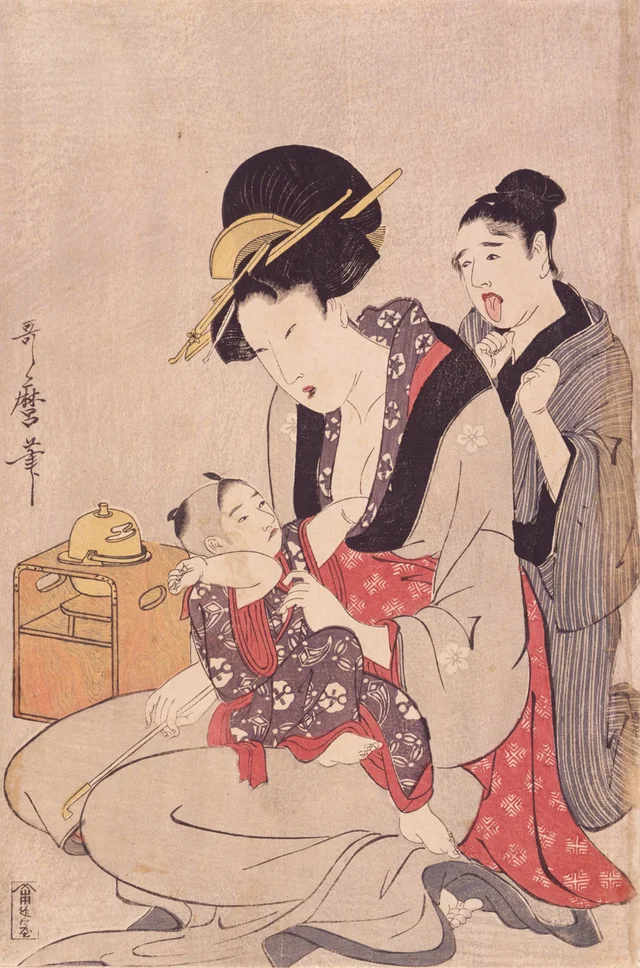
Mother, Child and Shop Boy, Kitagawa Utamaro

Mother, Child and Shop Boy, 19th century.

母子と丁稚 (museum title)

Kitagawa Utamaro (Japanese), colour woodcut on paper

Tokyo National Museum, Japan

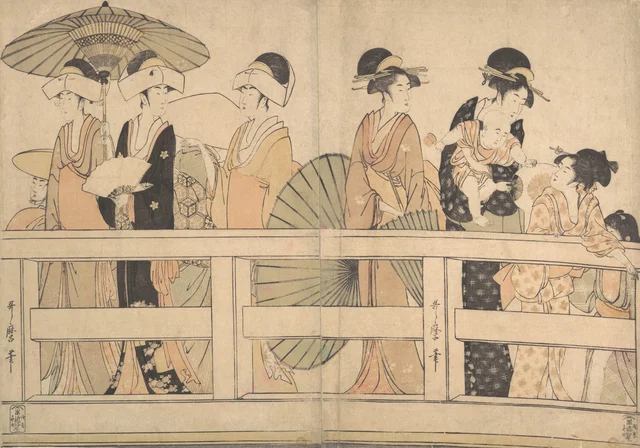
Enjoying the Cool Evening Breeze on and under the Bridge, Kitagawa Utamaro

Enjoying the Cool Evening Breeze on and under the Bridge, c. 1800.

Kitagawa Utamaro (Japanese), colour woodcut on paper

Metropolitan Museum of Art, United States

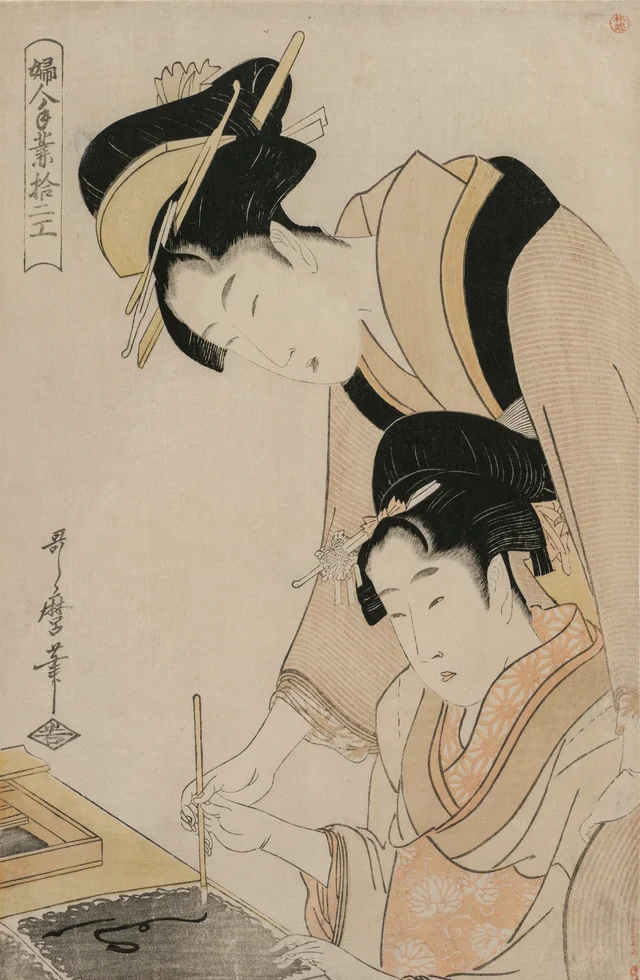
Mother Teaching her Daughter Calligraphy, from the series, Twelve Occupations of Women, Kitagawa Utamaro

Mother Teaching her Daughter Calligraphy, from the series, Twelve Occupations of Women, c. 1798.

Kitagawa Utamaro (Japanese), colour woodcut on paper

Cleveland Museum of Art, United States

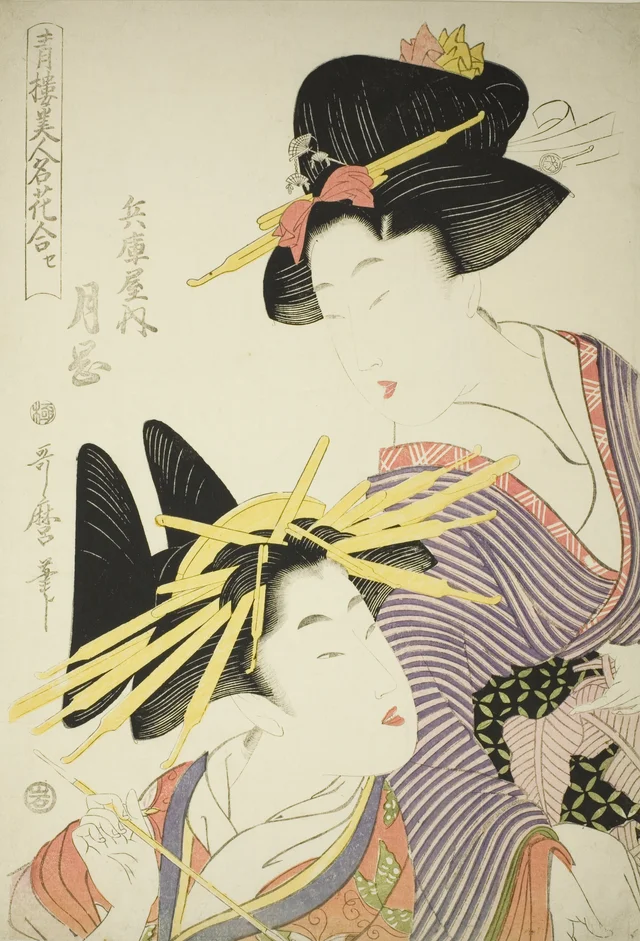
Tsukioka of the Hyogoya (Hyogoya uchi tsukioka), from the series "Seiro bijin meika awase", Kitagawa Utamaro

Tsukioka of the Hyogoya (Hyogoya uchi tsukioka), from the series "Seiro bijin meika awase", c. 1801.

Kitagawa Utamaro (Japanese), colour woodcut on paper

Art Institute of Chicago, United States
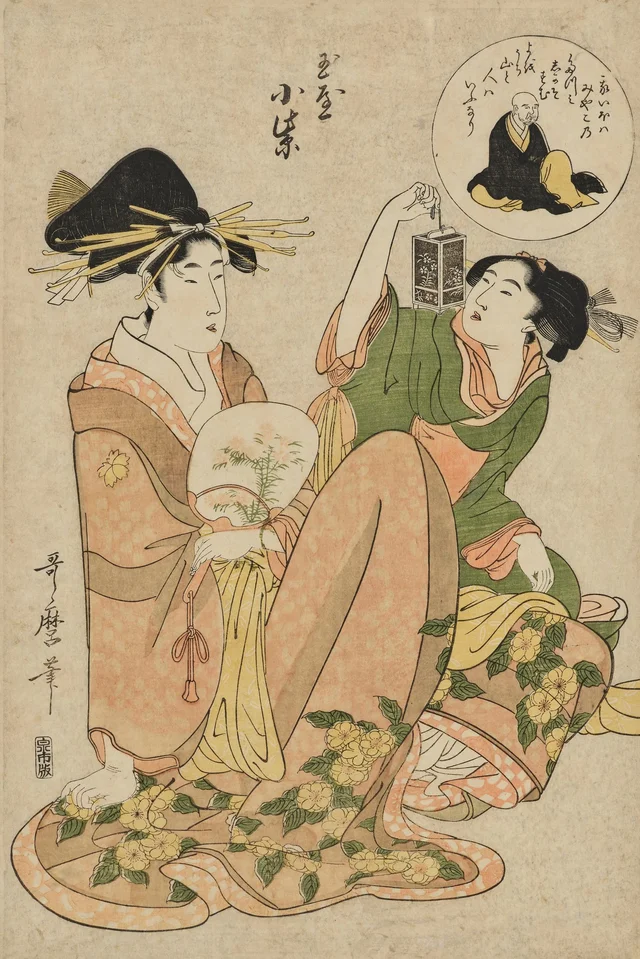
"Komurasaki of the Tamaya" from the Series "Courtesans for the Six Poetic Sages", Kitagawa Utamaro

"Komurasaki of the Tamaya" from the Series "Courtesans for the Six Poetic Sages", 19th century.

遊女見立六歌仙・玉屋小紫 喜撰法師 (museum title)

Kitagawa Utamaro (Japanese), colour woodcut on paper

Tokyo National Museum, Japan

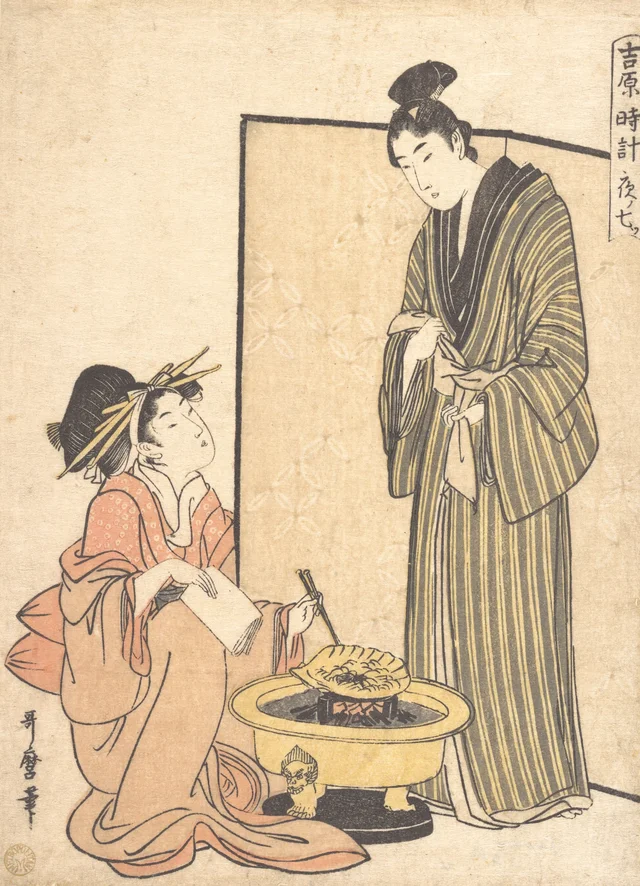
The Seventh Hour of the Night, Kitagawa Utamaro

The Seventh Hour of the Night, c. 1800.

Kitagawa Utamaro (Japanese), colour woodcut on paper

Metropolitan Museum of Art, United States

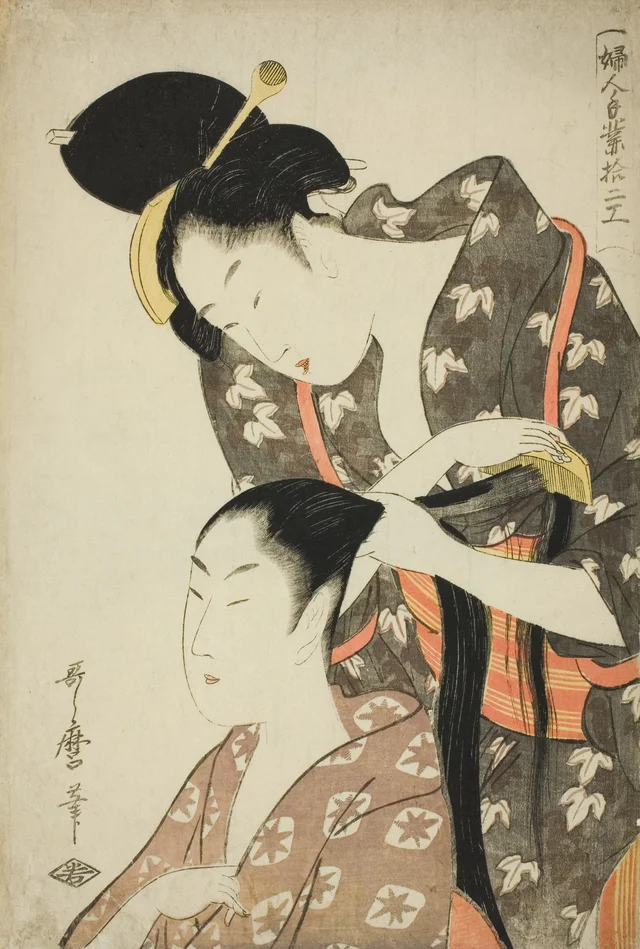
Hairdresser, from the series "Twelve Types of Women's Handicraft (Fujin tewaza juni ko)", Kitagawa Utamaro

Hairdresser, from the series "Twelve Types of Women's Handicraft (Fujin tewaza juni ko)", c. 1798–1799.

Kitagawa Utamaro (Japanese), colour woodcut on paper

Art Institute of Chicago, United States

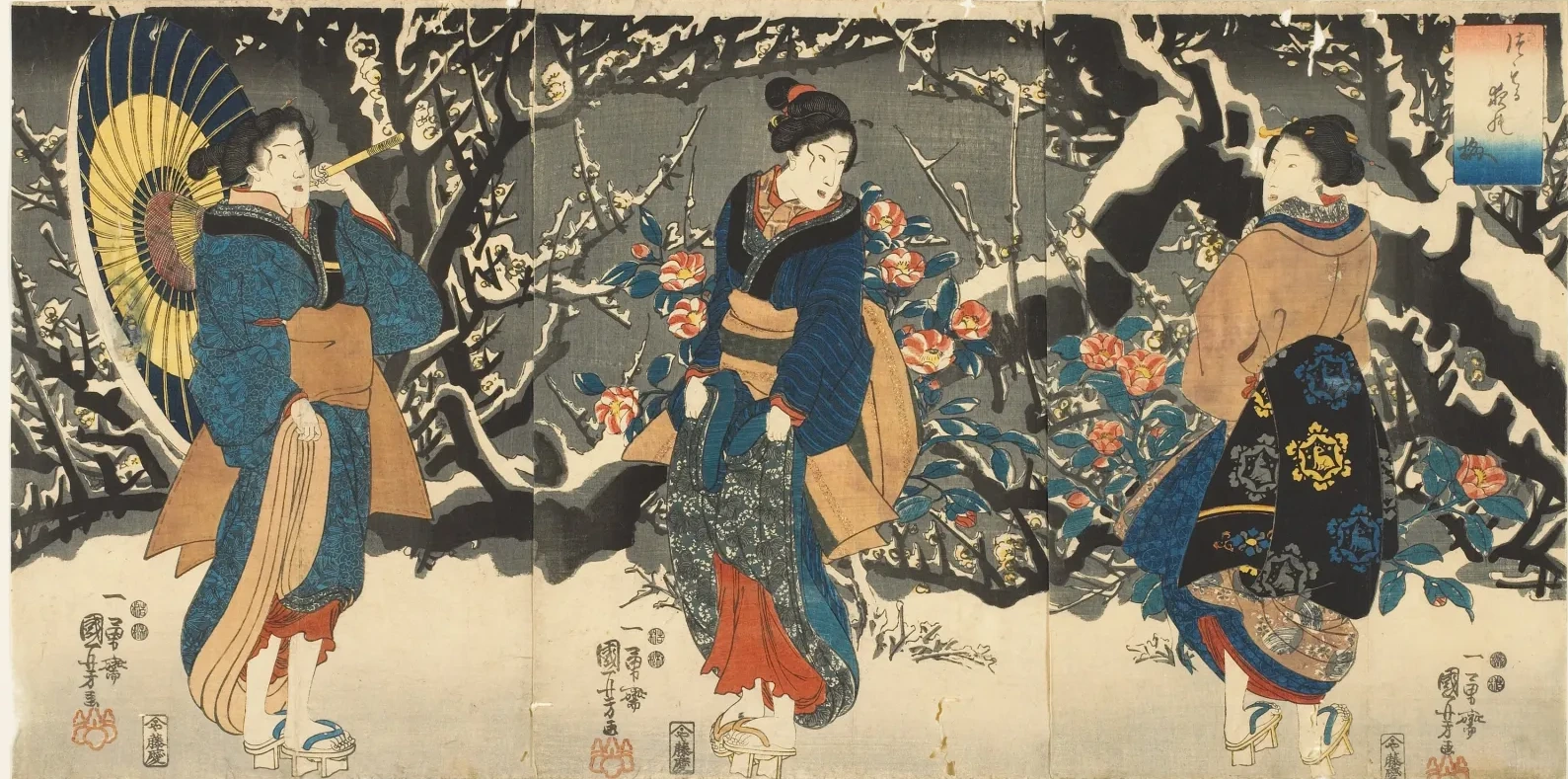
Plum Blossoms in the Evening Snow, Utagawa Kuniyoshi

Plum Blossoms in the Evening Snow, 1847–1852.

Utagawa Kuniyoshi (Japanese), colour woodcut on paper

Minneapolis Institute of Art, United States

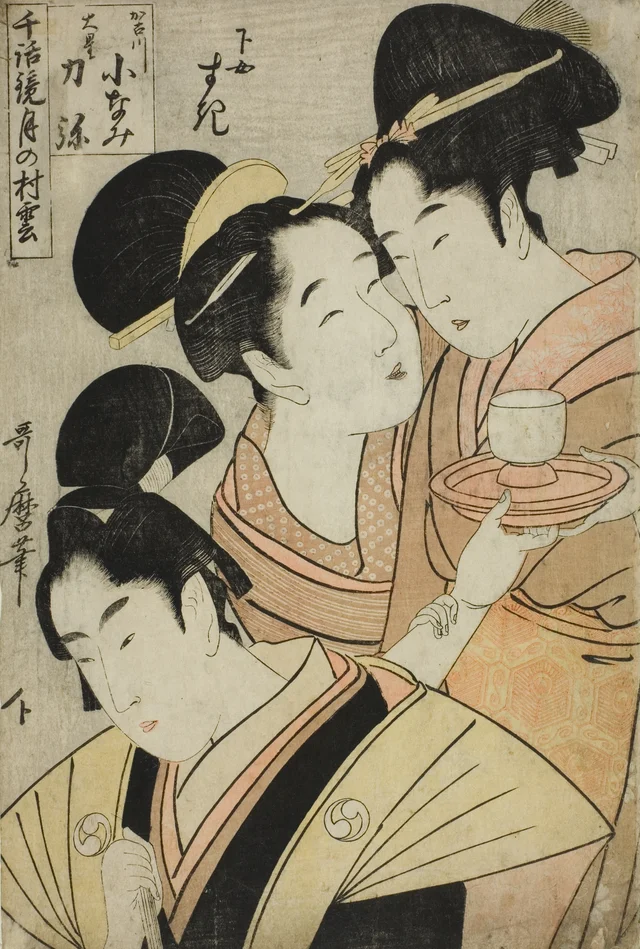
Kakogawa Konami, Oboshi Rikiya and the Maidservant Suki, (Kakogawa Konami, Oboshi Rikiya, gejo Suki) from the series "Models of Love Talk: Clouds Form Over the Moon (Chiwa kagami tsuki no murakumo) ", Kitagawa Utamaro

Kakogawa Konami, Oboshi Rikiya and the Maidservant Suki, (Kakogawa Konami, Oboshi Rikiya, gejo Suki) from the series "Models of Love Talk: Clouds Form Over the Moon (Chiwa kagami tsuki no murakumo) ", c. 1798–1800.

Kitagawa Utamaro (Japanese), colour woodcut on paper

Art Institute of Chicago, United States

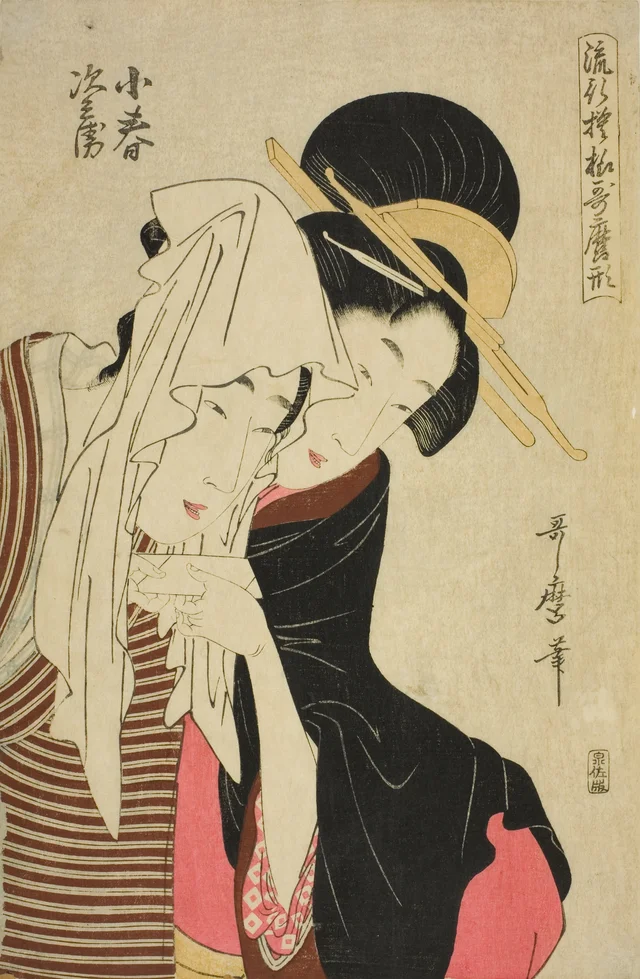
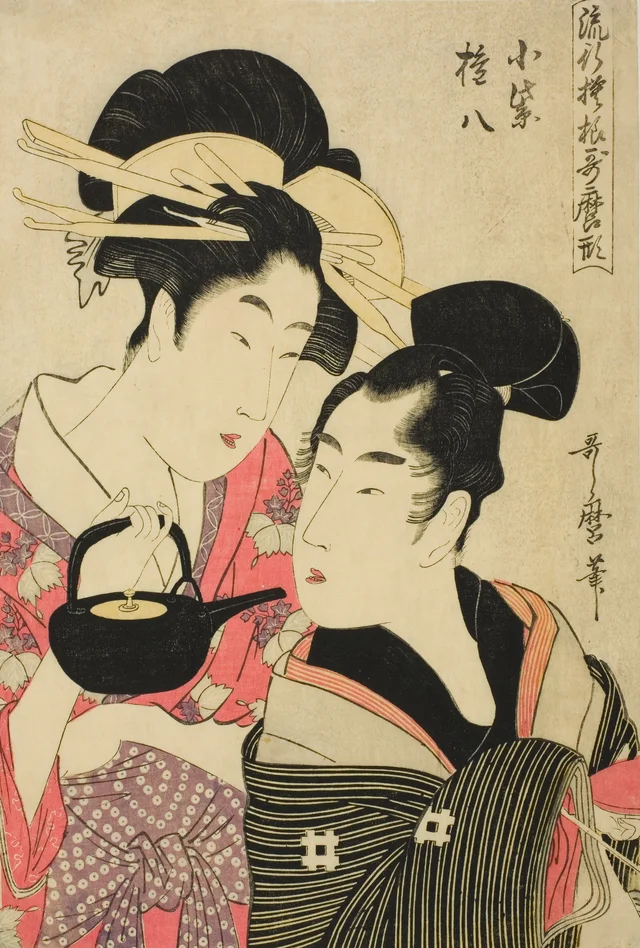
Koharu and Jihei, from the series "Fashionable Patterns in Utamaro Style (Ryuko moyo Utamaro-gata)", Kitagawa Utamaro

Koharu and Jihei, from the series "Fashionable Patterns in Utamaro Style (Ryuko moyo Utamaro-gata)", c. 1798–1799.

Kitagawa Utamaro (Japanese), colour woodcut on paper

Art Institute of Chicago, United States

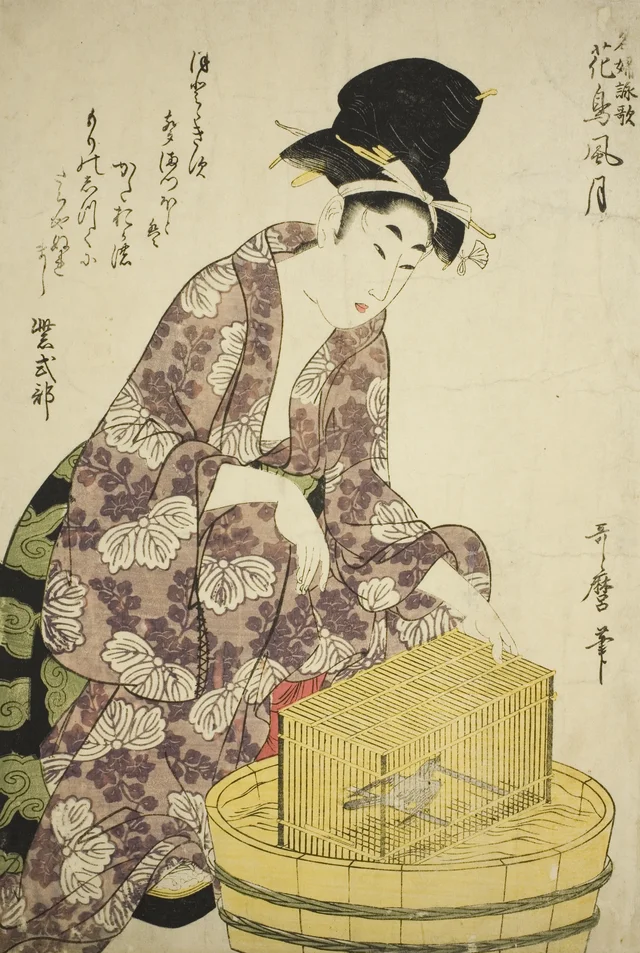
Murasaki Shikibu: Bird, from the series "Famous Women and Their Poems on Flowers, Birds, Wind, and Moon (Meifu eika kacho fugetsu)", Kitagawa Utamaro

Murasaki Shikibu: Bird, from the series "Famous Women and Their Poems on Flowers, Birds, Wind, and Moon (Meifu eika kacho fugetsu)", c. 1805.

Kitagawa Utamaro (Japanese), colour woodcut on paper

Art Institute of Chicago, United States

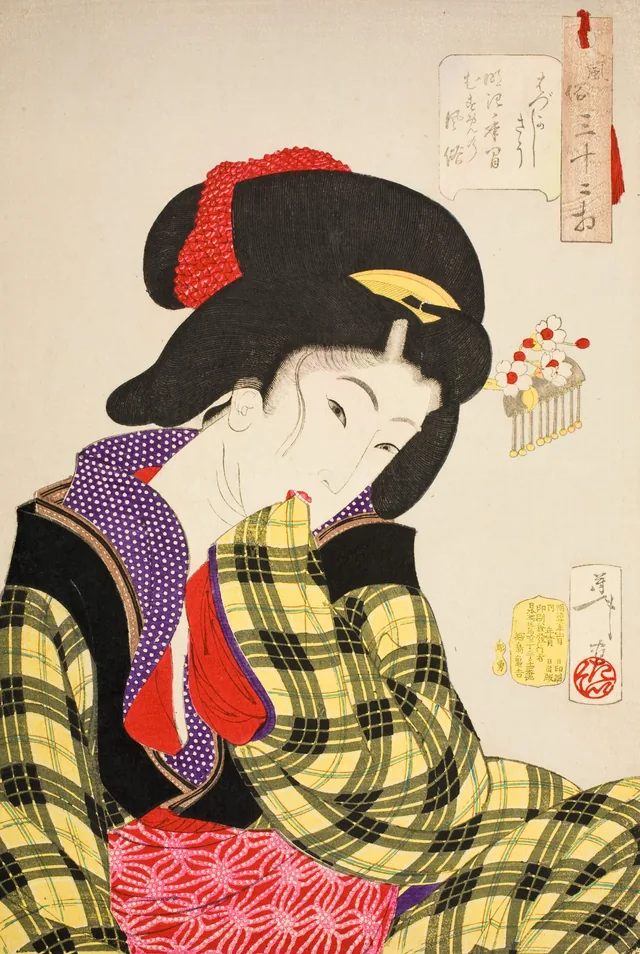
Looking Shy: The Manners of a Young Girl of the Meiji Era, Tsukioka Yoshitoshi

Looking Shy: The Manners of a Young Girl of the Meiji Era, 1888.

Tsukioka Yoshitoshi (Japanese), color woodblock print

Los Angeles County Museum of Art, United States

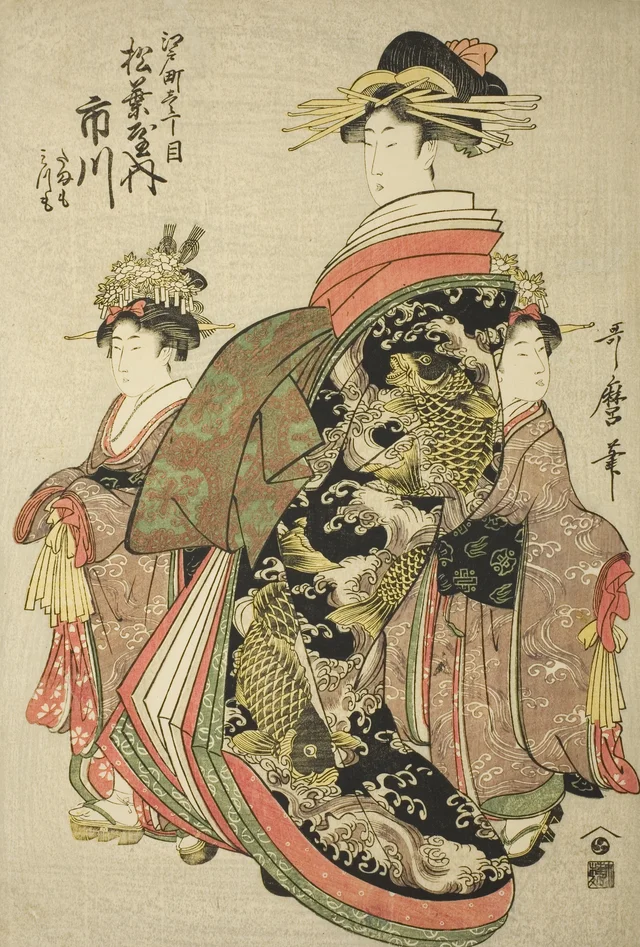
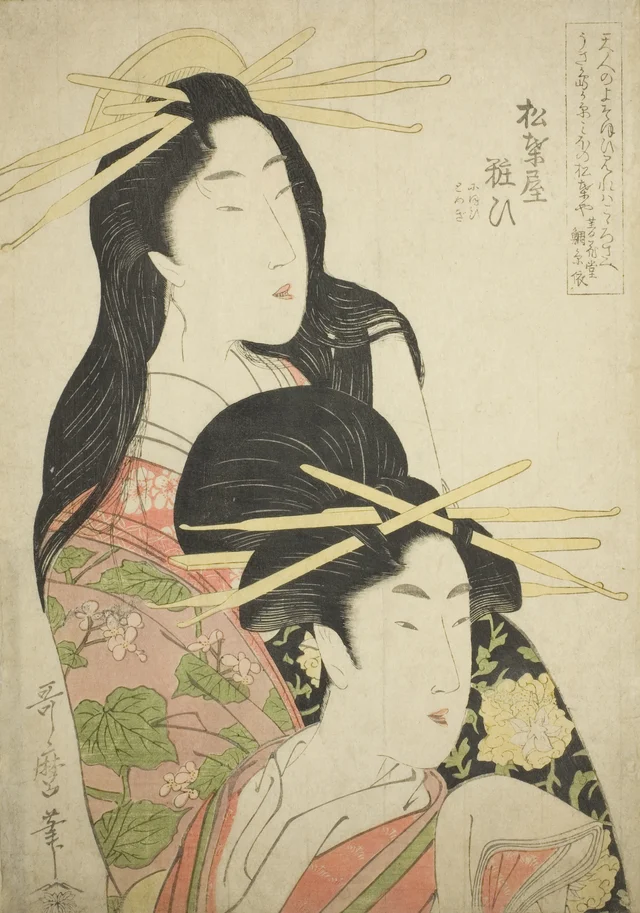
The Courtesan Ichikawa of the Matsubaya in Edo-machi Itchome, with her Child Attendants Tamamo and Mitsumo, Kitagawa Utamaro

The Courtesan Ichikawa of the Matsubaya in Edo-machi Itchome, with her Child Attendants Tamamo and Mitsumo, c. 1803.

Kitagawa Utamaro (Japanese), colour woodcut on paper

Art Institute of Chicago, United States

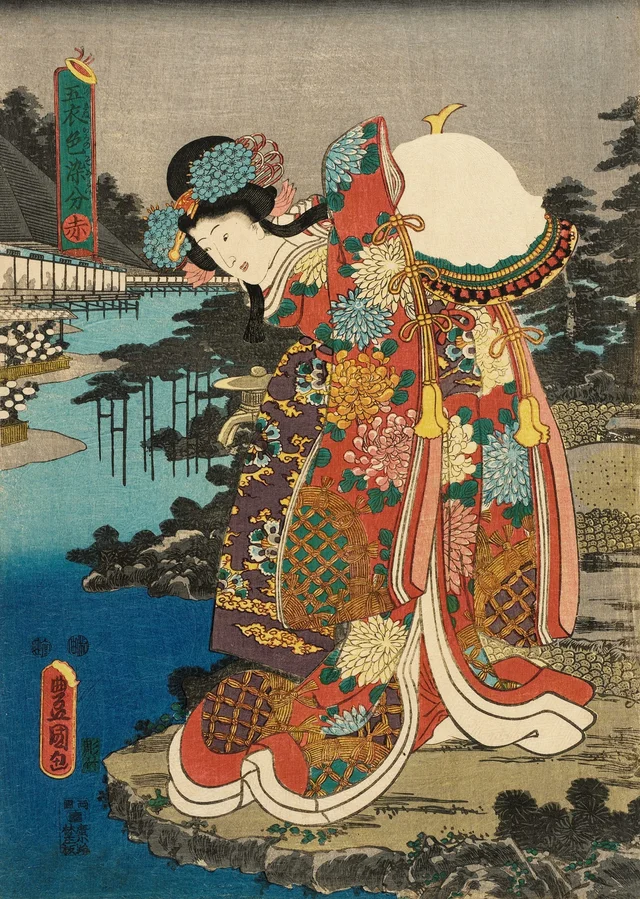
Red, Utagawa Kunisada

Red, c. 1847–1852.

Utagawa Kunisada (Japanese), color woodblock print

Los Angeles County Museum of Art, United States
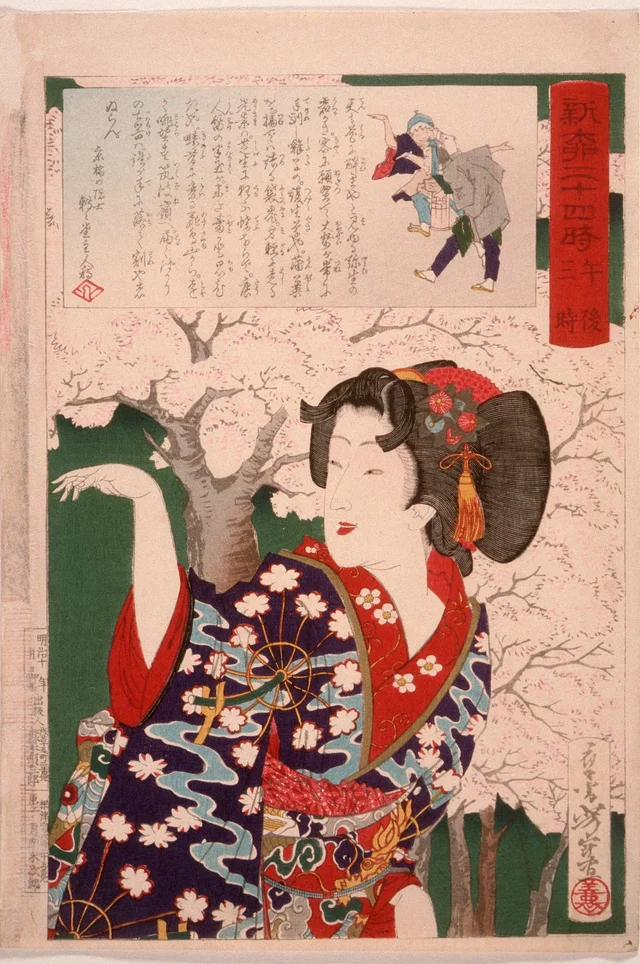
Geisha by Cherry Trees at 3:00 p.m., Tsukioka Yoshitoshi

Geisha by Cherry Trees at 3:00 p.m., 1880.

Tsukioka Yoshitoshi (Japanese), color woodblock print

Los Angeles County Museum of Art, United States

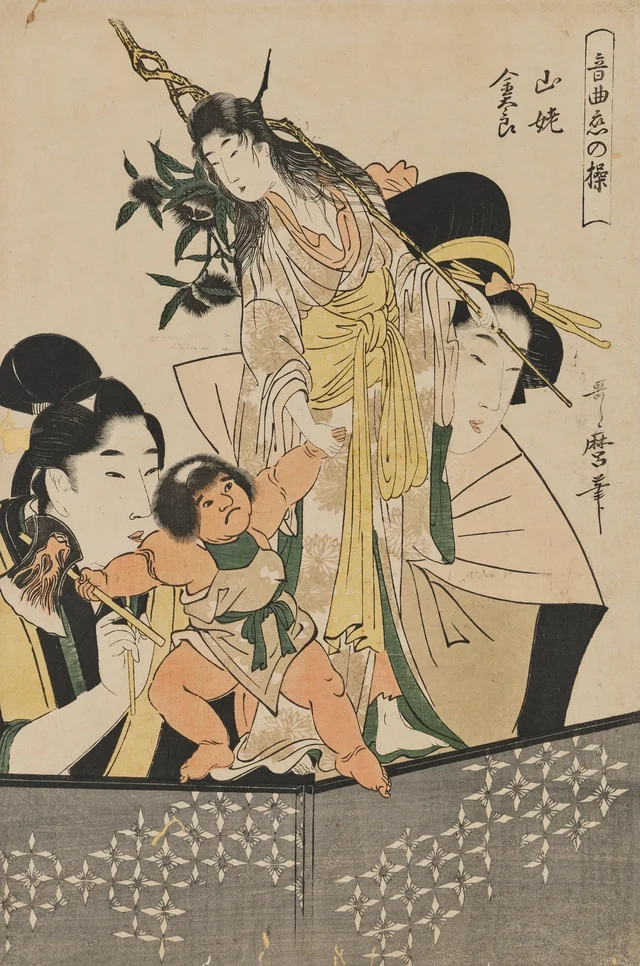
"Kintarō and a Mountain Witch ("Yamanba")" from the Series "Manipulations of Love with Musical Accompaniment", Kitagawa Utamaro

"Kintarō and a Mountain Witch ("Yamanba")" from the Series "Manipulations of Love with Musical Accompaniment", 19th century.

音曲恋の操・山姥、金太良 (museum title)

Kitagawa Utamaro (Japanese), colour woodcut on paper

Tokyo National Museum, Japan
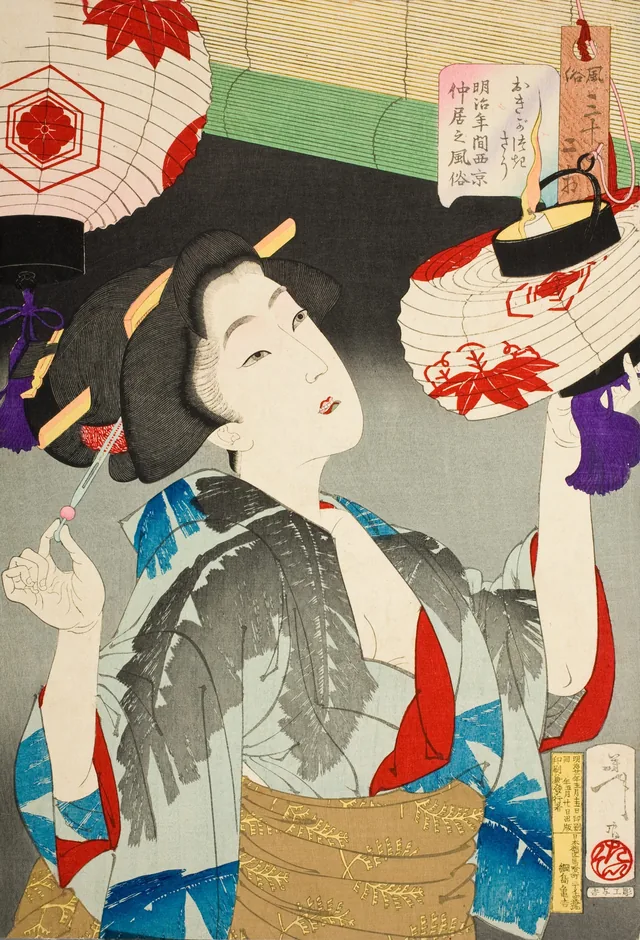
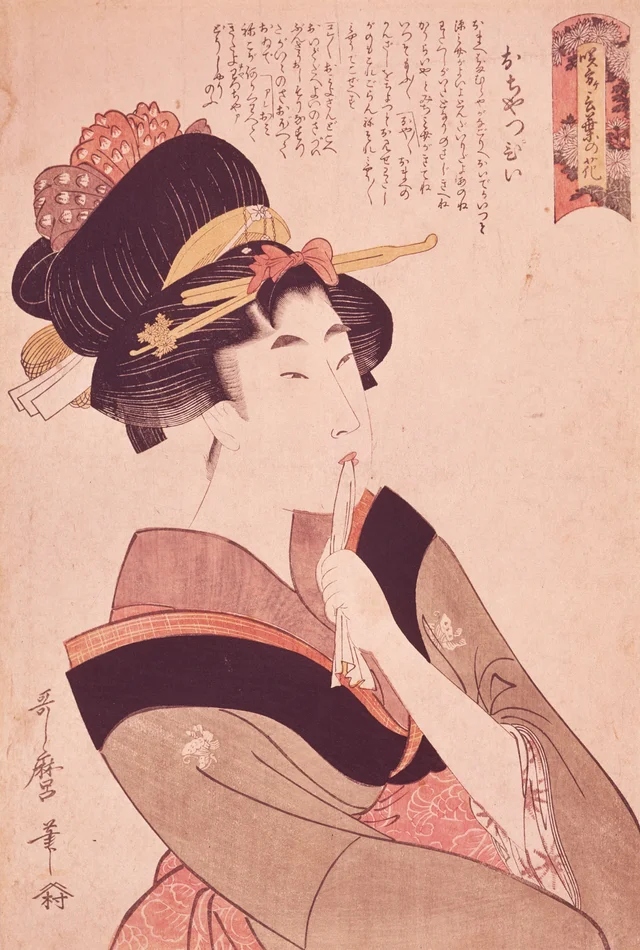
“The Precocious Girl”from the Series "Variegations of Blooms According to their Speech", Kitagawa Utamaro

“The Precocious Girl”from the Series "Variegations of Blooms According to their Speech", 19th century.

咲分ヶ言葉の花・おちやつぴい (museum title)

Kitagawa Utamaro (Japanese), colour woodcut on paper

Tokyo National Museum, Japan

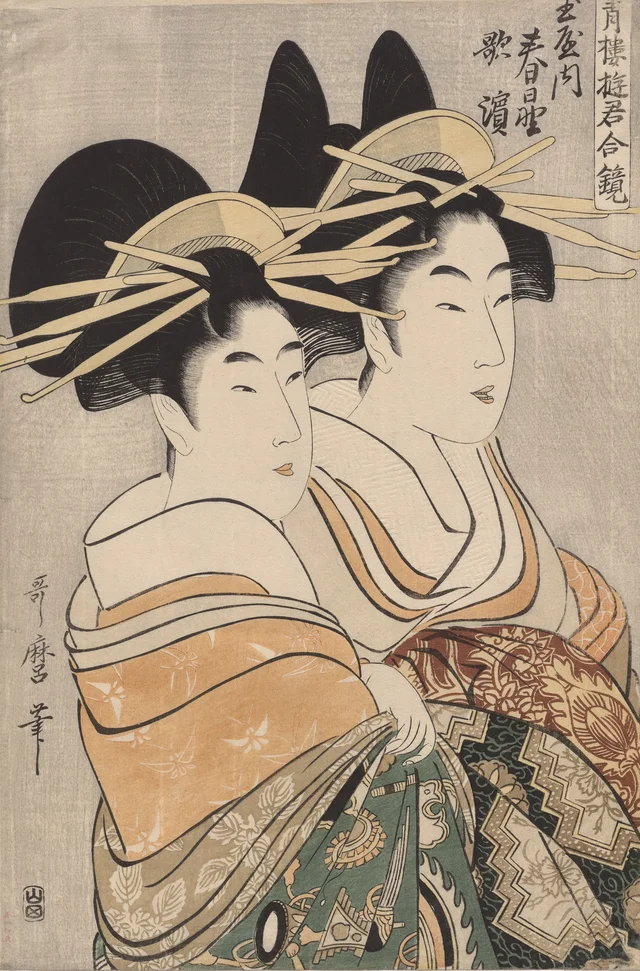
The Courtesans Kasugano and Utahama of Tamaya, from Courtesans of the Pleasure Quarters in Double Mirrors, Kitagawa Utamaro

The Courtesans Kasugano and Utahama of Tamaya, from Courtesans of the Pleasure Quarters in Double Mirrors, c. 1800.

Kitagawa Utamaro (Japanese), colour woodcut on paper

Cleveland Museum of Art, United States

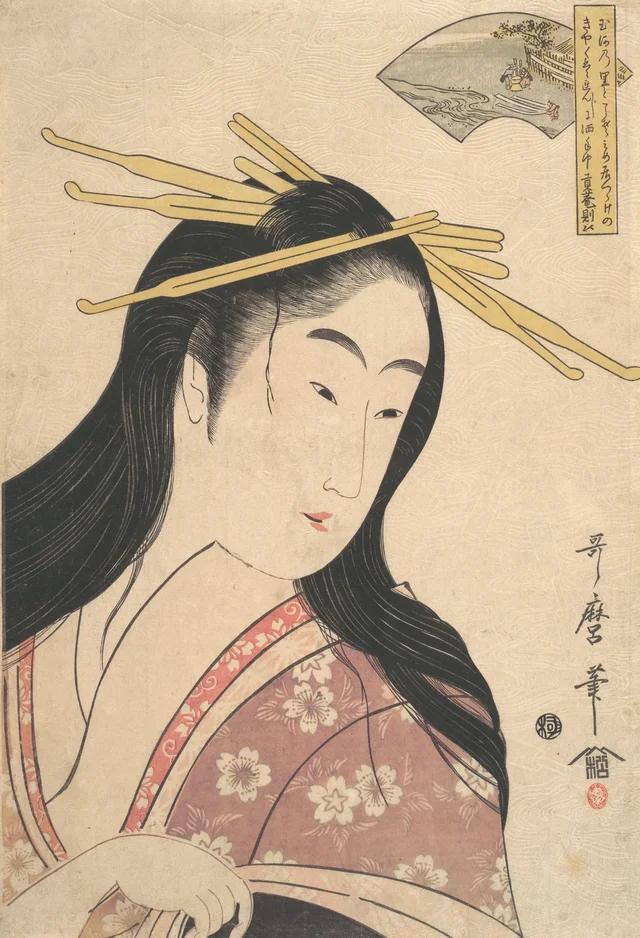
Tetsukuri no Tamagawa, from the series, "Six Tama Rivers" (Mu Tamagawa), Kitagawa Utamaro

Tetsukuri no Tamagawa, from the series, "Six Tama Rivers" (Mu Tamagawa), c. 1798.

Kitagawa Utamaro (Japanese), colour woodcut on paper

Metropolitan Museum of Art, United States

Komurasaki and Gonpachi, from the series "Fashonable Patterns in Utamaro Style (Ryuko moyo Utamaro-gata)", Kitagawa Utamaro

Komurasaki and Gonpachi, from the series "Fashonable Patterns in Utamaro Style (Ryuko moyo Utamaro-gata)", c. 1798–1799.

Kitagawa Utamaro (Japanese), colour woodcut on paper

Art Institute of Chicago, United States

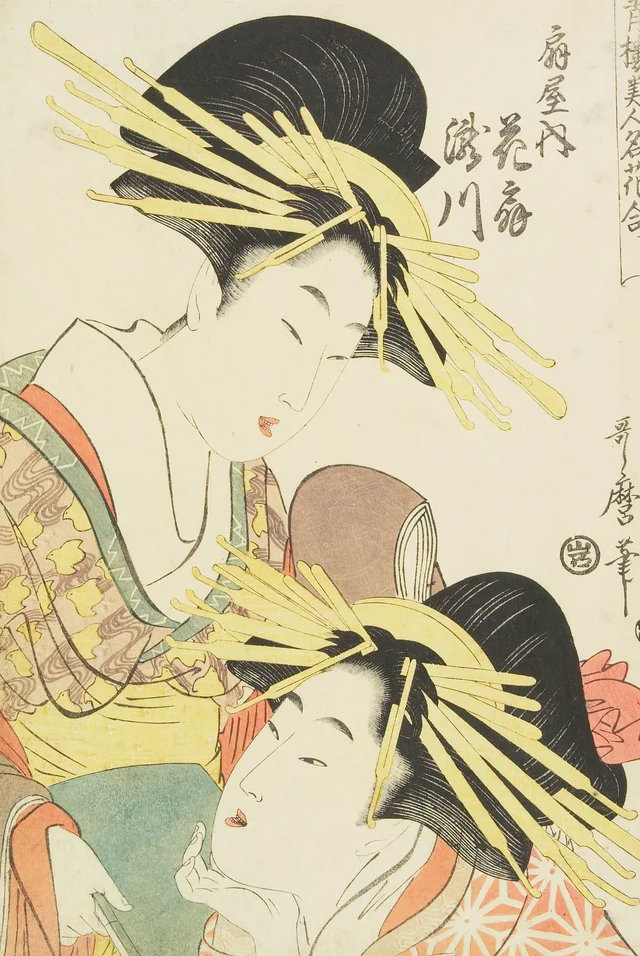
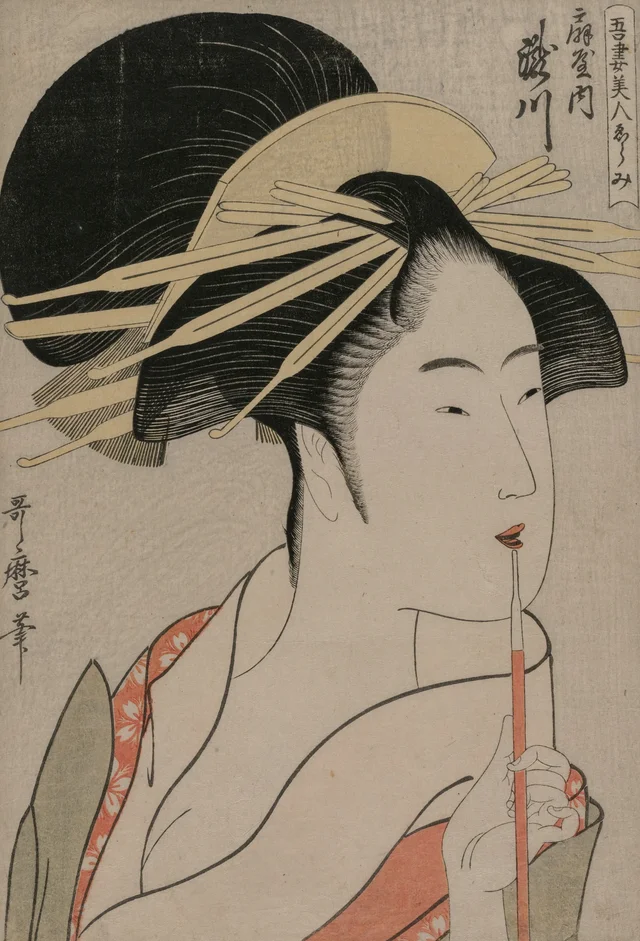
The Courtesans Hanaōgi and Takigawa of the Ōgiya House, Kitagawa Utamaro

The Courtesans Hanaōgi and Takigawa of the Ōgiya House, c. 1805.

Kitagawa Utamaro (Japanese), colour woodcut on paper

Minneapolis Institute of Art, United States

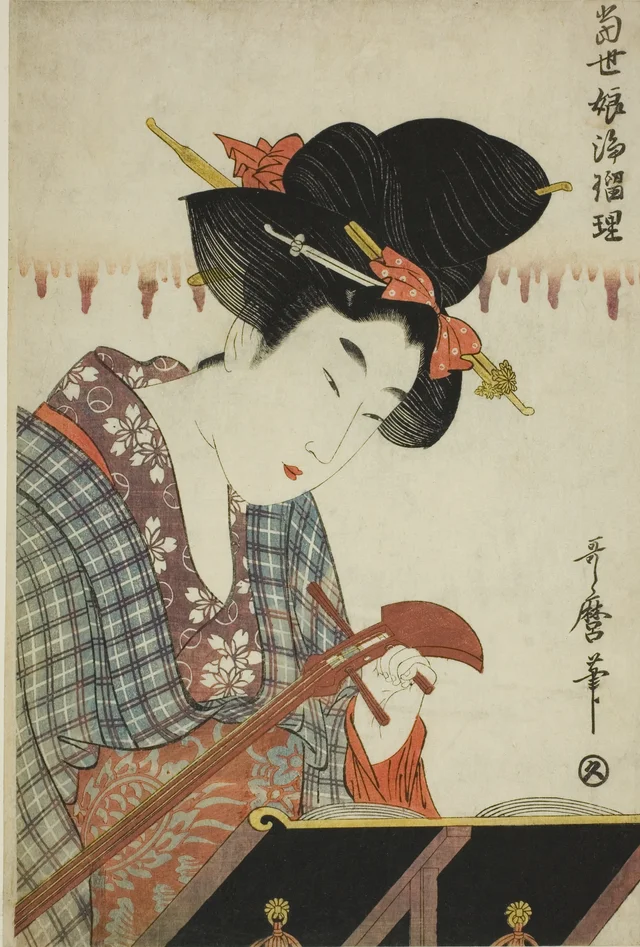
Turning a Shamisen (Shamisen no nejime), from the series "Chanting to Shamisen by Young Women of Today (Tosei musume joruri)", Kitagawa Utamaro

Turning a Shamisen (Shamisen no nejime), from the series "Chanting to Shamisen by Young Women of Today (Tosei musume joruri)", c. 1804.

Kitagawa Utamaro (Japanese), colour woodcut on paper

Art Institute of Chicago, United States

Imamurasaki, a Prostitute of the Kinpei Daikoku House, Tsukioka Yoshitoshi

Imamurasaki, a Prostitute of the Kinpei Daikoku House, 1887.

Tsukioka Yoshitoshi (Japanese), color woodblock print

Los Angeles County Museum of Art, United States
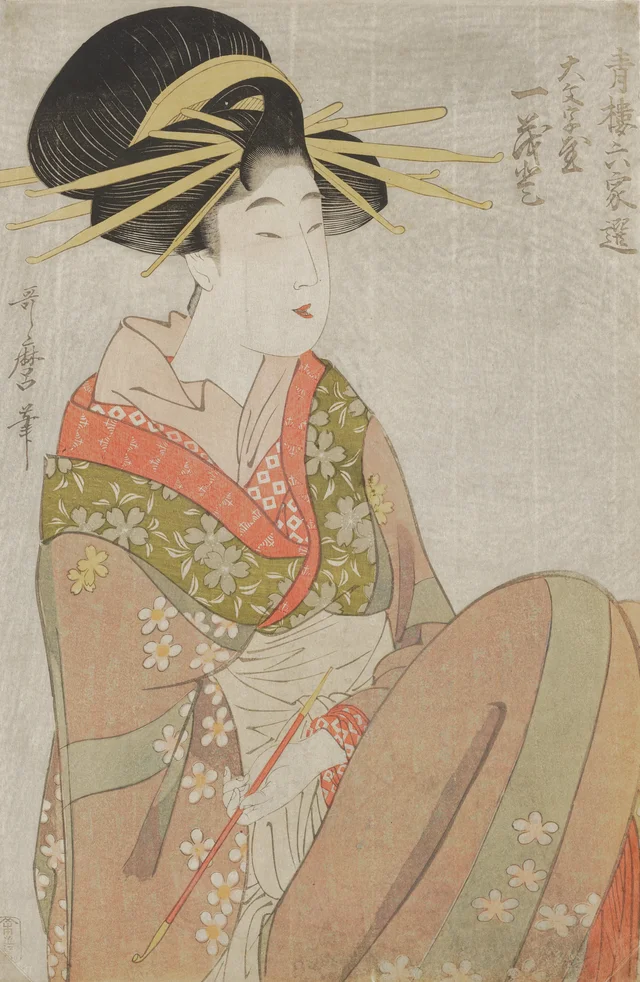
Courtesan Hitomoto of the Daimonjiya, Kitagawa Utamaro

Courtesan Hitomoto of the Daimonjiya, c. 1801–1802.

Kitagawa Utamaro (Japanese), colour woodcut on paper

Minneapolis Institute of Art, United States

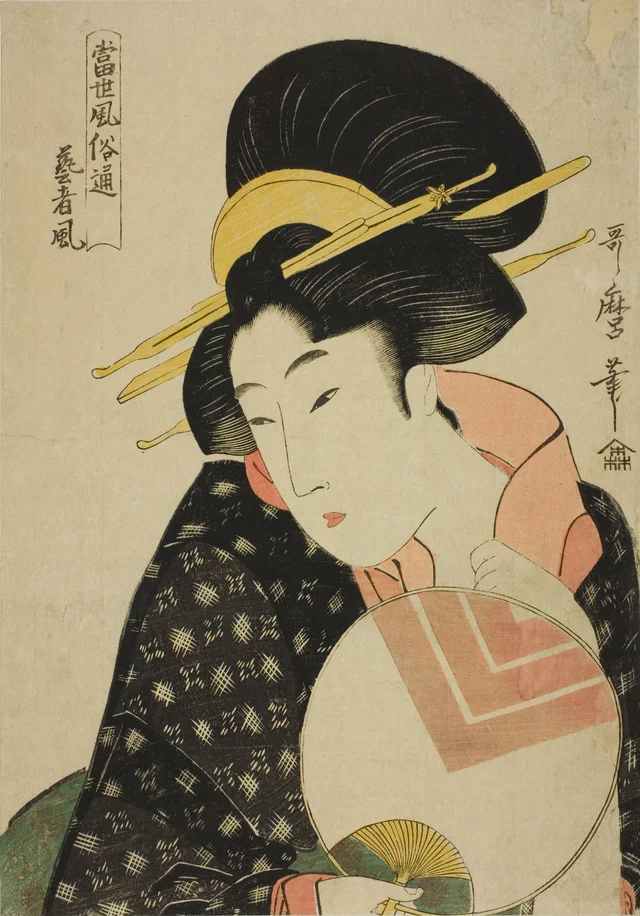
Geisha Style (geisha fū) from the series Guide to Contemporary Styles (Tōsei fūzoku tsū), Kitagawa Utamaro

Geisha Style (geisha fū) from the series Guide to Contemporary Styles (Tōsei fūzoku tsū), 1801.

Kitagawa Utamaro (Japanese), colour woodcut on paper

Art Institute of Chicago, United States

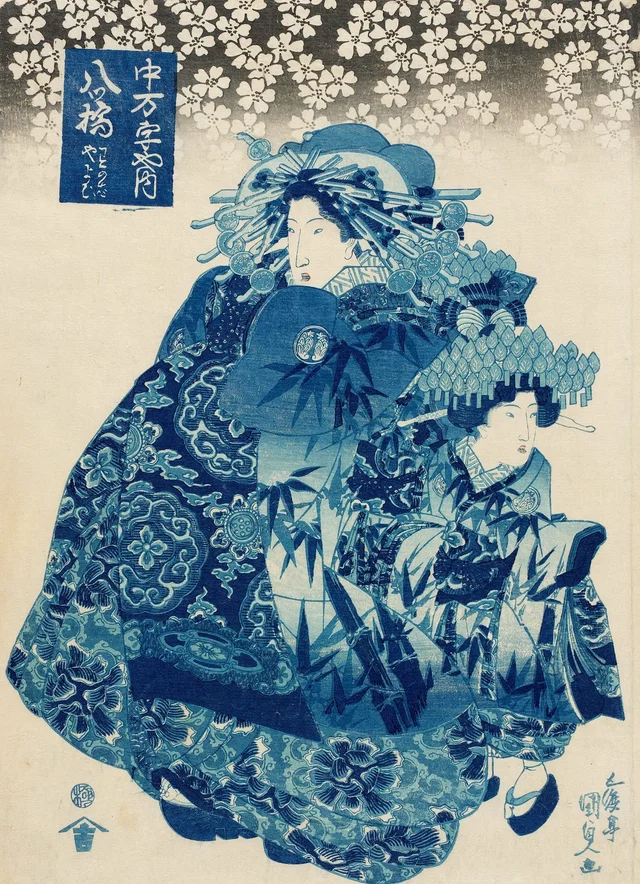
Yatsuhashi of the Naka-Manjiya, kamuro Wakaba and Yayoi, Utagawa Kunisada

Yatsuhashi of the Naka-Manjiya, kamuro Wakaba and Yayoi, c. 1831.

Utagawa Kunisada (Japanese), color woodblock print

Los Angeles County Museum of Art, United States

The Courtesan Taume, Tsukioka Yoshitoshi

The Courtesan Taume, 19th century.

Tsukioka Yoshitoshi (Japanese), color woodblock print

Los Angeles County Museum of Art, United States
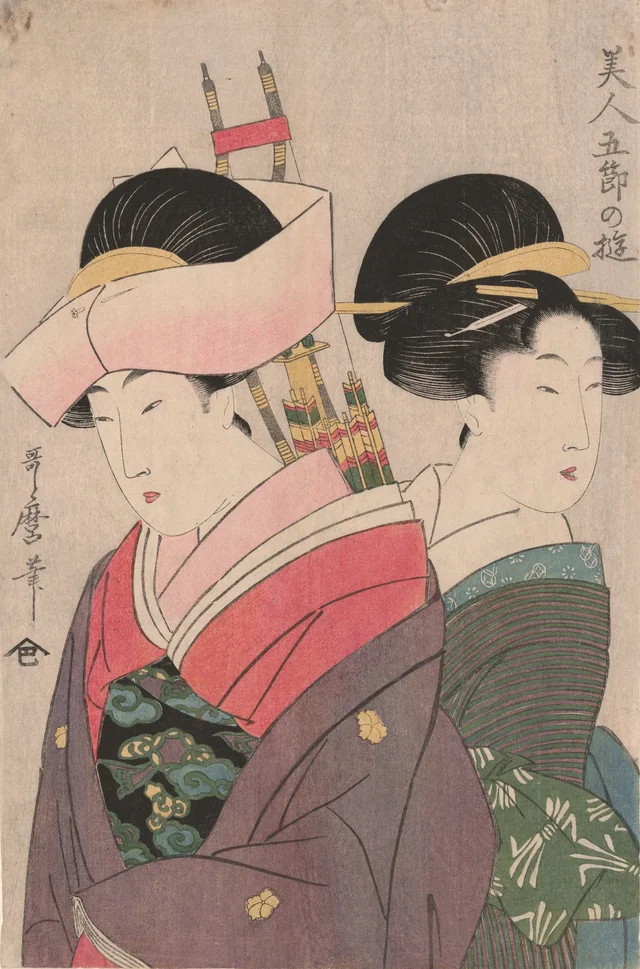
Beauty and Attendant on New Year’s Day, from the series “Pleasures for Beauties on the Five Festival Days" ("Bijin gosetsu no asobi"), Kitagawa Utamaro

Beauty and Attendant on New Year’s Day, from the series “Pleasures for Beauties on the Five Festival Days" ("Bijin gosetsu no asobi"), c. 1800.

Kitagawa Utamaro (Japanese), colour woodcut on paper

Art Institute of Chicago, United States

Takigawa of the Ōgiya from the series A Selection of Eastern Beauties, Kitagawa Utamaro

Takigawa of the Ōgiya from the series A Selection of Eastern Beauties, c. 1798.

Kitagawa Utamaro (Japanese), colour woodcut on paper

Cleveland Museum of Art, United States

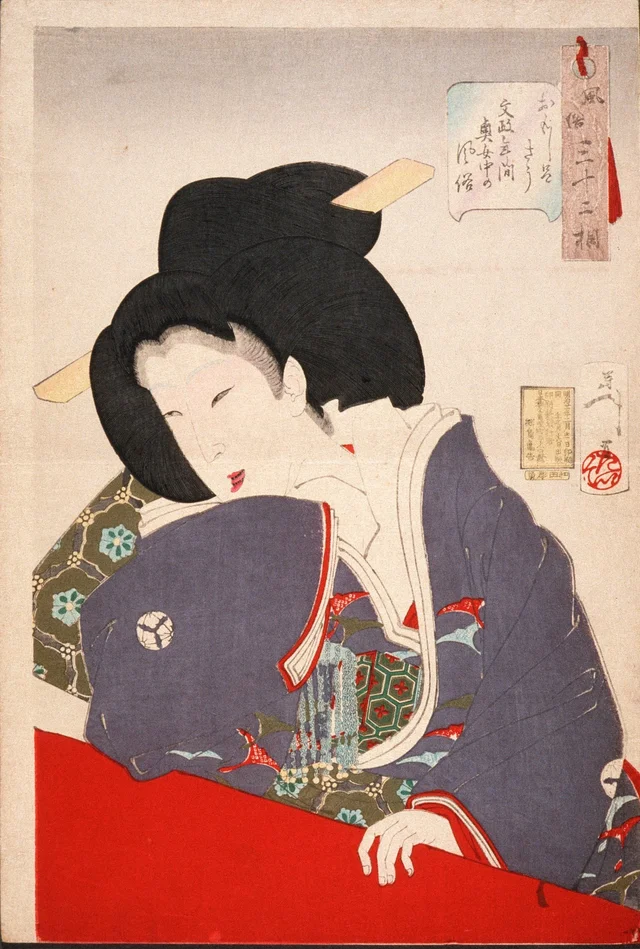
Interesting: A Lady-in-Waiting of the Bunsei Period (1818-1830), Tsukioka Yoshitoshi

Interesting: A Lady-in-Waiting of the Bunsei Period (1818-1830), 1888.

Tsukioka Yoshitoshi (Japanese), color woodblock print

Los Angeles County Museum of Art, United States

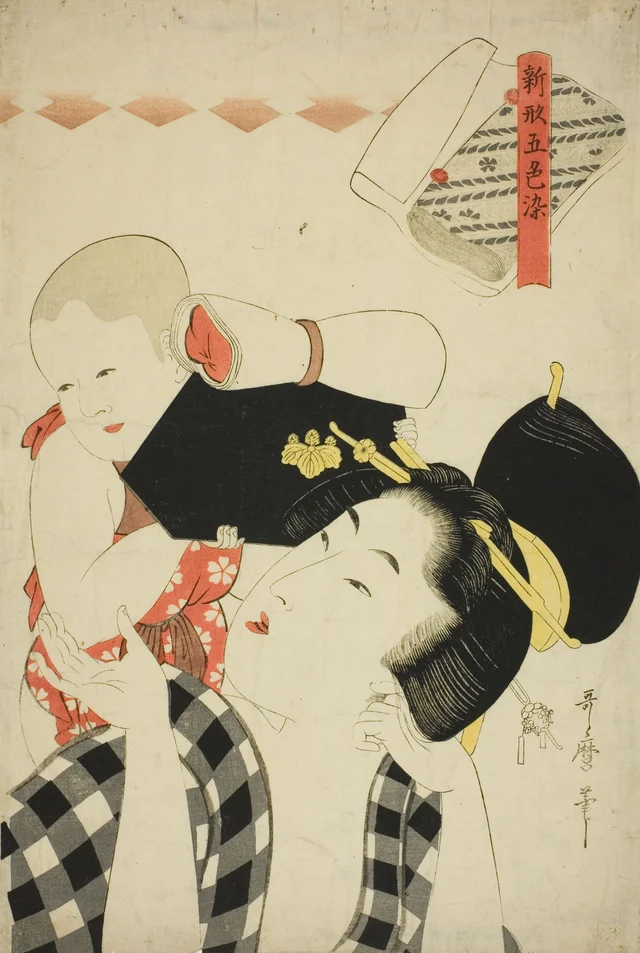
Mother and Child, from the series "New Patterns dyed in Five Colors (Shingata goshiki zome)", Kitagawa Utamaro

Mother and Child, from the series "New Patterns dyed in Five Colors (Shingata goshiki zome)", c. 1803.

Kitagawa Utamaro (Japanese), colour woodcut on paper

Art Institute of Chicago, United States

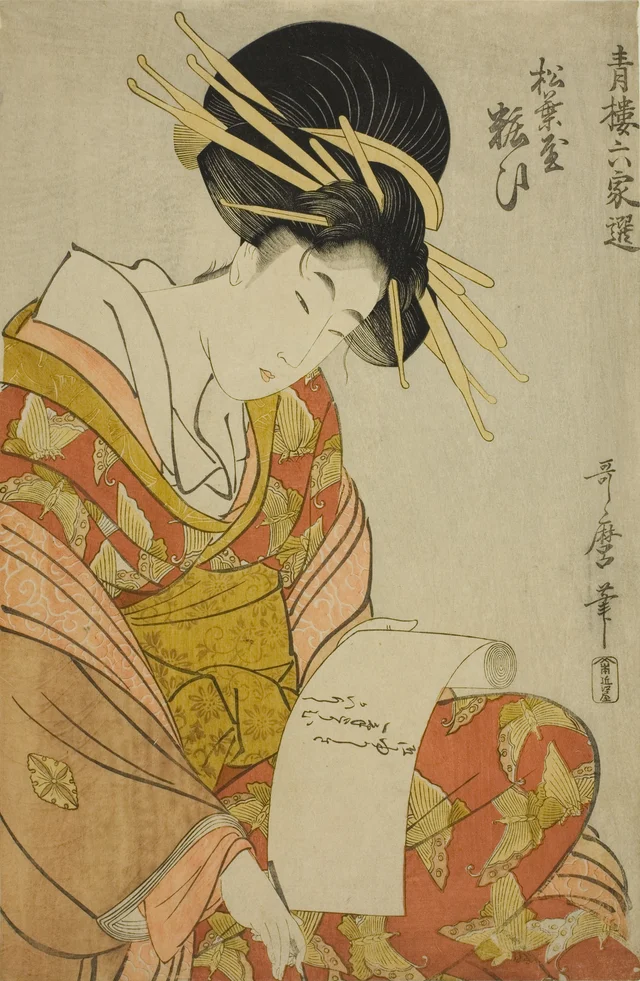
Yosooi of the Matsubaya, from the series Selections from Six Houses in Yoshiwara (Seiro rokkasen) (Matsubaya Yosooi), Kitagawa Utamaro

Yosooi of the Matsubaya, from the series Selections from Six Houses in Yoshiwara (Seiro rokkasen) (Matsubaya Yosooi), c. 1801.

Kitagawa Utamaro (Japanese), colour woodcut on paper

Art Institute of Chicago, United States

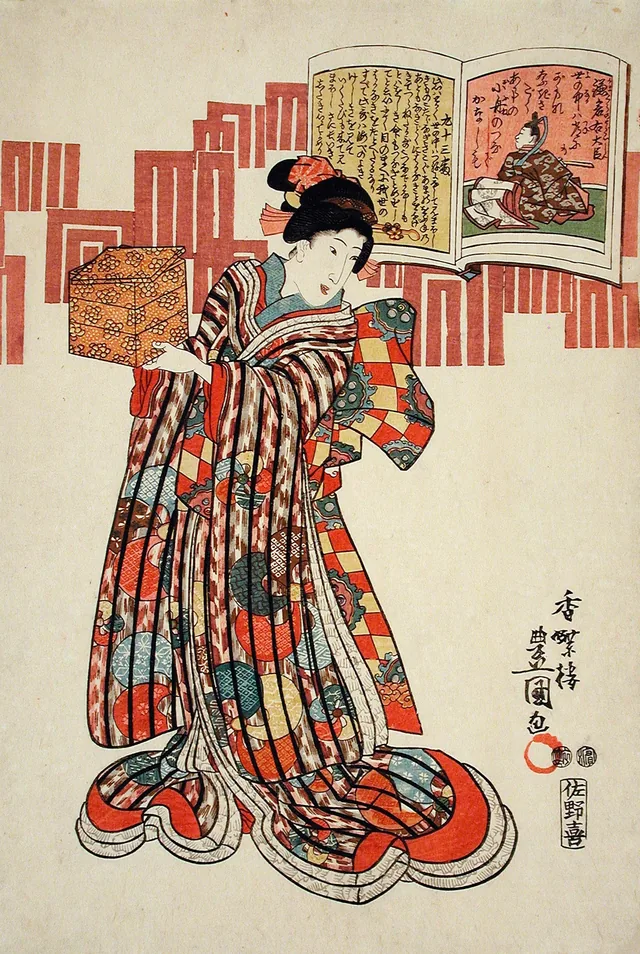
Poem by Kamakura Udaijin, Utagawa Kunisada

Poem by Kamakura Udaijin, c. 1847–1852.

Utagawa Kunisada (Japanese), color woodblock print

Los Angeles County Museum of Art, United States
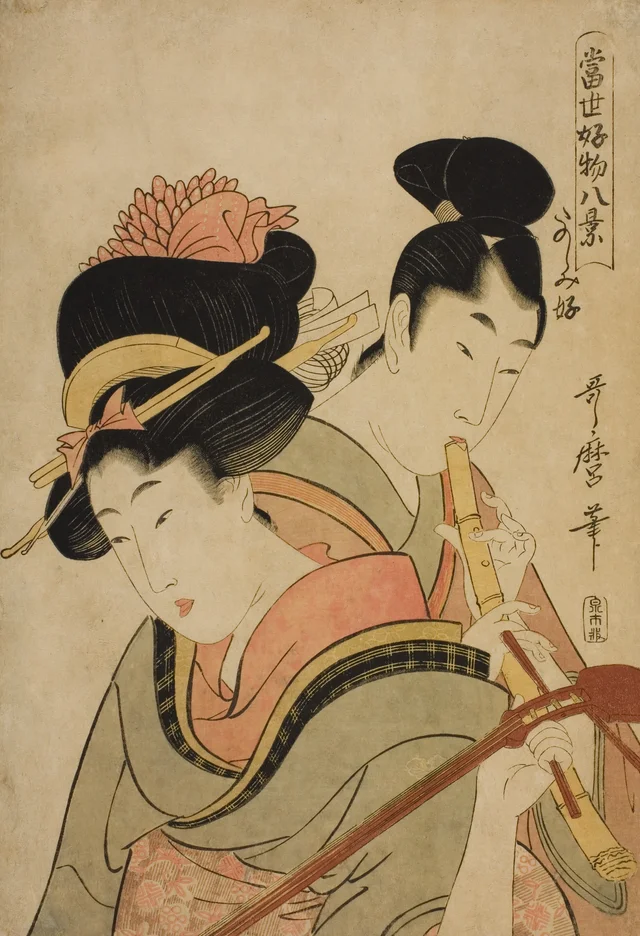
Likes Enjoying Herself (Tanoshimizuki), from the series "Eight Views of Favorite Things of Today (Tosei kobutsu hakkei)", Kitagawa Utamaro

Likes Enjoying Herself (Tanoshimizuki), from the series "Eight Views of Favorite Things of Today (Tosei kobutsu hakkei)", c. 1801.

Kitagawa Utamaro (Japanese), colour woodcut on paper

Art Institute of Chicago, United States

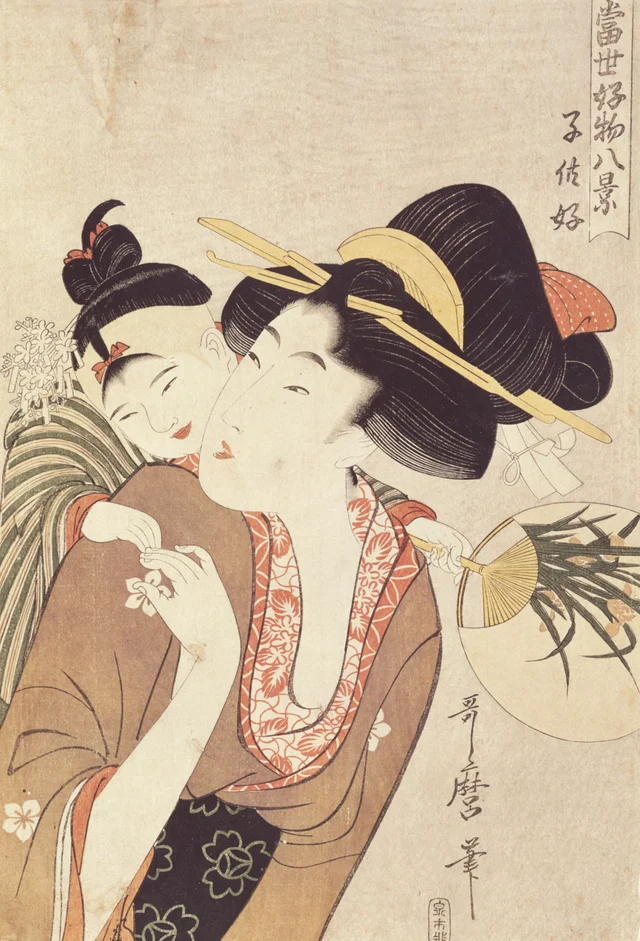
Fondness for Children, from the series Eight Views of Present-Day Favorites, Kitagawa Utamaro

Fondness for Children, from the series Eight Views of Present-Day Favorites, 19th century.

當世好物八景・子供好 (museum title)

Kitagawa Utamaro (Japanese), colour woodcut on paper

Tokyo National Museum, Japan

Elopers in Musashino, Kitagawa Utamaro

Elopers in Musashino, 19th century.

Kitagawa Utamaro (Japanese), colour woodcut on paper

Metropolitan Museum of Art, United States
The Courtesan Yosooi of the Matsubaya, Kitagawa Utamaro

The Courtesan Yosooi of the Matsubaya, c. 1799.

Kitagawa Utamaro (Japanese), colour woodcut on paper

Art Institute of Chicago, United States
Hour of the Tiger [4 am], Courtesan (Tora no koku, keisei), from the series "Customs of Beauties Around the Clock (Fuzoku bijin tokei)", Kitagawa Utamaro

Hour of the Tiger [4 am], Courtesan (Tora no koku, keisei), from the series "Customs of Beauties Around the Clock (Fuzoku bijin tokei)", c. 1798–1800.

Kitagawa Utamaro (Japanese), colour woodcut on paper

Art Institute of Chicago, United States